
Vandaag of morgen in huis

Kwaliteit gegarandeerd

Welkomstaanbiedingen ontgrendelen: GRATIS bezorging | Tot 80% korting | Gratis 30 dagen JoyPlus-proefperiode
Download de app
A folding shopping trolley is handy for shopping, parcels and days out. You can pull a shopping trolley on wheels behind you, fold it away after use and store it in a hallway, cupboard or car boot. However, not every model is suited to the same situation. A lightweight shopping trolley for a flat without a lift has different requirements from a stair-climbing shopping trolley for heavy loads.
Product descriptions don’t always tell the whole story, either. So pay particular attention to these common pitfalls.
A 60-litre bag may seem spacious, but that doesn’t automatically mean you can safely carry 60 kilograms. Capacity in litres tells you how much space there is; maximum load in kilograms tells you how much weight the frame and wheels are rated to carry according to the product specifications.
Put heavier items at the bottom and lighter shopping on top. Also check whether the stated load capacity applies to the bag, the frame or a separate sack-truck function.
A trolley with six wheels or a tri-wheel system may be designed for steps, kerbs and uneven paving. This can make it easier to move the trolley, but a full trolley on stairs still requires control and an appropriate lifting or pulling technique. Don’t use a stair-climbing shopping trolley as a seat or step stool, and don’t exceed the stated load limit.
“Folding” doesn’t mean the same thing for every model. Some trolleys fold flat, while others mainly compress the bag. So check the dimensions when folded, the weight of the frame and the space available in your storage area or car. A 4-kilogram model is harder to lift up the stairs than a lightweight shopping trolley weighing around 1.15 kilograms.
A capacity of 25 to 30 litres is often enough for everyday shopping. A large-capacity shopping trolley of 60 litres is better suited to bigger shopping trips or days out, but it will also be heavier and harder to manoeuvre when fully loaded.
Look out for these details:
A stated load capacity is a product specification, not a recommendation to always load the trolley to its limit. Before use, check that the bag is securely attached and that the load cannot shift.
A shopping trolley on wheels with two larger wheels is generally easy to pull over flat surfaces. EVA, PVC and PU wheels differ in material and construction. Check the wheel diameter and width, as well as the stability of the axle.
For pavements and stairs, multiple wheels on each side or a tri-wheel system can be useful. A compact two-wheel model may be more convenient for supermarket aisles and pavements. If you plan to use the trolley outdoors, while camping or on the beach, check that the wheels are suitable for uneven ground. No type of wheel will make a heavily loaded trolley easy to move over sand.
Aluminium is relatively lightweight and is often used in models that combine portability with a larger capacity. Steel can add more weight, but some designs use it to create a sturdy frame. When it comes to the bag, look for:
An insulated compartment can help keep food and drink at the right temperature for longer while you’re on the move. According to the product descriptions for the relevant models, these are insulated compartments; they are not a substitute for chilled transport or long-term storage in a fridge.
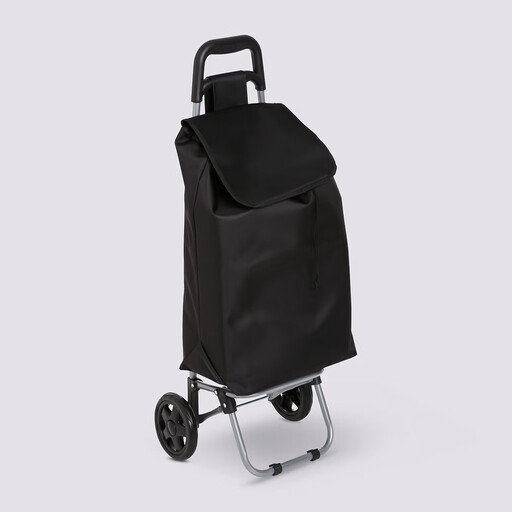
Why it suits this profile: The 30-litre capacity is well suited to everyday shopping, while its weight of around 1.33 kilograms makes this model relatively easy to handle.
The specifications list both the capacity and the product weight, so you won’t mistake this trolley for a model designed to carry heavy loads.
30-litre capacity, folding design, two wheels and materials including polypropylene, steel and EVA.
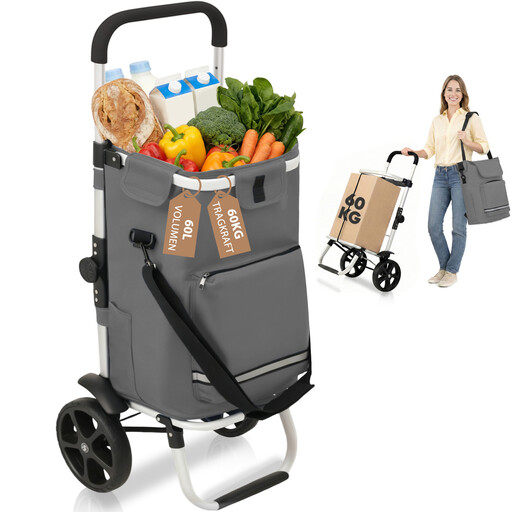
Why it suits this profile: This 3-in-1 shopping trolley combines a shopping trolley, sack truck and detachable shoulder bag for shopping and outdoor activities.
The product details state a load capacity of 60 kilograms and advise you to secure the load and not exceed this limit.
60-litre capacity, aluminium frame, insulated compartment, cup holder and puncture-proof PVC wheels.
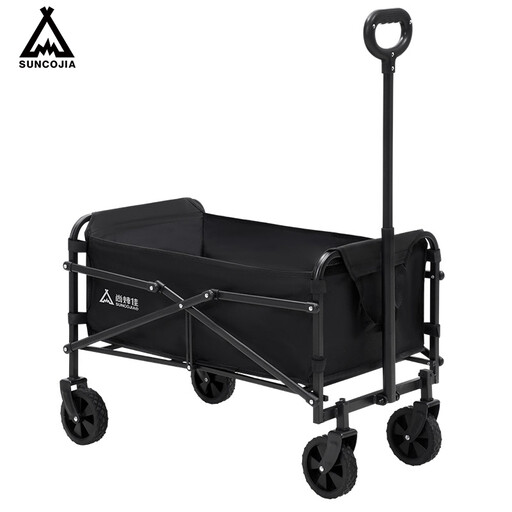
Why it suits this profile: Its large capacity is ideal for camping, picnics, beach trips, sports equipment and bulky shopping.
The details list a capacity of 170 litres and a maximum load of 100 kilograms separately. This makes the difference between volume and weight clear.
170-litre capacity, folding frame, swivel wheels and a 600D Oxford fabric bag.
When choosing a shopping trolley for older people, pay particular attention to its weight, handle height and stability. An adjustable handle can be useful if several people will be using the trolley. If you regularly use stairs, you could consider a six-wheel model, but keep the load within the stated limit.
For students and city-dwellers, a compact 2-in-1 model is a good option. The 2-in-1 shopping trolley can be used with the bag for shopping, or without it as a lightweight sack truck. One example is the 1.15-kilogram model with a 25-litre bag and a sack-truck capacity of 20 kilograms. For bigger trips and outdoor activities, a 3-in-1 shopping trolley offers extra flexibility with its shoulder bag and insulated compartment.
Clean your trolley according to the product instructions, let wet parts dry before folding it away, and check the wheels, fastenings and attachment points regularly. This helps prevent dirt or a loose connection from making it harder to use than necessary.
We’ve put together a complete, up-to-date list of products that meet these strict selection criteria and the applicable European safety regulations.
For a small or regular shopping trip, 25 to 30 litres is often practical. If you shop less often or also carry parcels and outdoor items, you could consider a 60-litre model. Always check the maximum load capacity, too.
A model with six wheels or a tri-wheel system is designed for use on stairs and kerbs. However, you still need to guide the trolley and secure the load properly. Don’t carry a heavy, unstable load, and don’t exceed the stated load limit.
Its lifespan depends on the load, the surfaces it’s used on, storage and maintenance. The frame, wheel axle and bag will wear out faster if the trolley is regularly overloaded or often used on rough paving. So check the wheels, seams, fastenings and folding mechanism before every trip.
