
Vandaag of morgen in huis

Kwaliteit gegarandeerd

Welkomstaanbiedingen ontgrendelen: GRATIS bezorging | Tot 80% korting | Gratis 30 dagen JoyPlus-proefperiode
Download de app
A folding shopping trolley can make it easier to transport groceries, parcels and camping equipment. However, a large capacity or high load capacity does not tell you everything. A trolley that is difficult to fold, unstable to manoeuvre or too large for the boot can quickly end up unused.
Pay particular attention to the construction, intended use and specifications actually stated in the product description. Below, you’ll find the most common pitfalls and a practical selection of models for different situations.
A manufacturer may state a maximum load capacity of 150 or 200 kg, for example, while the bag or container offers less practical space. For a standard shopping trolley, 25 to 51 litres is often sufficient. For a camping trip, day at the beach or gardening project, you’ll generally need a large-capacity shopping trolley or a folding utility wagon.
Also check whether the load capacity applies to an evenly distributed load. Heavy crates placed on top of lighter items can raise the centre of gravity and make the trolley less stable.
Coated Oxford fabric may repel water, but that does not automatically mean the seams, zips and base will remain waterproof for extended periods. Product descriptions often refer to protection against dust and light rain. In heavy rain, use an additional cover and store the trolley somewhere dry.
A trolley may fold down compactly but still take up a lot of space because of protruding wheels or a fixed handle. So check:
A folding hand trolley with removable parts is also easier to clean after use on sand, mud or wet ground.
Choose the capacity according to the type of load:
A lightweight shopping trolley is useful on stairs and when loading it into the car. A heavier frame, on the other hand, may offer greater stability. Look at the balance between the trolley’s own weight, bag capacity and maximum load capacity.
Watch out for conflicting information. The product name of the Handcart Foldable Small mentions 100 kg, while the product description states a maximum load capacity of 150 kg. If in doubt, check the current product page and assume the lowest clearly stated limit until the seller has clarified the discrepancy.
Two large EVA wheels can provide smooth, quiet movement on pavements and shop floors. For stairs, kerbs and uneven paving, a stair-climbing shopping trolley with six wheels is more practical. A camping utility wagon with wide all-terrain wheels is better suited to grass, sand and gravel.
Also look for:
A stair-climbing system can make it easier to tackle steps, but do not lift the trolley with a load heavier than you can safely handle. Apply the brake when the trolley is stationary and do not exceed the stated load limit.
A bag made from 600D Oxford fabric is described in the product information for several models as being designed for everyday and outdoor use. Check whether the bag is removable, whether it has a cover and whether smaller items can be stored separately.
A metal frame made from steel, galvanised steel or aluminium has different characteristics. Steel is generally heavier and suitable for higher loads, while aluminium can help reduce the overall weight. The stated construction, hinges and wheel axles are more important than a loose marketing term such as “heavy duty”.
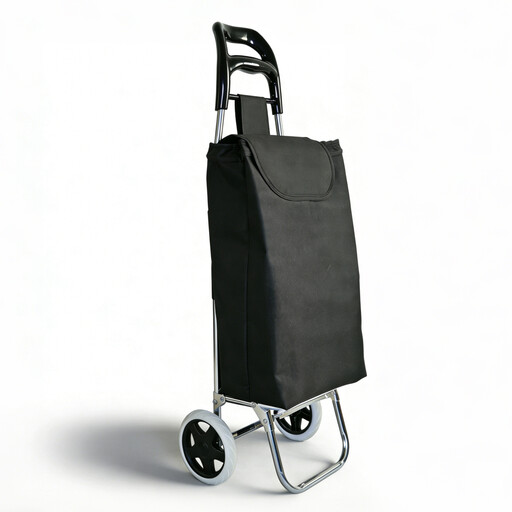
Why it suits this profile: At just 1.15 kg, it is practical for small households, students and anyone who often carries the trolley in the car or by hand.
The product description states both the 25-litre bag capacity and the separate 20 kg load capacity when used as a hand trolley. This clearly defines its intended use.
2-in-1 design, water-resistant 600D Oxford bag and EVA wheels according to the product description.
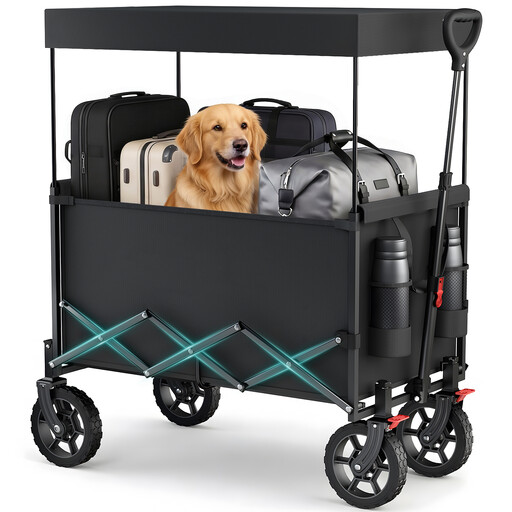
Why it suits this profile: This model is designed for campers and families who want to transport lots of items at once on trips, paths or grass.
The product page states a capacity of 150 litres, all-terrain wheels, brakes and a telescopic handle. This makes the choice easier to verify than relying on a general claim about outdoor use.
150 kg maximum load capacity, removable wheels, removable canopy and a 2-year warranty according to the product description.
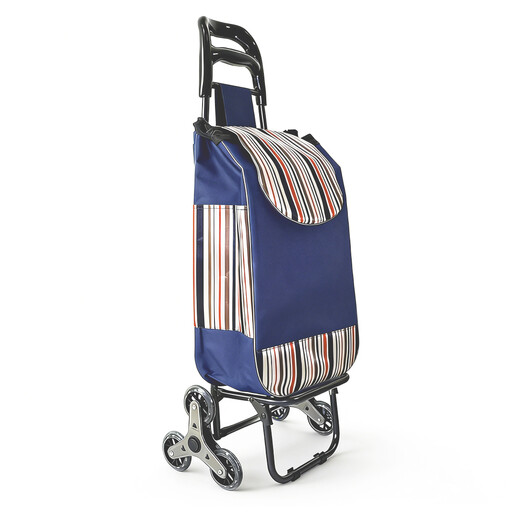
Why it suits this profile: A suitable choice for people living in upper-floor flats or anyone who regularly encounters kerbs, stairs and uneven paving.
The product description mentions a six-wheel tri-wheel system and a 30 kg load capacity without the bag. However, check that the stair width and the trolley’s own weight are suitable for your home.
38-litre bag capacity, 30 kg hand-trolley capacity and a flat-folding frame according to the product information.

Why it suits this profile: Designed for camping, days at the beach, festivals, gardening and other situations where you need to carry lots of bulky items.
The stated 127-litre internal capacity is separate from the maximum load capacity of 200 kg. Use the wagon on a level surface and follow the safety warnings on the product page.
127-litre capacity, foldable construction and dual brakes with swivel wheels according to the product description.
We’ve put together a complete, up-to-date list of products that fully meet these strict selection criteria and the applicable European safety regulations.
Where the construction allows it, remove the bag and wheels. Wipe the Oxford fabric and frame with a damp cloth, then allow all parts to dry completely before folding the trolley. Sand and mud around the wheel axles can make it harder to roll.
Its lifespan depends on the load, terrain, storage and maintenance. Do not use the trolley above the stated load capacity, check the hinges and wheel fittings regularly, and store it somewhere dry. A metal frame alone does not guarantee a long service life if the seams, wheels or folding locks wear out.
Choose a model with a six-wheel tri-wheel system if you regularly use stairs or cross kerbs. For level shop floors and pavements, two larger wheels are usually sufficient. Also check the bag capacity, the trolley’s own weight and its hand-trolley capacity, so that it suits the load you actually want to transport.
