
Vandaag of morgen in huis

Kwaliteit gegarandeerd

Welkomstaanbiedingen ontgrendelen: GRATIS bezorging | Tot 80% korting | Gratis 30 dagen JoyPlus-proefperiode
Download de app
A folding rollator with a seat can be helpful if you want to take regular breaks while walking, carry your shopping or need a walking aid that fits in your car. However, many models look much the same. A low weight, for example, doesn’t automatically mean a rollator is comfortable to use, while a high weight capacity doesn’t tell you whether it will fit through narrow doorways.
This guide explains what to look for before you buy. That way, you can avoid a purchase you regret and choose a model that suits your height, how you plan to use it and how you’ll transport it.
A lightweight rollator is easier to move and take with you, but the frame, wheels and seat also need to suit the way you’ll use it. So always check each of the following separately:
A model may be relatively compact but still too wide for a hallway, lift or car boot.
Not every folding walking-frame design remains upright on its own when folded. This matters if you want to store your rollator at home. Also check whether the folding mechanism is easy to operate without much force, and whether any parts could come loose while you’re carrying it.
If you’re choosing a rollator for travel, pay particular attention to its packed and transport dimensions. The stated size doesn’t always match the space you’ll need in your car.
A seat is intended for taking a rest, but it isn’t a replacement for a regular chair. Check the seat width, seat height, weight limit and the surfaces the model is designed for. Bring the rollator to a complete stop before sitting down, and follow the manufacturer’s instructions.
For everyday use, a weight of around 8 to 10 kg can be a practical compromise between portability and a sturdy metal frame. Also check the official weight capacity. The product information for the models below, for example, states 158 kg / 350 lb. Some product titles mention 172 kg; as this differs from the technical specification, it’s a good idea to check the current product page and instructions before ordering.
A rollator with a high weight capacity still needs to be used safely: distribute weight evenly, don’t hang a heavy bag from one handle, and don’t exceed the shopping bag’s weight limit.
A narrow rollator is useful in homes with tight passageways. A model that’s around 59 cm wide when unfolded may be a better fit at home than a wider outdoor model, but measure your doorways and passageways first.
When checking the seat, look at:
A higher seat can make it easier to stand up, but it still needs to suit your height.
A rollator with adjustable handles lets you find a more suitable height. The models below have handles that adjust to five positions. Set them so your shoulders remain relaxed and you don’t have to lean forwards.
Wheels of around 15.2 cm are suitable for many smooth indoor and outdoor surfaces. Take extra care on uneven pavements, kerbs or gravel. Check the brakes regularly and don’t use the rollator on surfaces it isn’t designed for.
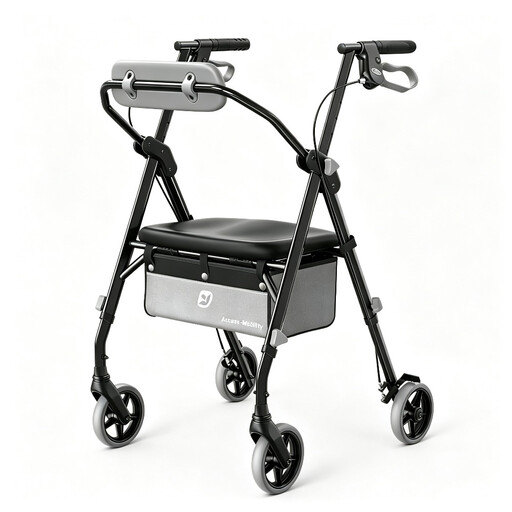
Why it suits this profile: This model combines a net weight of 8.5 kg with a width of 59 cm and a foldable design. It’s a good option if you’re looking for a straightforward rollator for indoor and outdoor use.
The product information includes the weight, dimensions, seat size and handle height. So you don’t have to rely on the term “lightweight” alone.
8.5 kg net weight; handles with five height settings from 80 to 93 cm; seat measuring 41 × 31.5 cm.
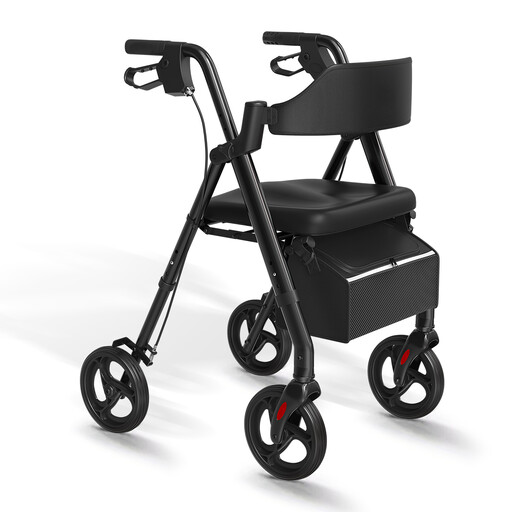
Why it suits this profile: The PU seat and stated dimensions make this an interesting option if you’re looking for a rollator with a seat for taking breaks indoors and outdoors.
The product page states that the model doesn’t remain upright on its own when folded. This helps you know what to expect when storing it.
Net weight of 9.35 kg; weight capacity of 150 kg according to the product information; basket with a stated weight capacity of 10 kg.
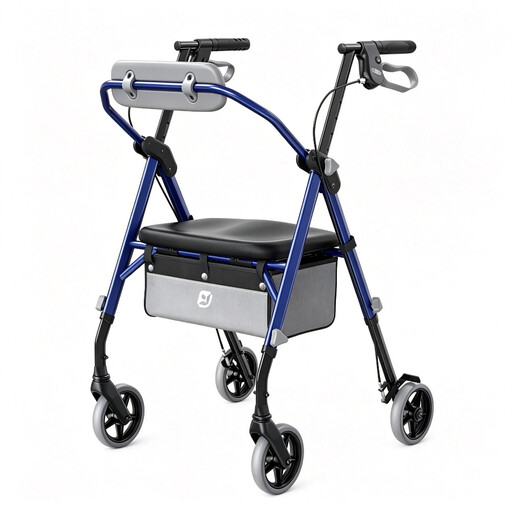
Why it suits this profile: This model is designed for people who prioritise the stated weight capacity and want a portable walking aid for outdoor use or travel.
As well as the weight capacity, the specifications list the frame material, wheel type, dimensions and five handle positions. Always compare these details with your own needs.
Carbon steel frame; stated weight capacity of 158 kg; 15.2 cm TPR wheels; net weight of 8.5 kg.
We’ve put together a complete, up-to-date list of products that meet these strict selection criteria and comply with current European safety regulations.
Set the handles at a height that allows your arms to bend slightly while keeping your shoulders relaxed. Then check that all the adjustment points are secure. The right setting depends on your height, posture and type of rollator.
Its lifespan depends on how often you use it, the surfaces you use it on, maintenance and the load it carries. Regularly check the brake cables, hinges, wheels and seat fixings. Clean the frame and dry it completely before folding and storing the rollator. If the brakes or wheels are worn, it’s safer to replace them than to carry on using a faulty part.
Running costs are usually limited to cleaning and replacing worn parts when needed, such as wheels, brake components or fixings. Don’t use harsh cleaning products, and store the rollator indoors in a dry place, away from heat sources. Always follow the manufacturer’s instructions.
