
Vandaag of morgen in huis

Kwaliteit gegarandeerd

Welkomstaanbiedingen ontgrendelen: GRATIS bezorging | Tot 80% korting | Gratis 30 dagen JoyPlus-proefperiode
Download de app
A good folding pruning saw is indispensable for garden maintenance or outdoor activities. However, the market is flooded with models that look sturdy but become dull, wobbly, or unsafe after just a few uses. Before you make a purchase, it's crucial to know what to look for to avoid wasting money on a saw that fails to perform.
As a Joybuy Product Recommendation Officer, I sift through the specifications and marketing claims for you. Here are the three most common pitfalls when buying a folding saw:
To avoid a bad purchase, focus on a few verifiable specifications rather than marketing buzzwords. These factors determine the performance and safety of your branch saw.
The heart of any garden saw is its blade. The quality of the steel and the geometry of the teeth are crucial.
A folding pruning saw must have a lock that securely holds the blade in both the open and closed positions. A good mechanism will click audibly into place and have no wobble. This not only prevents the saw from folding during use but also stops it from accidentally opening in your bag or pocket. Always check if the product description mentions a specific safety lock.
The handle should fit comfortably in your hand and be made from a non-slip material, such as rubber or cork. This ensures a firm grip, even when wearing gloves or in damp conditions. The blade length (usually between 18 and 25 cm) determines the branch thickness the saw is suitable for. A shorter blade is more compact and ideal as a camping or bushcraft saw, while a longer blade provides more cutting power for pruning thicker branches in the garden.
Based on these objective criteria, we have selected a number of models that suit different users.
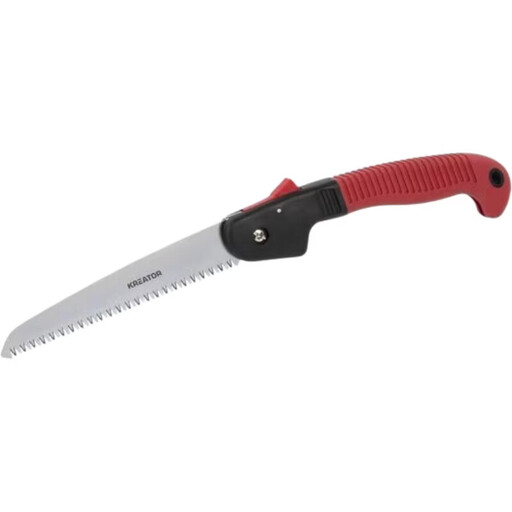
Why This Fits Their Persona: Ideal for those seeking a functional, safe saw for occasional garden pruning without a large budget. Compact and easy to store.
This model addresses the most critical pitfall: safety. It features an explicitly mentioned lockable design, preventing the blade from folding unexpectedly.
The teeth are triple-ground for a sharp cut, and the non-slip handle provides a firm grip, improving control.
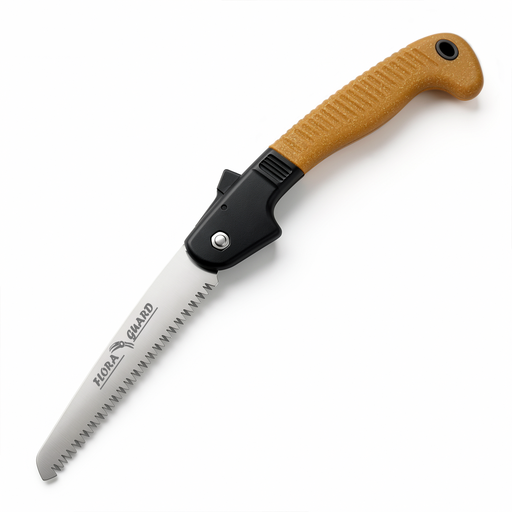
Why This Fits Their Persona: Perfect for those who need a reliable saw for both garden work and outdoor activities like camping or hiking. A true all-rounder.
This saw tackles the pitfall of inferior steel. The hardened SK-5 carbon steel blade is rust-resistant and stays sharp for a long time, ensuring you won't be stuck with a dull saw.
The unique triple-cut tooth design ensures fast, efficient sawing. The ergonomic, non-slip cork handle offers comfort and control, and the safety lock guarantees safe operation.
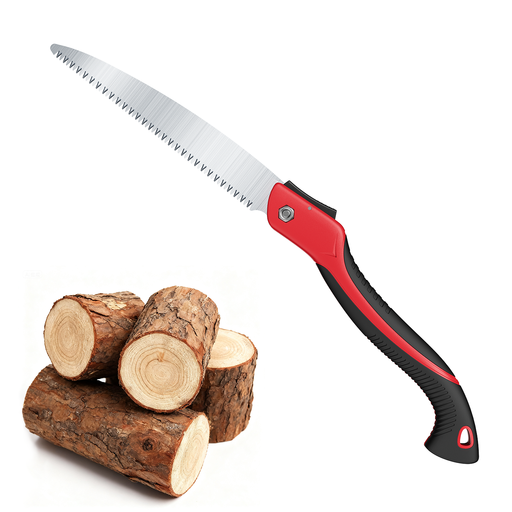
Why This Fits Their Persona: Suitable for gardeners who regularly prune thicker branches and shrubs and need a saw with greater reach and power.
This saw combines a reliable safety lock with a robust SK-5 steel blade. This prevents the blade from bending or the lock from failing when cutting thicker, tougher branches.
The longer 25 cm blade provides greater cutting capacity. Its ergonomic, non-slip handle reduces fatigue during more demanding jobs.
We have compiled a complete, real-time list of products that fully satisfy these strict selection criteria and UK safety regulations.
Proper maintenance is simple and significantly extends the saw's lifespan. Clean the blade with a dry cloth after each use to remove sap and moisture. A drop of oil on the pivot point and a thin coat on the blade will help prevent rust. Ensure the saw is completely dry before folding and storing it.
The main difference lies in the teeth. A pruning saw, designed for cutting trees, typically has coarser teeth engineered to cut efficiently through live, green wood without getting stuck. A regular hand saw is often intended for dry, processed wood and has finer teeth for a smoother finish.
Not necessarily. A longer blade can cut through thicker branches faster, but it is also heavier and less manoeuvrable in dense shrubs. For general garden work and travel, a more compact model (around 18-20 cm) is often more practical. Choose the length based on the thickness of the branches you expect to cut most often.
