
Vandaag of morgen in huis

Kwaliteit gegarandeerd

Welkomstaanbiedingen ontgrendelen: GRATIS bezorging | Tot 80% korting | Gratis 30 dagen JoyPlus-proefperiode
Download de app
A folding camping table may seem simple at first: unfold it, put your things on it and you’re ready to go. But the wrong choice can quickly lead to a wobbly table, too little workspace or one that’s awkward to fit in your car. You’ll notice this most at campsites, festivals, on the beach or during a picnic in a windy park.
So don’t focus only on a low price or claims such as “ultralight”. Pay particular attention to the dimensions, frame, folding mechanism and maximum load. Below, you’ll find the key points to consider, along with a few models to suit different needs.
A lightweight camping table is easy to carry, but a low weight doesn’t automatically mean it’s stable. A narrow frame, short legs or lightweight joints can make a table more prone to wobbling. So check the frame construction, the feet and how the legs lock into place.
An aluminium camping table often offers a practical balance of low weight and a sturdy frame. This makes aluminium a good choice for campers, caravan and motorhome owners, and anyone who wants to move their table around regularly.
A table may pack away compactly but still be too small for four plates, a camping stove and drinks bottles. So check both sets of dimensions:
For a family or group, a camping table designed for several people is usually more practical than a small model. For a hiker or angler, a compact picnic table weighing around one to two kilograms may be more convenient.
An adjustable camping table can sit more evenly on uneven ground, but only if the legs are secured properly. Before use, always check that each lock is fully engaged and that all the legs are touching the ground. Where possible, set up the table on firm, level ground.
A folding outdoor table isn’t designed to be used as a step or a seat. Also check the maximum static load. Spread heavy items across the surface and avoid putting too much pressure on a single corner.
An aluminium outdoor table is generally lightweight and easy to transport. Check whether the table has an aluminium top, an aluminium frame, or plastic or nylon feet. Each part has a different purpose:
A cross or X-shaped frame distributes the load across several support points. This can be a useful choice for cooking, eating and keeping your camping gear on.
If you mainly travel by car, caravan or motorhome, you could choose a larger tabletop. For hikers and festival-goers, packed size and weight matter more. A portable camping table should not only be lightweight, but also easy to set up without tools.
Check whether the tabletop and frame are stored separately. This can make the packed shape more compact, but it also means you’ll have more parts to fit together when setting up.
If you’re choosing a camping table with adjustable legs, make sure the locks are easy to see. Set the legs to the required height and check them before putting down crockery, cooking equipment or electronics. Clean aluminium surfaces with a damp cloth, then dry them. Store the table somewhere dry and don’t leave it in direct sunlight or rain for long periods.
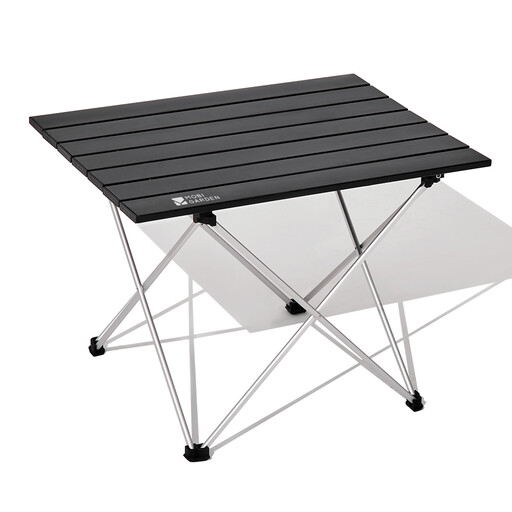
Why it suits this type of user: This compact model is designed for hiking, fishing and smaller camping trips. According to the product information, it weighs around 1.25 kg.
The product description lists a separately stowable top and frame, an X-shaped cross frame and a packed size of 16 × 8 × 57 cm.
Set-up size of 50 × 40 × 40 cm, an aluminium frame and a stated static load capacity of around 20 kg.
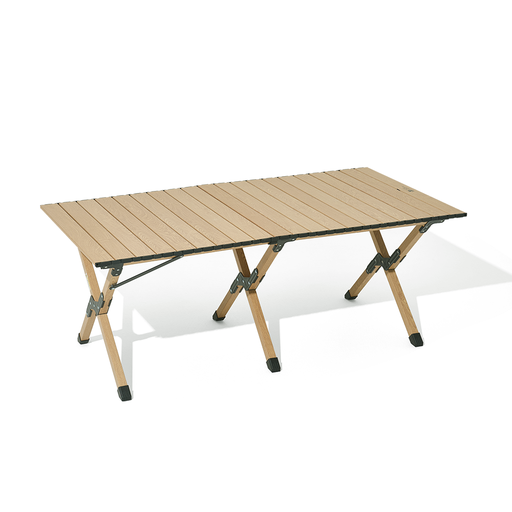
Why it suits this type of user: With a set-up size of 116 × 60 × 44,5 cm, it offers more tabletop space for meals, outdoor cooking and gatherings.
The X-shaped support, separately stowable parts and PVC feet help address both space and stability.
Aluminium top and frame, around 4.9 kg net weight, and room for several people.
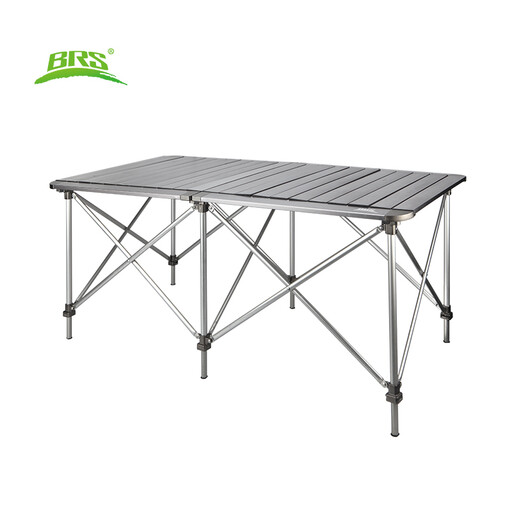
Why it suits this type of user: This model is designed for group camping, families, festivals and outdoor cooking when you need extra workspace.
Two tabletops that can be used separately and telescopic legs let you adjust the layout and height to suit the activity.
Measures 126,5 × 69 cm and has two tabletop surfaces and folding legs, according to the product description.
We’ve put together a complete, up-to-date list of products that meet these strict selection criteria and the applicable European safety regulations.
Don’t use the table as a stool, step or support. Also keep it away from naked flames and strong sources of heat.
It depends on how you’ll use it. A medium-sized tabletop may be enough for meals alone. If you also need space for cooking equipment, pans and drinks, you’ll want more room. A table around 116 cm wide will generally offer more workspace than a compact 50 cm model.
Yes. Aluminium is widely used for portable outdoor tables. However, check the product warnings and keep the table away from naked flames and extreme heat. Only put a hot pan where the product instructions allow, and don’t exceed the stated load capacity.
Wipe the surface with a damp cloth, dry all the parts and store the table somewhere dry. If you have an adjustable model, check the leg locks regularly. Prolonged exposure to rain and direct sunlight can damage materials and joints.
