
Vandaag of morgen in huis

Kwaliteit gegarandeerd

Welkomstaanbiedingen ontgrendelen: GRATIS bezorging | Tot 80% korting | Gratis 30 dagen JoyPlus-proefperiode
Download de app
A folding camping table might seem simple at first: unfold it, put your things on it and you’re ready to go. But small differences in design can make a big difference on a camping holiday, picnic or barbecue. A table that wobbles, doesn’t offer enough space or is awkward to fit in the car can quickly become a nuisance in your camping gear.
So don’t just focus on the price or an attractive product photo. Pay particular attention to the construction, dimensions and how the table packs away.
A spacious table is handy for a family, but its size when unfolded tells you little about how easy it is to transport. Check the packed dimensions, weight and whether a carry bag is included. For example, a table that’s 120 cm wide might suit four to six people, but it will take up more room in the car than a medium-sized model.
A stated maximum load usually applies to a static load distributed evenly across the table. It doesn’t mean you can lean or sit on it, or put a heavy cooker on one corner. Also look for warnings about the ground surface, locking mechanisms and making sure the legs are fully extended.
An adjustable camping table can be useful on grass, sand or uneven ground at a campsite. But the legs must be fully locked in place. Before use, check that all the locks are secure and that the table doesn’t tip when you apply light pressure to one side. Always use a camping table on ground that’s as flat and firm as possible.
An aluminium camping table is usually relatively lightweight and easy to clean. Aluminium also won’t rust like untreated steel, although its components and joints can still wear or become damaged. A table with carbon steel parts can be compact and sturdy, but needs more care if it’s exposed to damp conditions for long periods.
Check the difference between the tabletop material and the frame material. An aluminium tabletop with an aluminium tube frame has different properties from a model with an aluminium tabletop and an aluminium-iron alloy base.
A compact tabletop may be enough for two people. You’ll need more space for meals with crockery, pans and drinks. Check the actual dimensions, rather than relying on descriptions such as “multi-person” or “large size”.
As a practical guide:
A portable camping table should suit the way you travel. A heavier model is often no problem if you’re travelling by caravan or car. But if you’re going to a festival, walking a short distance to your pitch or travelling in a campervan, every kilo counts.
A roll-top camping table may have the tabletop and frame packed separately. This can save space, but it also means you’ll need to assemble or unroll both parts before use. So check how quickly the table can be set up and whether any loose parts could easily get lost.
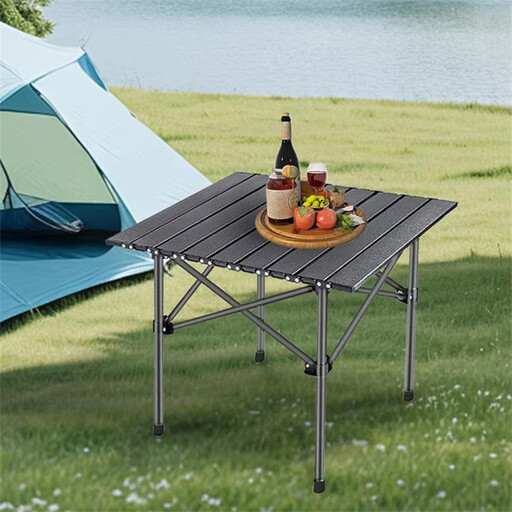
Why it suits this type of user: This compact model is designed for campers looking for a simple table for cooking, drinks or a small barbecue. At around 2.2 kg, it’s easy to carry.
The dimensions are clearly stated: 53 × 51 × 50 cm when unfolded and 11 × 15 × 53 cm when packed away. This lets you check in advance whether the table will fit in your luggage.
Carbon steel construction, a carry bag, as stated in the product title, and a stated load capacity of 100 kg. Avoid using it in damp conditions for long periods.
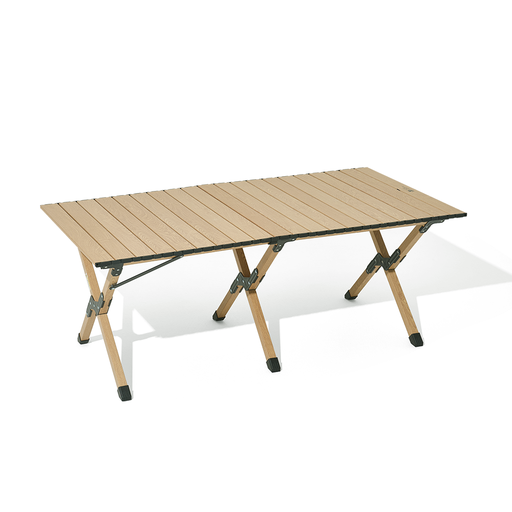
Why it suits this type of user: Measuring 116 × 60 × 44.5 cm, the table offers a spacious surface for meals, cooking equipment and group use, while the tabletop and frame can be packed away separately.
According to the product description, the X-shaped frame and PVC foot caps are designed to provide support and grip. Make sure all the feet are on a flat, firm surface.
Aluminium tabletop and frame, a weight of around 4.9 kg and a tabletop that can be packed away separately.
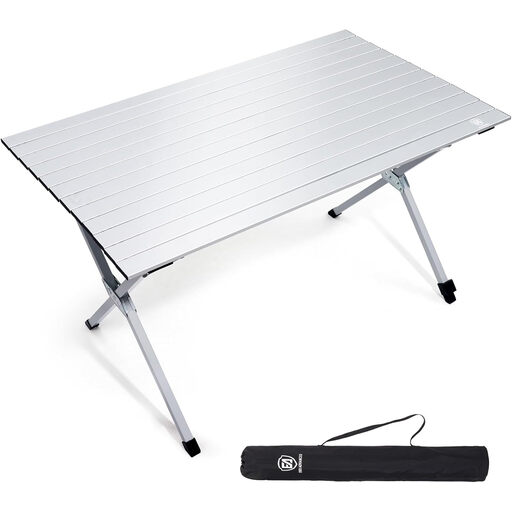
Why it suits this type of user: This model is designed for larger meals, barbecues, garden parties and use on the balcony. The 120 × 70 cm tabletop has room for 4 to 6 people.
The product description lists four U-shaped locks, hook-and-loop fasteners and one height-adjustable leg. Check these parts before use and don’t exceed the stated load capacity of 100 kg.
Aluminium tabletop, roll-up design, carry bag and adjustable leg. The stated weight is around 7.3 kg.
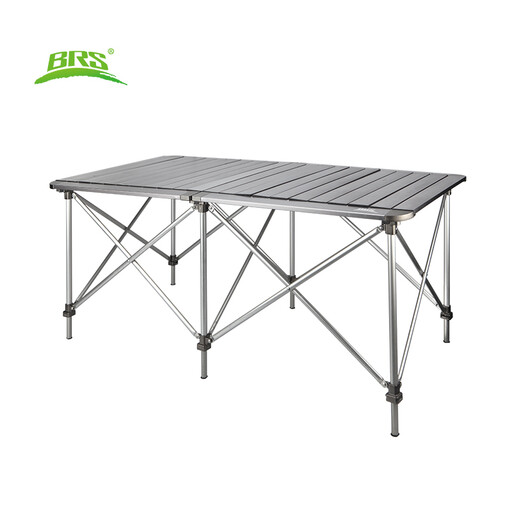
Why it suits this type of user: According to the product description, the two tabletop sections and telescopic legs are designed for separate uses, such as cooking on one side and eating on the other.
The adjustable legs offer several height settings, but every lock must be fully secured before you put down crockery, cooking equipment or drinks.
Aluminium alloy, two independently usable sections and a folding design for storage in a car, campervan or camping box.
We’ve put together a complete, up-to-date list of products that meet these strict selection criteria and the applicable European safety regulations.
Choose a flat, firm surface. Unfold the frame fully, make sure all the legs are properly on the ground and check every locking mechanism. If the tabletop rolls out, make sure the fasteners or straps are secured correctly too. Spread heavy items as evenly as possible across the surface.
Its lifespan depends on the material, how it’s used, the load it carries and how it’s stored. Don’t leave the table out in the rain or direct sunlight for long periods. Wipe off dirt with a damp cloth, dry the frame and store the table somewhere dry. Check the hinges, foot caps and leg locks regularly.
That depends on the specifications. Check the maximum load, any warnings about open flames and the recommended distance from heat sources. An aluminium or metal tabletop is usually easy to clean, but no camping table is automatically suitable for direct flames or extreme heat.
