
Livraison le jour même et le lendemain

Qualité garantie

Débloquez vos offres de bienvenue: Livraison GRATUITE | Jusqu'à -80 % | 30 jours d'essai gratuits à JoyPlus
Téléchargez l'application
A folding camping table may seem simple, but small differences can determine how comfortable it is to cook, eat and keep your belongings on. A table that looks lightweight and sturdy on paper may turn out to be too low, wobbly on grass or awkward to fit in your car.
This matters to campers, families, festival-goers and anyone looking for a portable table for a picnic, garden party or temporary use at home. So don’t focus only on the price or the word “outdoor” in the product title. Check the construction, dimensions and usage limitations in particular.
A compact camping table is handy, but some models have several separate parts that you need to assemble each time. So check the folded dimensions and see whether the tabletop and frame are stored separately. This can make a difference when space is limited in your boot, campervan or camping storage box.
A stated load capacity doesn’t automatically mean the table will be stable on every surface. A table may support a certain static weight but still tip if pressure is concentrated on one corner. Check whether the legs lock into place, whether the feet provide grip and whether the frame needs to be fully opened.
A low table may be suitable for cooking at ground level, but awkward to use for a meal. An adjustable camping table offers more flexibility, while a fixed-height model is often simpler. Consider the width, too: a table for two has different requirements from a camping table for several people with cooking equipment, crockery and drinks.
An aluminium camping table is usually a good choice if weight and ease of transport matter to you. Aluminium components are used in various portable models, but always check the stated weight and load capacity. An aluminium frame doesn’t guarantee unlimited strength.
Steel legs can provide a solid base, but they often add weight. An MDF or plastic tabletop may be suitable for indoor use or occasional outdoor use, depending on the care instructions. Avoid leaving it out in the rain for long periods if the manufacturer advises against this.
Measure the space where you plan to use the table in advance. A tabletop of around 50 × 40 cm is suitable for smaller items or a compact meal. A larger model, around 116 × 60 cm, gives you more room to cook and eat.
Be aware of the difference between static load capacity and practical use. Spread heavy items across the tabletop, place the table on a level surface and never use it as a step or seat unless this is permitted.
An X-shaped frame can distribute the load across several support points. On an adjustable table, securely locked telescopic legs are important. Before use, check that all the legs touch the ground and that the locks are fully engaged.
A lightweight camping table that unfolds quickly without tools is practical for festivals, picnics and short stops. For longer stays at a campsite, extra workspace may matter more than a minimal folded size.
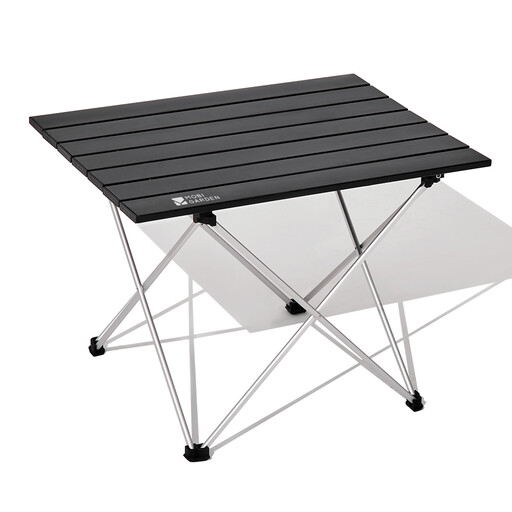
Why it suits this type of user: This compact table is designed for hiking, fishing, camping and short picnics. With a net weight of around 1.25 kg, it’s easy to take with you.
It packs down to around 16 × 8 × 57 cm, with the frame and tabletop stored separately. This makes it easier to pack than a table with a large, fixed bundle.
Aluminium tabletop and frame, X-shaped support, nylon foot caps and a stated static load capacity of around 20 kg.
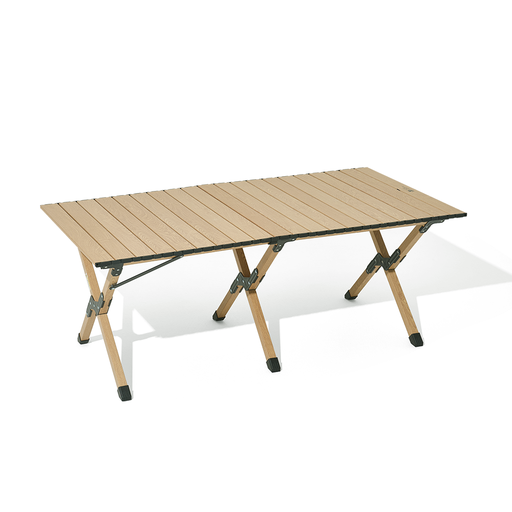
Why it suits this type of user: At 116 × 60 × 44.5 cm, this larger table is a good fit for campers and families who need more tabletop space for meals or outdoor cooking.
The X-shaped frame and PVC foot caps are construction features you can check, and they help when setting the table up on a firm, level surface.
Aluminium tabletop and frame, a net weight of around 4.9 kg, and a design that allows the tabletop and frame to be stored separately.
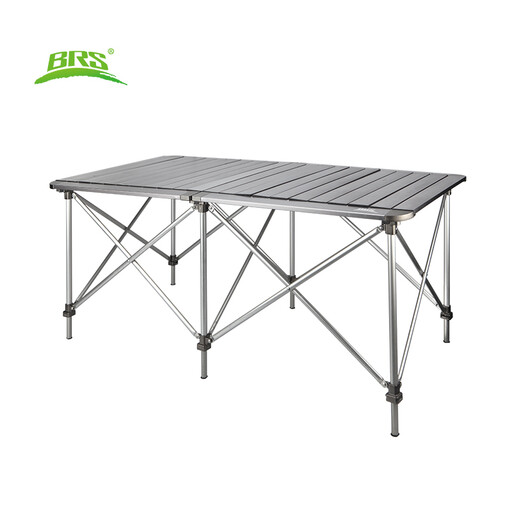
Why it suits this type of user: Measuring 126.5 × 69 cm, with two separately usable tabletop sections, this model is designed for group camping, overlanding, festivals and family use.
The telescopic legs are adjustable and feature a locking system. Check each lock before use and bear in mind the maximum load capacity for each side.
Aluminium construction, two work surfaces, adjustable height and a flat-folding design for storage in a car, campervan or camping storage box.
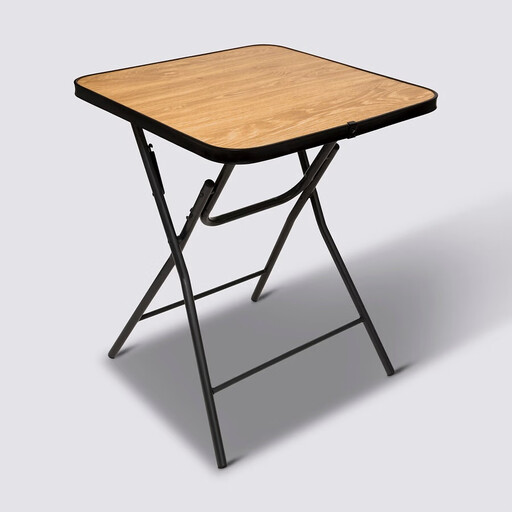
Why it suits this type of user: According to the product information, this 60 × 60 × 75 cm model is designed for indoor use. It could suit parties, hobby rooms or situations where you need some extra table space temporarily.
It’s clearly marked for indoor use, so you can avoid leaving the MDF tabletop exposed to rain or damp for long periods.
Melamine-coated MDF top, steel legs, a stated maximum load capacity of 50 kg and a folding design.
We’ve put together a complete, up-to-date list of products that meet these strict selection criteria and the applicable European safety regulations.
A small tabletop may be enough for one or two people. For a family or outdoor cooking, a table with a tabletop around 100 cm wide or more offers greater versatility. Measure your available storage space too, and check the folded dimensions.
Aluminium is often used for portable outdoor tables because it’s relatively lightweight. However, suitability depends on the overall construction, foot caps, locks and care instructions. Set the table up securely and don’t leave it out in the rain or direct sunlight for long periods if the manufacturer advises against this.
Fully open the table, lock all the legs and place it on a level surface. With an adjustable camping table, check that all the telescopic sections are set to the same height. Also avoid placing heavy items on one side of the tabletop.
