
Vandaag of morgen in huis

Kwaliteit gegarandeerd

Welkomstaanbiedingen ontgrendelen: GRATIS bezorging | Tot 80% korting | Gratis 30 dagen JoyPlus-proefperiode
Download de app
A folding camping table seems simple: unfold it, put your things on it and you’re ready to go. In practice, models vary considerably in size, stability, material and ease of storage. A table that looks spacious in a product photo may feel too small at the campsite. A lightweight model may be easy to carry, but could need extra care when set up on uneven ground.
For campers, families, festival-goers and caravan or motorhome owners, there are three common pitfalls to watch out for.
A table top measuring 120 cm wide sounds spacious, but remember to check the folded size too. In a small boot, caravan storage compartment or motorhome cupboard, the packed size is what matters most. A table that folds flat is generally easier to store than one with fixed legs.
Think about the shape as well. A square table is handy as a side table or for two people. For a family or group, a rectangular camping table may be more practical, as it gives you room to place plates and cooking equipment side by side.
An aluminium camping table is often easy to carry, but the material alone doesn’t tell you how stable it is. Check the leg construction, locks and feet. Telescopic legs should lock fully into place. For a roll-top table, pay particular attention to the connection between the table top and the frame.
Product descriptions sometimes use terms such as “high load capacity” or “extra stable”. Treat these as information from the manufacturer and check whether a specific maximum load is stated. Don’t place a camping stove, water container or heavy cool box on a table if its load capacity isn’t clear.
An adjustable-height camping table can be useful for eating, cooking or as a low table beside a chair. However, more adjustability isn’t automatically more useful. Decide in advance whether you need a standard-height table, a low cooking table or both. Also check whether each leg can be adjusted individually and whether the table remains stable on uneven ground.
An aluminium camping table is usually a good option for travellers who value low weight and portability. Aluminium doesn’t rust in the same way as untreated steel and is suitable for camping, picnics and overlanding. Be sure to check the joints, hinges and leg locks.
Plastic table tops are often easy to clean. A steel frame can add weight and stability, but makes the table less suitable for backpacking. A wooden table can create a lovely atmosphere for glamping or a regular campsite, but it’s generally less compact and heavier.
Use this practical guide as a starting point:
Don’t just look at the number of seats mentioned in the product description. Think about the space you’ll need for cups, pans, chopping boards and games too. A table for a family often needs more surface area than one used just for breakfast.
A good folding camping table should be easy to set up without tools. Before use, check:
After use, wipe away sand, mud and food residue with a damp cloth, then dry the table before putting it away. Store your camping table somewhere dry. Don’t leave aluminium, plastic or wood exposed to rain and direct sunlight for long periods if the care instructions advise against it.
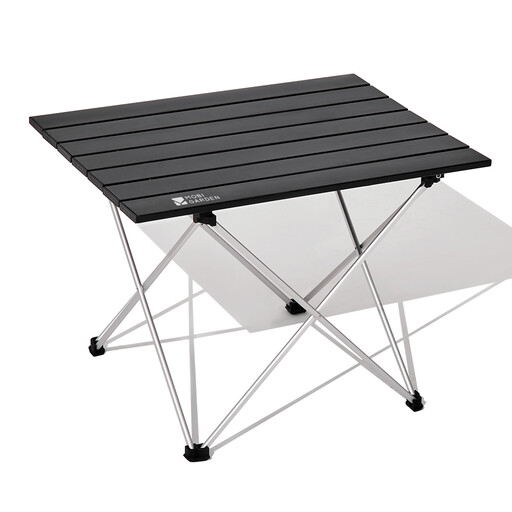
Why it suits this type of user: This compact camping table is designed for hiking, fishing and camping. Measuring 50 × 40 × 40 cm and weighing around 1.25 kg, it’s a good choice if you’re looking for a simple starting point.
The stated packed size of 16 × 8 × 57 cm makes the table easy to store neatly. The product information also gives a static load capacity of around 20 kg; distribute the weight evenly.
Aluminium frame, X-shaped support, nylon feet and separate storage for the table top and frame.
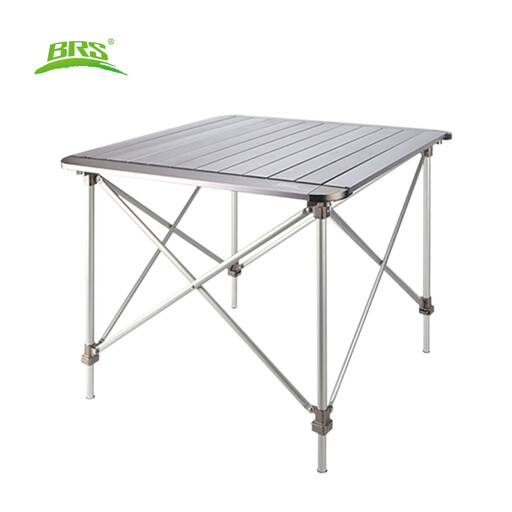
Why it suits this type of user: This 69 × 69 cm model combines a portable size with telescopic legs. It’s a good fit for campers who want one table for eating, cooking and use as a low side table.
The telescopic legs can be adjusted to several heights. The product description mentions leg locks; check they’re fully secured before use.
Aluminium alloy, tool-free set-up in under a minute according to the product information, and a flat-folding design for storage.
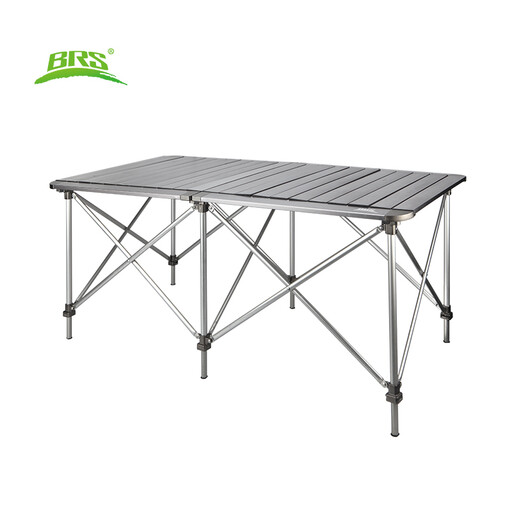
Why it suits this type of user: Measuring 126.5 × 69 cm, with two table sections that can be used separately, this model is a good choice for families, groups of campers, overlanders and festival-goers.
The double-section design lets you use one or both parts. This means you won’t need a separate table for every activity, as long as the packed size suits your vehicle.
Two independently usable table surfaces, adjustable telescopic legs and a flat-folding design according to the product description.
We’ve put together a complete, up-to-date list of products that meet these strict selection criteria and current European safety regulations.
Choose a firm, level surface and unfold the frame fully. Extend adjustable legs evenly and check all the locks. Don’t press down on one corner of the table top, and don’t use the table as a seat, step or stool. Keep cooking tables away from naked flames and extreme heat too.
Its lifespan depends on the material, hinges, load, transport and maintenance. An aluminium or plastic table may be suitable for regular outdoor use, but sand, moisture and overloading can wear the joints more quickly. Check the legs and fastenings regularly, and store the table somewhere dry.
A camping table doesn’t use electricity or fuel. The main costs are the purchase price, any maintenance and replacement parts, if available. When comparing tables, look beyond the price and consider the size, material, warranty terms and how you plan to transport it.
