
Vandaag of morgen in huis

Kwaliteit gegarandeerd

Welkomstaanbiedingen ontgrendelen: GRATIS bezorging | Tot 80% korting | Gratis 30 dagen JoyPlus-proefperiode
Download de app
A folding camping table needs to do more than simply unfold quickly. Whether you’re at a campsite, enjoying a picnic or having a barbecue, what matters most is whether the table stays stable, fits easily in your car and can support the weight you plan to put on it. A stylish look or low price won’t tell you much about that.
These three pitfalls are common:
Unclear load capacity
Some product titles mention a “high load capacity” without giving a specific maximum weight. Without that information, it’s difficult to tell whether the table is suitable for a camping stove, crockery or a heavy cool box.
A compact size that’s too small in practice
A lightweight camping table may be handy for two people, but leave too little room for a family or an outdoor kitchen. So check both the dimensions when it’s set up and its size when folded.
A wobbly frame on uneven ground
On grass, gravel or at a campsite, not all the legs will sit firmly on the ground by default. A table without clearly specified feet, sturdy joints or fully folding supports may shift or tip over more easily.
First, check the dimensions when the table is set up. A table around 100 to 120 cm wide has room for several plates and cooking essentials. A compact model may be enough for a quick coffee break, while a family may prefer a large camping table or a separate camping kitchen.
Also check:
A portable camping table weighing around 2 to 5 kg is usually easier to carry than a heavy wooden model. However, consider the balance between weight and stability. Ultralight doesn’t automatically mean suitable for intensive use.
An aluminium camping table is popular because aluminium is relatively lightweight and doesn’t rust easily. A table with a roll-up top often has a tabletop made of several separate aluminium slats. This makes it easier to store, but it may feel different from a single-piece tabletop.
Check the frame, too. Aluminium tubes are lightweight, while steel is generally heavier but may have a high stated load capacity in some models. The Huacan table, for example, has a stated load capacity of 100 kg. Always treat this as a static limit and spread the weight across the tabletop. Don’t place a heavy load on one small spot.
A folding camping table should be fully open before you put any weight on it. Check that all the legs are touching the ground and, ideally, set the table up on a firm, level surface.
Practical points to look out for include:
A table isn’t designed to be used as a step or a seat. Avoid putting concentrated pressure on one corner, too. This is particularly important with a folding picnic table that has a lightweight frame or roll-up top.
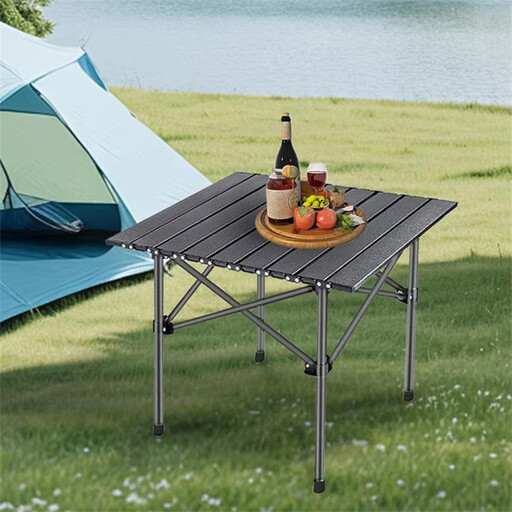
Why it suits this profile: Its compact dimensions and weight of around 2.2 kg make it a good fit for campers looking for a simple table for cooking, barbecuing or a quick picnic.
Its stated load capacity of 100 kg gives you a clearer idea of how much weight it can take than models with no stated limit. Always check how to distribute the weight, though.
Carbon steel construction, a folded storage size of 11 × 15 × 53 cm and an included storage bag, according to the product information.
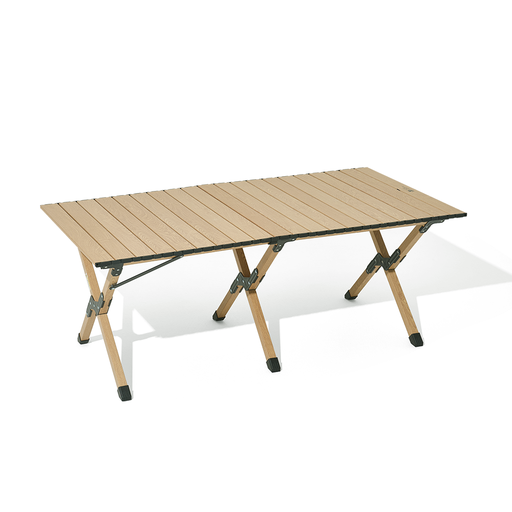
Why it suits this profile: This model is designed for anyone who wants to combine a generous tabletop with a lightweight aluminium design for camping, picnics or use around the home.
The product information gives both the dimensions when set up and details of the construction. This makes it easier to judge in advance whether 116 × 60 cm will suit your needs.
Aluminium tabletop and frame, weighing around 4.9 kg, with PVC feet and an X-shaped frame, according to the product description.
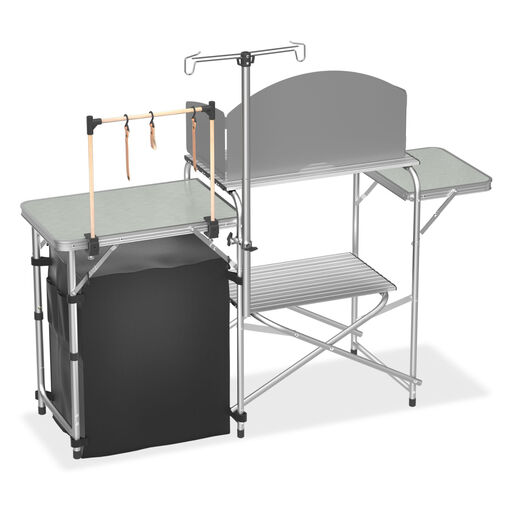
Why it suits this profile: If you need a separate cooking and prep area on longer camping trips, a cabinet table with several work surfaces may be more practical than a standalone table.
Its dimensions of 146 × 46 × 141 cm give you a clear idea of how much space you’ll need. Before buying, check that your tent, awning or storage area can accommodate it.
Three work surfaces, according to the product name, and a design that can be used as a camping kitchen and for storage.
We’ve put together a full, up-to-date list of products that meet these strict selection criteria and comply with the applicable European safety regulations.
Choose a firm, level surface. Fully unfold the frame and check that all the legs are stable. Spread heavy items across the tabletop and stay within the stated load capacity. Don’t use the table as a seat or a step.
Its lifespan depends on the materials, construction and how well you look after it. Don’t leave a table out in the rain or direct sunlight for long periods. Clean the tabletop according to the product instructions, dry it after use and store the table in a dry place. Regularly check that the screws, hinges and feet are still secure.
That depends on the stated load capacity, heat resistance and where you place the barbecue. Never put a hot appliance directly on a delicate or roll-up tabletop without first checking the product instructions. Use a firm, level surface and keep flammable materials away.
