What should you look for when choosing?
First, take test shots with the setup you actually plan to use. Only replace the camera if those images reveal a specific problem.
| What to consider |
What should you check? |
Who is this important for? |
| Colour against white |
Check whether you can set the white balance, and test several fabric colours under the same lighting. Nikon explains that an incorrect white balance can create an unwanted colour cast. |
If I want white and different fabric colours to look true to life across a product range, I assess test shots under the lighting I plan to use. Around 33% of consumers put colour reproduction first. |
| Visible textile detail |
Take a test shot of the whole item and of the smallest detail you want to show. Assess the lens and focus from your intended working distance. Shopify Netherlands discusses texture and detail in fashion photography. |
If I want to show the weave, seams or edges as well as the overall product, I check that these details are recognisable in my shots. For around 27% of consumers, textile detail is the top priority. |
| Consistent shots |
Check whether you can position the camera or phone securely, directly above the shooting area, and repeat the angle and lighting. Orbitvu describes flat-lay photography as shooting from above. |
If I want to photograph several folded items in the same way, I look for a fixed angle and consistent lighting. Around 20% of consumers prioritise consistency. |
| Complete setup |
Check whether you are buying a body or a kit with a lens, and make a note of which components you already have. Shopify Netherlands lists a camera, lens, tripod and background among the equipment used for product photography. |
If I first want to establish whether my current equipment is enough, I compare the complete setup rather than just the camera body. Around 20% of consumers put the overall kit configuration first. |
Cameras on Joybuy
This selection on Joybuy includes cameras you can assess for this photography task. Compare test shots taken from your intended shooting position, and check which lens or accessories are included with each version.
 No image available
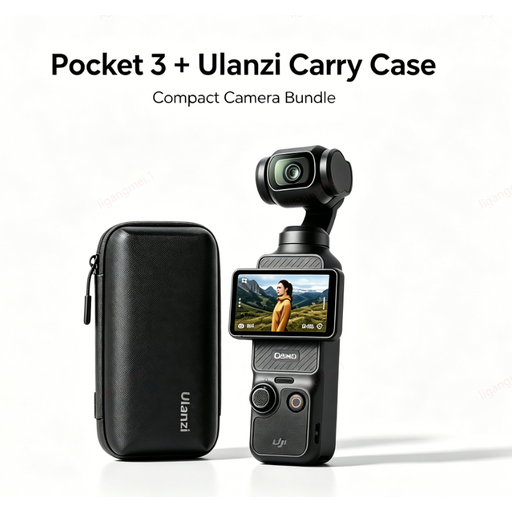
DJI Pocket 3 with Ulanzi Custom Storage Carry Case
Assess this camera by taking test shots from the fixed position you plan to use for photographing folded textiles.
The product name lists a DJI Pocket 3 camera and a Ulanzi storage case.
View on Joybuy
 No image available
Komery W6 digital camera
If you want to adjust the framing with zoom, check with test shots whether the combination suits your shooting distance.
The product name lists 12X optical zoom, 4K video, WiFi and 64 MP.
View on Joybuy
 No image available
DJI Osmo Pocket 3 Creator Combo
First check whether this version suits your needs for still textile photography; the product name also mentions video features.
The product name lists a 1-inch CMOS sensor and 4K/120 fps video.
View on Joybuy
 No image available
DJI Osmo Pocket 3
Take test shots of textiles to assess whether the camera suits the way you want to frame your product.
The product name lists a 1-inch CMOS sensor, 4K/120 fps video and a 2-inch rotating touchscreen.
View on Joybuy
 No image available
Sony ZV-E10 with 16-50mm zoom lens, black
If you want to compare a camera and lens together, assess test shots taken with the included lens from your intended working distance.
The product name lists a 16-50 mm zoom lens and the colour black.
View on Joybuy
Frequently asked questions
Do you need to buy a mirrorless camera straight away for folded textiles?
No. First try your existing smartphone with a fixed camera angle, a white background and controlled lighting. Compare test shots of light, dark and textured fabrics to decide whether you need more camera control.
How can you keep the background white without changing the fabric colour?
Keep the lighting as consistent as possible and check the white balance. Nikon explains that an incorrect white balance can create an unwanted colour cast. Assess the white background and textile colour together in a test shot, rather than simply editing the background to look whiter.
What should you check when buying a camera?
Check whether the offer is for a body or a kit with a lens, and whether you need a tripod, background or lighting. For a consumer purchase in the Netherlands, the seller is your point of contact for the legal guarantee; the Dutch government states that there is no fixed statutory guarantee period in the Netherlands. If you are buying for business, do not assume that consumer rights automatically apply.
Can you use a supplier’s photos in your online shop without permission?
Not necessarily. The Dutch government says you may only use other people’s copyrighted photos with the creator’s permission. So make sure you have the necessary usage rights before publishing photos from a supplier or photographer.
Do you always have 14 days to change your mind when buying a camera online?
Not in every case. According to the Dutch government, when you buy online as a consumer from a business, you often have 14 days to change your mind, although there are exceptions. If you are buying for business, do not assume the same consumer protection automatically applies.


