
Textile seller with colour variants
Takes repeatable photos where differences between fabrics and colours need to remain recognisable. Canon Europe highlights white balance as something to consider in challenging light.


For overview shots of folded piles, trying a phone you already own is a sensible first step. A mirrorless camera may be useful if you need more choice of lenses and shooting settings. Keep the lighting, white balance, background and camera position as consistent as possible: Canon Europe discusses white balance in challenging light, and a tripod helps you maintain a steady frame. For small fabric details, check the exact lens and working distance; a standard zoom is not automatically suitable as a macro lens.
Takes repeatable photos where differences between fabrics and colours need to remain recognisable. Canon Europe highlights white balance as something to consider in challenging light.
Wants to show features such as weave or stitching as well as a folded pile. To do this, assess the lens and working distance separately.
Needs to be able to move the setup and recreate the same frame at the next session. A tripod and a fixed shooting position can help; the Consumers’ Association lists size and ease of use among the things to consider when choosing a camera.
Choose this if: you mainly photograph whole piles and test shots are sharp enough and show usable colours.
Bear in mind: small fabric details may call for a different crop or more suitable equipment.
Choose this if: you take overview shots regularly and want to control the framing and settings yourself.
Bear in mind: the supplied zoom lens is not automatically a macro lens for small details.
Choose this if: you need to show weave, stitches or labels at close range and your current lens does not capture them as needed.
Bear in mind: a separate lens needs to be compatible with your camera mount and means more equipment.
| What to consider | What should you check? | Who should give this more weight? |
|---|---|---|
| Consistent colour | Test the white balance under the lighting you actually use and compare test shots of your own fabrics. | If I sell colour variants, I want fabrics to remain recognisable under changing workshop lighting. Around 36% of consumers therefore give colour consistency their highest priority. |
| Small fabric details | Check the magnification, minimum focusing distance and working distance of the exact lens. | When I want to show weave or stitching clearly, the lens needs to capture those details at my working distance. Around 29% of consumers prioritise the visibility of small fabric features. |
| Repeatable framing | Check whether a tripod, fixed background and screen position will work with the available worktable. | If others use the photography space in between, I want to be able to reset my camera and framing easily. Around 21% of consumers prioritise repeatable shots in a shared space. |
| Complete setup | Check what the kit includes and whether you need an extra lens or support for your crop. | When test shots from my existing phone already meet my needs, I do not want to buy equipment I do not need. Around 14% of consumers focus mainly on the complete setup they will need. |
Colour reproduction also depends on the lighting and the white balance you choose. A camera with more megapixels will not, by itself, make changing light consistent.
Before comparing cameras by sensor specifications, try using your own fabrics with a fixed lighting setup and white balance.
Changing light may mean retaking photos or spending extra time editing them.
Magnification and focusing distance depend on the specific lens, not the name of the camera body.
Before choosing a separate lens, check the lens and working distance with a test subject of the size you want to photograph.
Canon Netherlands describes the EOS R50 with RF-S 18–45mm as a kit with a standard zoom for general photography.
Sony describes the ILCE-6400L as a version supplied with a 16–50mm zoom lens.
Nikon describes the Z50II kit with NIKKOR Z DX 16–50mm VR as a combination with a standard zoom.
Fujifilm lists the XC15–45mm as the kit lens for the X-S20.
Camera options for this subject; use test shots for each model to check whether you can achieve the textile framing and detail you want.
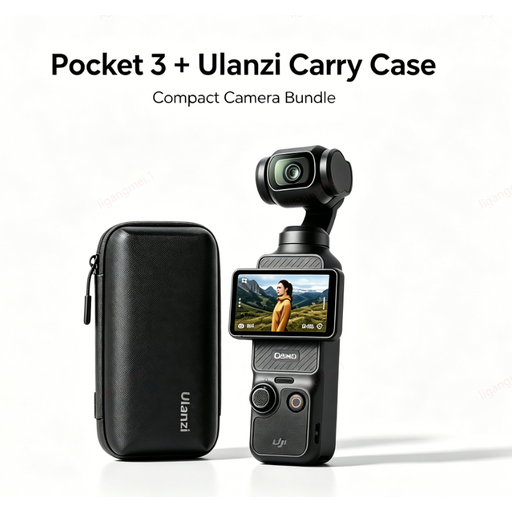 No image available
Take a test shot to see whether this camera captures your pile and the smallest details you want to show.
Bundle with a Ulanzi storage case.
 No image available
Take a test shot of your own textiles to see whether the framing and detail meet your needs.
The product title lists 4K, 80 MP UHD and 18X zoom.
 No image available
Take a test shot to check whether this version captures the fabric details you want at your working distance.
The product title lists 5K, 80 MP UHD and 18X zoom. An SD card is not included.
 No image available
Test the framing with your own pile and small fabric features before deciding whether this model suits your setup.
The product title lists a 1-inch CMOS sensor, 4K/120fps video, 3-axis stabilisation and a 2-inch rotating touchscreen.
 No image available
Use test shots to check whether the supplied zoom lens captures the overview and details you want.
The product title lists a 16–50mm zoom lens. According to the product information, an adapter and charger are not included.
No. Start by taking a test shot of the whole pile and of the smallest detail you need to show. Only choose a separate lens if the crop and working distance with your current lens are not suitable; magnification is a feature of the specific lens.
Make a note of the position of the camera, textiles and lights. Use the same background where possible, and check the white balance again if the lighting changes. A tripod helps you keep the framing consistent.
According to the Government of the Netherlands, you are entitled to a product that meets the required standards; there is no fixed statutory warranty period in the Netherlands. If a product is faulty, the seller is your point of contact. The guidance cited relates to consumer rights; check separately which terms apply if you are buying on behalf of a business.
That depends on who is taking the photos and how the images will be used. According to the Dutch Data Protection Authority, identifiable people are considered personal data, and a lawful basis under the GDPR is needed for business processing. For photos of employees taken by employers, the regulator says consent is the lawful basis in most cases. Keep other people out of your textile photos and assess any potential publication separately.