
Vandaag of morgen in huis

Kwaliteit gegarandeerd

Welkomstaanbiedingen ontgrendelen: GRATIS bezorging | Tot 80% korting | Gratis 30 dagen JoyPlus-proefperiode
Download de app
A day at the beach, a weekend camping trip, or a visit to a festival: it quickly becomes a chore of lugging coolers, chairs, bags, and toys. A foldable wagon seems like the perfect solution. But the market is flooded with models that look great at first glance but are quick to disappoint in practice.
Before you invest in a new utility wagon, it's crucial to know the common pitfalls. Many wagons buckle under the weight, are a nightmare to fold, or have wheels that give out after a single walk in the woods. We've listed the three most significant design flaws that can render your purchase useless.
collapsible wagon should be quick and compact to store. However, some models require a manual and significant effort to fold and unfold. The result is a "foldable" wagon that permanently lives in the garage because it's too much of a hassle.To avoid buyer's remorse, focus on a few concrete specifications. These determine whether your wagon will be a reliable assistant or a source of frustration.
Look beyond the maximum weight. The combination of load capacity and volume (expressed in litres) tells the whole story. A 200kg wagon is ideal for heavy items like tents or bags of potting soil. For a family outing, a capacity of 100-150 litres is usually more than enough to carry everything. A robust foldable utility cart has a steel frame that actually supports the weight while in motion.
The wheels are perhaps the most critical component.
foldable beach wagon, wide wheels are essential. They "float" over the sand instead of sinking into it.festival cart.A sturdy steel frame is the foundation of a durable wagon. Check that the pivot points and folding mechanism feel solid. The fabric of the container should ideally be made of a strong polyester, such as 600D Oxford. This material is wear-resistant, can take a beating, and is easy to wipe clean with a damp cloth.
Not all wagons are created equal. The right choice depends on what you'll be using it for most. Here are a few options, matched to specific user profiles.
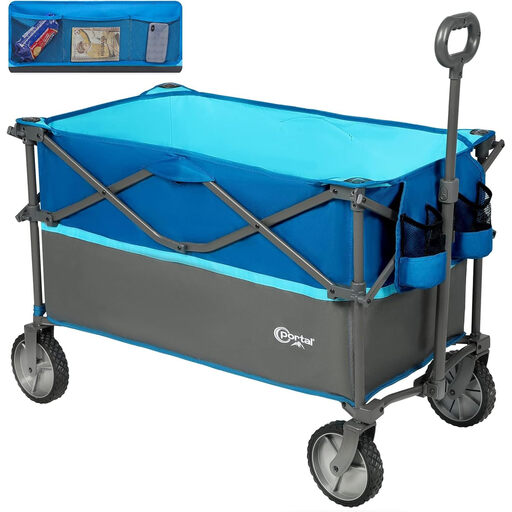
Why This Fits Their Persona: Ideal for families looking for a reliable all-rounder. With a volume of 228 litres, there's plenty of room for beach gear, a picnic basket, and toys. The cup holders are a practical addition for on-the-go use.
Its steel frame and robust wheels are designed for varied terrain, so you won't get stuck on a forest path. The folding mechanism is intuitive and requires no extra tools.
Load Capacity: 120 kg. Capacity: 228 litres. Extras: Built-in cup holders and side pockets.

Why This Fits Their Persona: Perfect for the serious camper, festival-goer, or for jobs in the garden. This `camping wagon` is built for heavy-duty work and effortlessly transports a full set of gear or heavy tools.
Directly addresses the 'misleading load capacity' pitfall. The 200 kg specification is supported by a reinforced steel frame and dual brakes, ensuring control and safety even at maximum load.
Load Capacity: 200 kg. Wheels: 360° swivel wheels with brakes. Construction: Heavy-duty steel frame.
A good wagon is the foundation for any outing. To complete your kit, a lightweight, foldable bag for personal items is just as important.
We have compiled a complete, up-to-date list of products that meet these strict selection criteria and EU regulations.
This varies greatly by model, from around 50 kg to over 200 kg. Pay attention to the difference between static and dynamic load capacity. The dynamic weight (while in motion) is the most important indicator. A cart with a steel frame and robust wheels will, in practice, come closer to its advertised maximum weight than a lighter model.
No, definitely not. An effective foldable beach wagon needs wide wheels. Thin, hard wheels dig directly into loose sand, making the cart nearly impossible to pull. Specifically look for models with "all-terrain" or extra-wide wheels if you plan to take the wagon to the beach often.
Most wagons are low-maintenance. The polyester fabric can usually be wiped clean with a damp cloth and some mild soap. On some models, the fabric is removable and can be washed at a low temperature (always check the care label). Rinse the wheels with water to remove sand and mud, and let the wagon dry completely before storing it to prevent mould.
