
Vandaag of morgen in huis

Kwaliteit gegarandeerd

Welkomstaanbiedingen ontgrendelen: GRATIS bezorging | Tot 80% korting | Gratis 30 dagen JoyPlus-proefperiode
Download de app
A foldable wagon seems like the perfect solution for everything: a day at the beach with the kids, transporting camping gear at a festival, or hauling heavy bags of potting soil in the garden. The convenience of a compact utility wagon that fits in your car's trunk is undeniable. Yet, many people end up with a purchase that brings more frustration than convenience. Before you invest in a folding wagon, it's crucial to recognise the common pitfalls.
Many models buckle under marketing claims that don't hold up in practice. These are the three most common problems:
wagon for the beach or a muddy festival ground requires something entirely different. They dig right in, leaving you dragging more than rolling.collapsible wagon should, above all, be easy to fold and unfold. However, some designs are so clumsy that it becomes a struggle. A heavy, complex system negates the entire benefit of a "foldable" model.To avoid a bad purchase, it's helpful to look beyond the marketing and focus on the specifications that truly matter. Pay close attention to the following three points.
These two are often confused.
garden cart for heavy bags of soil needs a high load capacity, even if the volume is less important.Always check the maximum load capacity and consider what you will realistically be transporting. A cart with 200 liters of volume but only a 50 kg load capacity is unsuitable for heavy groceries or camping gear.
The wheels determine where you can use the wagon.
camping wagon or festival cart.wagon with brakes is not an unnecessary luxury. On a slope, like a dune path or a hilly campsite, a brake prevents the cart from rolling away with your belongings. You'll usually find brakes on the front wheels.The durability of a foldable utility wagon depends on its frame and the fabric used. A steel frame is generally more robust and can support more weight. The fabric, often 600D Oxford polyester, is a strong and wear-resistant choice. Also, pay attention to how the cart folds. A "canopy" system that you pull up in the middle is often the quickest and easiest.
Not every wagon is the same. The right choice depends on your specific situation. Below, we match some popular models to different user profiles.

Why This Fits Their Persona: Perfect for beach days and grocery runs thanks to its large capacity, secure brakes, and a convenient drop-down tailgate for longer items like a parasol or bodyboard. A versatile and safe choice for families.
The PU wheels with bearings are a clear upgrade from standard plastic, allowing it to roll more smoothly on sand. The dual brakes provide control on slopes, a common weakness in cheaper models.
Large 300L capacity with drop-down tailgate; Dual brakes for extra safety; Wheels are easily removable for cleaning.
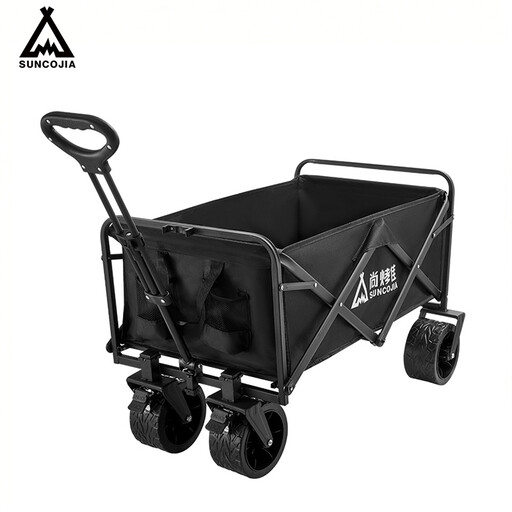
Why This Fits Their Persona: Built for heavy loads on unpredictable terrain. The enormous capacity and robust frame make it possible to transport a tent, chairs, and a cooler in a single trip from the car park to the campsite.
Where many carts struggle with weight, this model is built with a thickened steel frame. The wide off-road wheels are designed for mud and grass, not just pavement, preventing you from getting stuck.
Very large 350L capacity; Thickened steel frame for heavy loads; 360-degree swivel wheels for maneuverability.
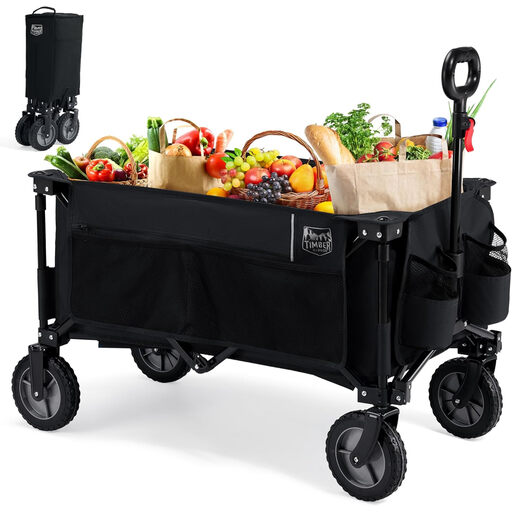
Why This Fits Their Persona: A functional all-rounder for jobs in and around the house. Ideal for transporting garden waste, potting soil, or tools, and can be stored compactly in the shed or garage after use.
This model focuses on ease of use. The 'one-pull' folding mechanism is genuinely simple and avoids the frustration of complex systems. It's not too heavy, yet still offers a decent 100 kg load capacity for most jobs.
Simple and fast folding mechanism; Convenient side pockets and cup holders for extra storage; Good balance between capacity (200L) and size.
We have compiled a complete, up-to-date list of products that fully meet these strict selection criteria and current safety regulations.
The load capacity varies greatly by model, typically between 70 kg and 150 kg. Pay close attention to whether the manufacturer specifies the static (stationary) or dynamic (while moving) load capacity. For heavy items like bags of soil or a full cooler, a model with a load capacity of at least 100 kg is recommended.
No, definitely not. A wagon for the beach needs wide wheels that won't sink into the sand. Standard, narrow plastic wheels are unsuitable for this. Opt for models with wide PU or rubber wheels if you plan to take the cart to the coast.
Most wagons have a polyester fabric bin that you can clean with a damp cloth and mild soap. On some models, the fabric bin is removable, which makes cleaning much easier. Always let the fabric dry completely before folding and storing the cart to prevent mildew. The wheels can usually be rinsed off easily with water.
