
Vandaag of morgen in huis

Kwaliteit gegarandeerd

Welkomstaanbiedingen ontgrendelen: GRATIS bezorging | Tot 80% korting | Gratis 30 dagen JoyPlus-proefperiode
Download de app
Sunglasses that fit in a jacket pocket, feel light and provide sufficient protection from sunlight sound simple enough. Yet there are several points to consider with foldable UV400 sunglasses, where marketing claims and real-world performance do not always match. A compact hinge can be convenient, for example, but it may also become vulnerable if the frame does not close properly. And a dark lens does not automatically mean it offers sufficient UV protection.
The Joybuy Product Recommendation Officer therefore helps you compare the most important specifications. This makes it easier to choose lightweight sunglasses for driving, cycling, walking or travelling without focusing solely on appearance.
The colour or darkness of a lens says little about its level of protection on its own. UV400 refers to protection against UV radiation up to a wavelength of 400 nanometres. Check that UV400 is clearly stated in the product specifications, rather than only in an advert title.
Claims about the percentage of UV radiation blocked come from the manufacturer. According to Beneunder’s own product information, some models block at least 99.8% or 99.9% of UV radiation. Treat this as a brand-specific product specification, not as a general guarantee for every pair of sunglasses.
Anti-reflective sunglasses can reduce distracting reflections, for example from wet roads or windows. However, be aware of the difference between anti-reflective treatment, polarisation and a dark tint. These are separate features.
Beneunder lists an OAR coating on several models and provides a brand-stated reduction in reflections. According to Beneunder’s own research, certain models offer at least 99.8% reflection reduction. When driving, also check that the lenses are not too dark for changing light conditions.
Portable sunglasses are often folded and unfolded several times a day. A cheap or stiff hinge can quickly become impractical as a result. Look at the type of construction, the folded dimensions and the care instructions.
A TR90 frame is lightweight and flexible. This makes it suitable for lightweight sunglasses, but it does not mean the product is unbreakable. Fold the sunglasses gently in the indicated direction and preferably store them in a hard case.
Choose sunglasses that explicitly state UV400 protection in the product specifications. Nylon, polycarbonate and TAC are different lens materials, each with their own properties. For everyday use, the following details are also relevant:
Sunglasses are not safety glasses. Do not use sports models for grinding, machining, welding or other high-impact activities.
Glasses that are barely noticeable are generally more likely to stay comfortably in place during a walk or bike ride. Consider both the weight and the dimensions:
One universal size will not fit every face equally well. Adjustable arms, soft nose pads or flexible hinges can help, but always check the measurements in inches or millimetres.
For everyday use and travelling, foldable UV400 sunglasses are particularly convenient when they can be stored compactly. A large frame offers more coverage, while a cat-eye or Boston style places more emphasis on appearance.
For cycling and other outdoor sports, grip, peripheral vision and a sturdy case are more important. According to the product description, photochromic lenses adjust to the amount of UV light. Bear in mind that a car windscreen can block UV light, meaning photochromic lenses may become less dark inside a car.
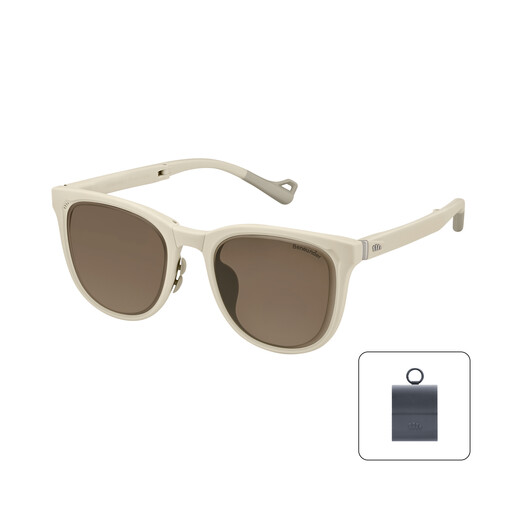
Why it suits this profile: A classic Boston shape for everyday use, with a folding design that fits easily in a jacket pocket or bag.
The product description mentions UV400, anti-reflective treatment and a folding construction, rather than simply referring to a dark lens.
TR90 frame, nylon lenses, adjustable arms and a stated weight of 0.97 oz.
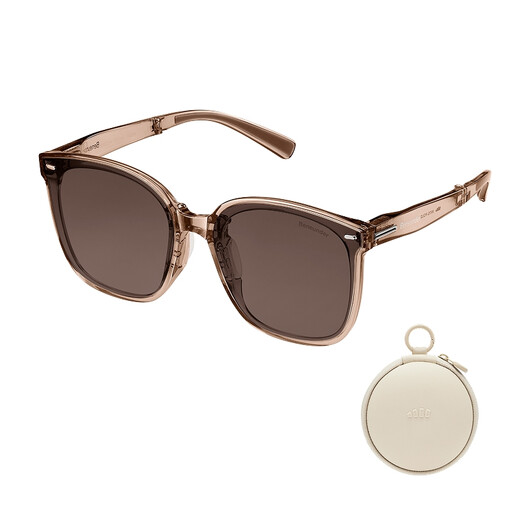
Why it suits this profile: For anyone who wants to combine a larger frame, clear coating information and compact storage with a stylish look.
The specifications mention a tri-fold design, a folded thickness of 35 mm and care with a microfibre cloth.
TR90 frame, UV400 nylon lenses, OAR anti-reflective treatment and a stated weight of 26 grams.

Why it suits this profile: Designed for cycling, running and other activities where changing light, grip and all-round vision are important.
The product information mentions both UV400 and photochromic, polarised lenses, along with a warning about use in the car.
TR90 frame, polycarbonate lenses, adjustable nose pads and a stated weight of 26 to 29 grams.
We have put together a complete, up-to-date list of products that fully meet these strict selection criteria and the applicable European safety regulations.
Foldable sunglasses do not automatically last longer simply because they are made from a sturdy material. Daily care makes a difference:
UV400 is an important product specification that refers to protection against UV radiation up to 400 nanometres. Also check whether the information comes from the manufacturer and whether the sunglasses are suitable for your intended use. Sunglasses with UV400 are not designed for looking directly at the sun or a solar eclipse.
Not always. According to OutdoorMaster’s product warning, photochromic lenses may become less dark inside a car because the windscreen blocks UV light. When driving, it is sensible to consider visibility, lens category and suitability for changing light conditions.
Use the folding mechanism without applying force, touch the lenses as little as possible and store the sunglasses in a protective case. Lightweight sunglasses made from TR90 may be flexible, but they are not unbreakable. Before buying, also check whether spare parts or care instructions are listed.
