
Vandaag of morgen in huis

Kwaliteit gegarandeerd

Welkomstaanbiedingen ontgrendelen: GRATIS bezorging | Tot 80% korting | Gratis 30 dagen JoyPlus-proefperiode
Download de app
A foldable UV-protective umbrella is useful for commuting, holidays, festivals and everyday walks. In the Netherlands, a single umbrella can protect you from both bright sunshine and a sudden shower. However, models vary considerably in size, canopy, frame and ease of use.
Marketing terms such as “blackout”, “windproof” and “UPF 2000+” do not tell the whole story. Always check the measurable specifications and consider how you will actually use the umbrella.
A brand may state a high UPF rating or percentage of UV blockage. According to the brand’s own research or product information, such a figure may apply under specific test conditions. This does not automatically mean that every area beneath the umbrella will be fully shielded. The angle of the sun, open sides and the way you hold the umbrella also play a part.
So do not focus on the figure alone. Look at the type of canopy too. An umbrella with a black coating or double layer may provide additional shade, while a single, thin canopy is generally designed with compactness in mind.
A five-fold umbrella will often fit in a handbag or rucksack, but usually has a smaller open diameter. This is practical for one person, but less suitable if you also need to keep a laptop bag, pushchair or shopping dry.
Compare the open diameter with the folded length. A model that is only a few centimetres longer when folded may still offer noticeably more coverage when opened.
An aluminium and fibreglass frame may contribute to stability and flexibility, according to the product description. However, no compact umbrella is designed to be used without risk in strong winds or storms. Hold the umbrella low in high winds, fold it away when the structure is visibly under strain, and allow it to dry completely after rain.
A sun protection umbrella with L.R.C. black coating is designed to limit light and heat on the inside of the canopy. According to Beneunder’s product descriptions, various models offer UPF 50+ and more than 99% UV blockage. UPF 2000+ is mentioned for some models. These are claims from the manufacturer’s product information, not a general guarantee for every use situation.
Also pay attention to the construction:
For personal use, an open diameter of around 90 to 95 cm is often a practical starting point. According to the specifications, the Beneunder BM527 and BM528 models have a diameter of approximately 94.5 cm. The BM398 and BM397 are larger, at approximately 99 cm, and therefore provide more coverage for your body and clothing.
A larger rain and sun umbrella will generally take up more room when folded. Check the length of the closed model before ordering.
A wind-resistant umbrella generally has reinforced ribs and a frame combining aluminium and fibreglass. The product information for the recommended models mentions, among other features, six reinforced ribs on various five-fold models.
For rainy weather, a water-repellent umbrella is more practical when the canopy allows water to bead up and roll off quickly. According to Beneunder’s product description, some models use a lotus-leaf-inspired water-repellent finish. “Quick drying” does not mean that you should store the umbrella while it is damp for long periods. Shake off excess water and allow the canopy to air-dry completely.
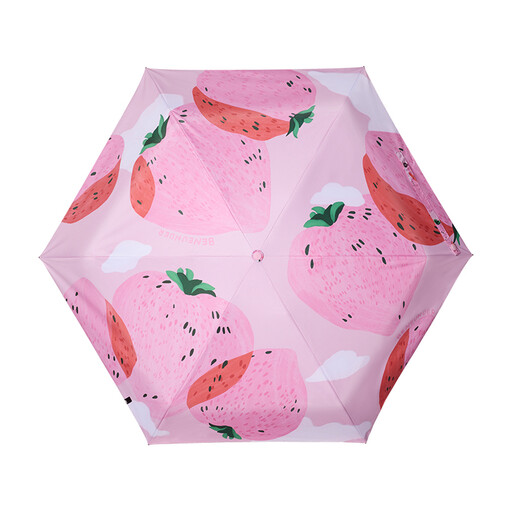
Why it suits this profile: This compact option is ideal for students, commuters and everyday use in a bag. According to the specifications, the umbrella weighs approximately 255 grams and has a folded length of around 19 cm.
With an open diameter of approximately 94.5 cm, it provides more personal coverage than many very small pocket models, while the five-fold design remains easy to carry.
L.R.C. black coating, six reinforced ribs, a water-repellent finish and a case that can be carried by hand or worn cross-body.
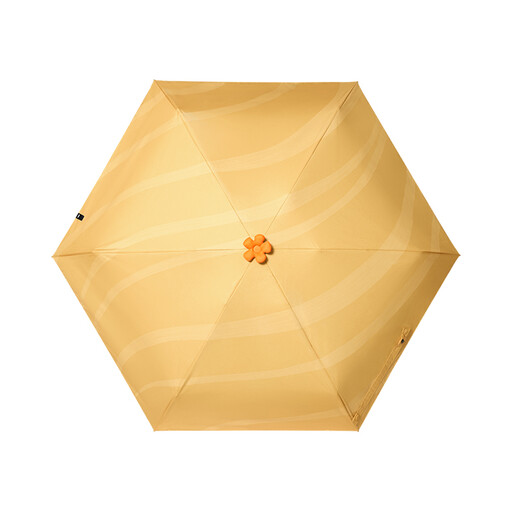
Why it suits this profile: This model combines a compact shape with a water-repellent finish and a carry case. It is well suited to travellers who want to take one umbrella with them for both sunny and wet days.
The specifications mention both UV protection and water repellency. This means you do not have to rely solely on an umbrella designed for sunny weather.
According to the product description: UPF 50+, approximately 247 grams, six reinforced ribs, around 20 cm when folded, and a case for carrying by hand or cross-body.
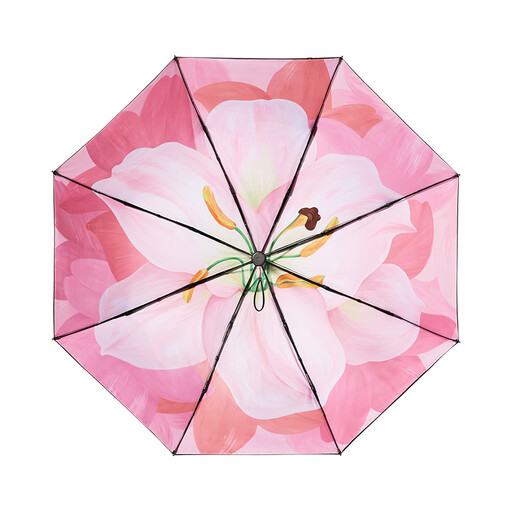
Why it suits this profile: This model is designed for users who prioritise more shade and body coverage over the smallest possible packed size, for example during longer walks or outdoor activities.
The larger open diameter of approximately 99 cm and the double layer make it clear that this is not an ultra-compact travel umbrella, but a model designed to provide more generous coverage.
Double canopy, polyester fabric with L.R.C. black coating, fibreglass-aluminium frame and a weight of approximately 370 grams, according to the product information.
We have put together a complete, up-to-date list of products that fully meet these strict selection criteria and the applicable European safety regulations.
A coating and frame will remain usable for longer when you look after the umbrella properly:
The service life depends on how often the umbrella is used, wind exposure, folding and maintenance. A compact umbrella that is squeezed into a full bag every day may wear out faster than one that is carefully stored in the supplied case.
Yes, if the product description states that the canopy is water-repellent or waterproof. Check whether the model is intended to be a rain and sun umbrella. Always allow the canopy to dry completely after a shower before storing it.
Usually. The extra folds can reduce the folded length. However, this often comes with a smaller open diameter or a more complex folding mechanism. When comparing a compact travel umbrella, check both the closed dimensions and the diameter.
The price depends on the number of canopy layers, coating, frame, carry case and folding mechanism. Do not compare price alone. Also consider the UPF rating, open diameter, weight, ribs and water-repellent properties. This helps you avoid buying a cheap model that proves less useful because of limited coverage or weaker components.
