
Vandaag of morgen in huis

Kwaliteit gegarandeerd

Welkomstaanbiedingen ontgrendelen: GRATIS bezorging | Tot 80% korting | Gratis 30 dagen JoyPlus-proefperiode
Download de app
Foldable sunglasses fit easily into a coat pocket, handbag or hand luggage. That makes them handy for commuting, driving, travelling and outdoor activities. However, models can differ considerably in fit, hinges, lens quality and comfort.
If you only look at the colour or price, you may run into familiar problems: a pair that feels loose after a few months, lenses that cause distracting reflections or a frame that turns out to be too large for everyday wear. Use the following checks to help avoid a disappointing purchase.
Foldable sunglasses have extra moving parts. Poorly made hinges can become stiff or feel too loose. Check how the sunglasses fold, whether the hinges move smoothly and whether the frame feels stable when unfolded.
Open and close a pair with a folding mechanism gently. Don’t force the arms if they don’t move smoothly.
A dark lens doesn’t automatically offer good protection from UV rays. Look specifically for the UV400 marking. According to the product information for the models mentioned, this indicates protection from UV rays up to 400 nanometres. Always check the product details and safety information for the specific model too.
A dark tint without clear UV specifications tells you little about the level of protection.
An anti-reflective coating can reduce reflections on the lens surface. Polarised sunglasses also filter out some of the distracting horizontally reflected light, for example from wet tarmac or water. This can be useful when driving, cycling or on holiday, but polarisation isn’t essential for everyone.
When driving, also check the display on your sat nav or smartphone. Some screens may look darker from certain angles when viewed through polarised lenses.
UV400 sunglasses are a sensible first choice for everyday outdoor use. Nylon, TAC and polycarbonate are different lens materials, each with its own properties. Nylon is often used for lightweight sunglasses; TAC is commonly found in polarised sports lenses, while polycarbonate is used in models where impact resistance is a consideration.
Claims such as “blocks 99.9% of UV rays” come from the brand’s product information. Treat these percentages as stated product specifications, not as a general guarantee for every pair.
Lightweight sunglasses feel more comfortable when worn for long periods. According to the product description, the Beneunder FD421 models weigh 26 grams and have a TR90 frame. This material is described in the specifications as flexible and lightweight.
Don’t just look at the weight. Check the frame width, bridge width and arm length too. Oversized sunglasses can look stylish, but may move around too much on a narrower face. A frame that presses against your temples won’t be comfortable for long periods either.
According to the stated specifications, the FD421 folds down to around 35 millimetres thick. The Boston-style FD01h is listed as folding down to around 1.15 inches thick. Ideally, store foldable sunglasses in a hard or sturdy case. Keys and grit can scratch the lenses if you leave them loose in a bag.
Clean the lenses with a soft microfibre cloth. For sports models, the product information recommends rinsing them with clean water first and avoiding strong or alcohol-based cleaners.
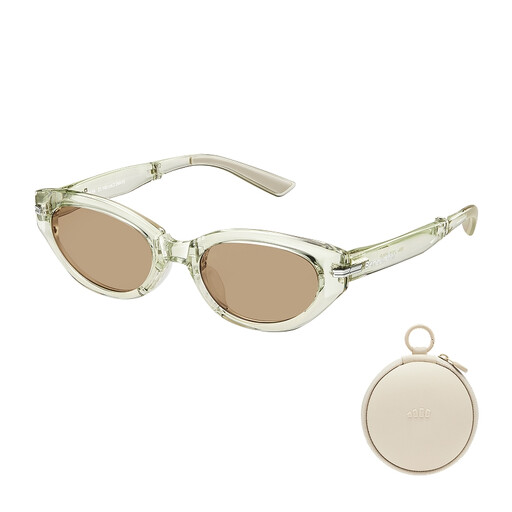
Why it suits this profile: This cat-eye style pairs a striking shape with a foldable design for everyday wear, shopping and travel.
The product information lists TR90, UV400, an anti-reflective coating and flexible five-barrel hinges. Be sure to check the fit against the stated measurements.
A frame width of around 5.8 inches, air-cushion nose pads and soft arms, according to the product description.
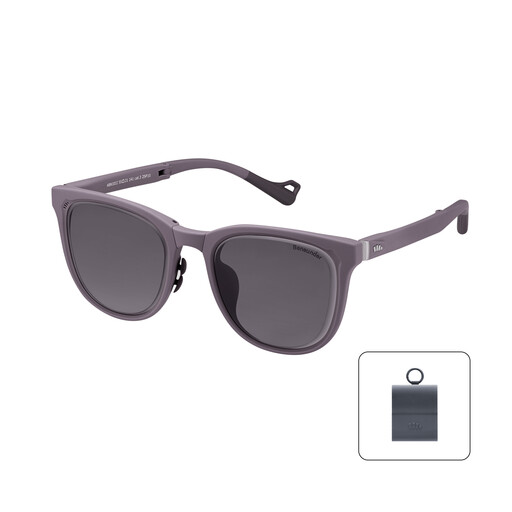
Why it suits this profile: The classic Boston shape works well with business wear and for everyday use, while the adjustable arms help accommodate different face shapes.
The description mentions adjustable arms, double nose pads and several lens coatings. These features give you more control over the fit and everyday care.
A TR90 frame, nylon lenses with UV400 and anti-reflective, oil-repellent and scratch-resistant coatings, according to the product information.
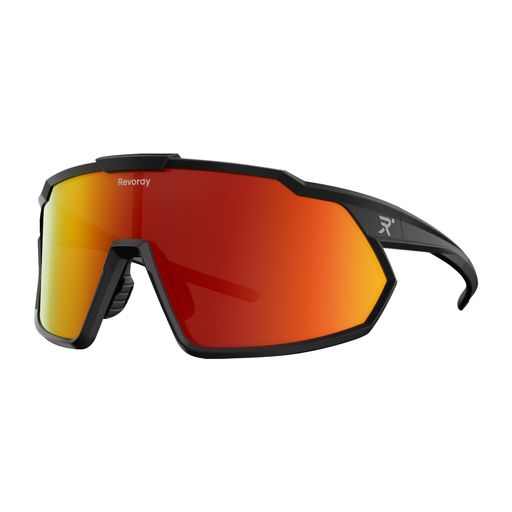
Why it suits this profile: For cyclists and active users, a secure fit, polarised TAC lenses and low weight matter more than a classic frame.
The product information lists adjustable, non-slip nose pads and arms, as well as water- and oil-repellent coatings. The manufacturer says the model has been tested to ANSI Z87.1.
Around 33 grams, UV400 according to the product information, and TAC polarised lenses with around 15.2% light transmission.
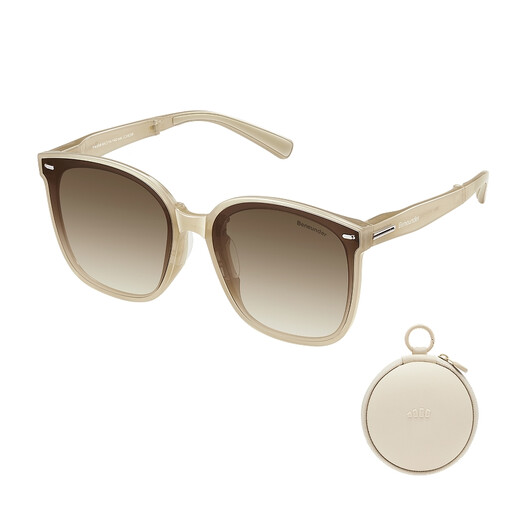
Why it suits this profile: The large lenses offer broad coverage, while the compact tri-fold design is handy for hand luggage, the glove compartment or a day bag.
The stated specifications list a weight of 26 grams, a folded thickness of around 35 millimetres and a TR90 frame.
UV400 lenses, an OAR anti-reflective coating and an oversized frame; the stated light and reflection values come from Beneunder’s product information.
We’ve put together a complete, up-to-date list of products that meet these strict selection criteria and the applicable European safety regulations.
They can be, provided they fit well, don’t distort your vision and let enough light through. An anti-reflective coating can help reduce distracting reflections. With polarised sunglasses, some LCD screens may be harder to see clearly from certain angles. Test them with your sat nav screen beforehand.
Their lifespan depends on the hinges, materials, use and care. Fold them gently as designed, don’t leave them loose among hard objects and store them in a case. Replace them if the lenses are deeply scratched, the frame becomes misshapen or the arms no longer feel secure.
A lightweight frame can feel comfortable when cycling or walking, but ordinary foldable sunglasses aren’t automatically sports sunglasses. For more intensive use, non-slip features, a secure fit and lenses suited to the activity are important. For cycling sunglasses with UV400, check the model’s stated impact and safety information too.
