
Vandaag of morgen in huis

Kwaliteit gegarandeerd

Welkomstaanbiedingen ontgrendelen: GRATIS bezorging | Tot 80% korting | Gratis 30 dagen JoyPlus-proefperiode
Download de app
A foldable storage cabinet is handy when you need extra storage space in a hurry, whether in the bedroom, living room, student room or home office. You can use it to store clothes, toys, books, snacks and small household items without having to install a permanent cabinet.
However, not every folding storage cabinet looks the same in everyday use as it does in the product photo. A cabinet may look spacious but have a low weight capacity. Unclear dimensions, a poor closure or an unstable stack can also lead to disappointment. Use these checks to make a more informed choice.
A stated capacity, such as a 48-litre storage box or 67-litre storage box, doesn’t tell you everything. The usable space inside may be smaller because of thick walls, a frame or rounded corners. So measure the items you want to store, and check the internal dimensions if they’re available.
A wide opening is practical for clothes. For books and toys, a cabinet with several levels can make things easier to organise. If you mainly want to store boxes or supplies, a large single compartment may be more useful.
A cabinet may be spacious, but not suitable for heavy books or full containers of supplies. Check the weight capacity per level, not just the total number of compartments. Some product descriptions give a guideline of around 15 to 25 kg per level. Always check whether this applies to the specific model.
Place heavy books at the bottom and lighter clothes at the top. This reduces the strain on the structure and helps keep the cabinet stable.
A stackable storage unit isn’t automatically suitable for every surface or stack height. An uneven floor, a cabinet that hasn’t been assembled correctly or an overloaded top level can make it less stable. So check:
First, measure the space where you plan to put the cabinet. Leave extra room to open a door or pull out a compartment. A single-level cabinet is often easier to fit in a small bedroom or student room. A four-tier model can hold more items, but it also needs more vertical space.
Deep, wide compartments are handy for storing clothes. An open layout works well for storing toys, as children can pick things up and put them away more easily. For storing books, sturdy horizontal levels and compartments of a suitable size are important.
A 48-litre storage box is suitable for a small amount of clothing, accessories, toys or office supplies. It’s generally easier to move and more likely to fit in a smaller room.
A 67-litre storage box offers more space for bulky items such as bedding, larger garments or seasonal belongings. However, it can become heavier when full. So check the weight capacity before storing books, supplies or other heavy items in it.
Check what the panels, seams and closures are made of. Plastic is easy to wipe clean, while fabric-like sections may be less suitable for damp rooms. Ventilation usually isn’t a major concern in a bedroom or office, but air circulation may matter in a storage room or when storing clothes.
Don’t place a foldable storage cabinet against a damp wall, and follow the manufacturer’s care instructions. Use a lightly damp cloth and avoid harsh cleaning products unless the material is designed to withstand them.
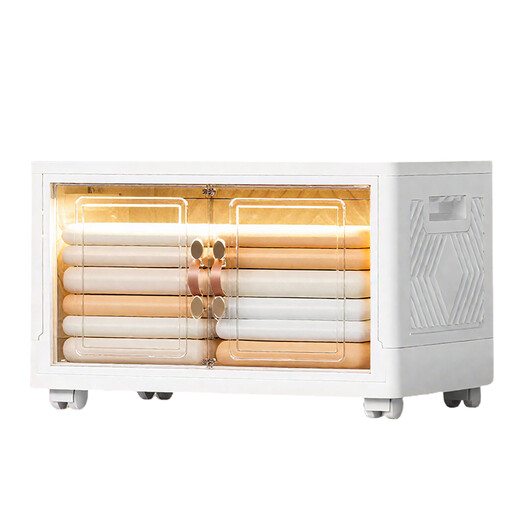
Why it suits this type of buyer: A single level keeps things organised and takes up less space. Its 48-litre capacity is suitable for clothes, toys, snacks or books in a smaller home or student room.
The layout makes it easier to avoid stacking the cabinet too high. Be sure to check the exact external dimensions and weight capacity before you buy.
48-litre capacity; single level; foldable design, as stated in the product name.
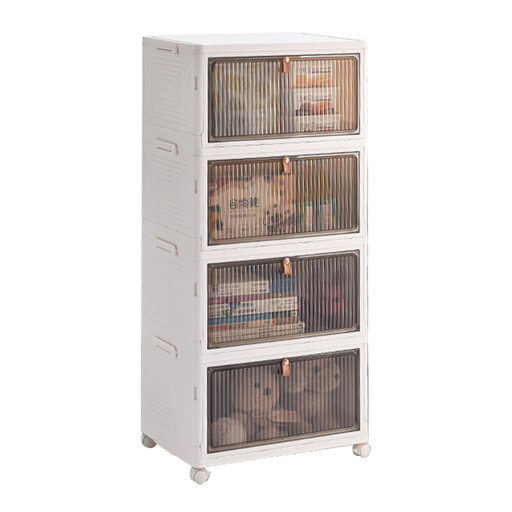
Why it suits this type of buyer: Four levels make it easy to organise items such as books, shoes, snacks and clothes in a bedroom, office or living room.
The four separate levels reduce the chance of everything getting lost in one deep compartment. Check the assembly and stability information before stacking.
Four levels; described as extra large; suitable for a bedroom or office.
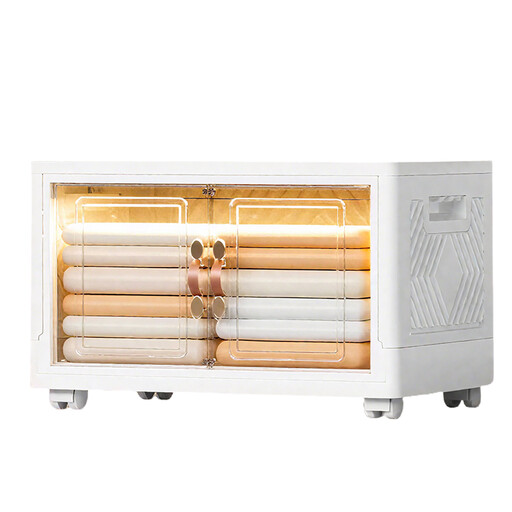
Why it suits this type of buyer: Its 67-litre capacity is designed for larger quantities of items, such as seasonal clothes, bedding, toys or supplies.
A single large compartment means you don’t have to split wider items between several smaller sections. Pay particular attention to the total weight when the cabinet is full.
67-litre capacity; single level; foldable design, as stated in the product name.
We’ve put together a complete, up-to-date list of products that meet these strict selection criteria and comply with current European safety regulations.
Place the cabinet on a level surface and keep heavier items on the lower levels. Use lidded containers in an open cabinet for small parts, cables or craft supplies. Labels are useful in a bedroom storage area, so you don’t have to open every compartment to find what you need.
Flexibility is especially important when choosing a storage unit for a student room. Pick a size that will fit through doorways and up staircases when you move. A foldable model is also easier to put away when you need more space temporarily.
Assemble the cabinet fully according to the instructions, place it on a level floor and put heavier items at the bottom. Only stack it if the product is designed for stacking, and don’t exceed the stated weight capacity.
Its lifespan depends on the material, load, frequency of use and storage conditions. Regularly overloading it, dragging it across the floor or placing it in a damp room can speed up wear and tear. If you use it frequently, check the seams, closures and panels.
That depends on the capacity, design and lifespan you’re looking for. A foldable cabinet often needs less assembly and is easier to move. Don’t compare just the purchase price: also consider the number of usable compartments, the weight capacity and whether it suits your space.
