
Vandaag of morgen in huis

Kwaliteit gegarandeerd

Welkomstaanbiedingen ontgrendelen: GRATIS bezorging | Tot 80% korting | Gratis 30 dagen JoyPlus-proefperiode
Download de app
A foldable shopping trolley is useful when you do not want to carry your shopping, luggage or camping equipment. However, models vary considerably in load capacity, wheel type and ease of storage. A compact trolley for a few groceries has different requirements from a transport trolley for heavy boxes.
Pay particular attention to these three common pitfalls:
For everyday shopping, a capacity of around 30 to 60 litres is often sufficient. A 30-litre model is relatively lightweight and suitable for smaller shops. If you visit several shops or also carry bottles and packaged goods, it may be better to choose a larger wheeled shopping trolley.
Pay attention to the difference between:
A stated capacity of 60 kg does not mean that every surface or staircase is suitable for that load. Follow the manufacturer's safety instructions and do not exceed the stated limit.
Two large wheels are common on a traditional wheeled shopping trolley. They roll well on flat pavements and shop floors. Swivel wheels make turning easier, while wide wheels are better suited to grass, sand or uneven paths.
A stair-climbing shopping trolley with multiple PU wheels can be practical on short flights of stairs, kerbs and uneven terrain. Use the trolley carefully, keep a firm grip on the handle and make sure the contents cannot shift. For the beach, campsite or a picnic, a wide camping trolley is often more suitable than a narrow trolley.
An aluminium frame is generally lightweight. Steel or iron may offer greater structural strength, but usually increases the trolley's own weight. Oxford fabric, PP and PVC are commonly used for the bag, compartment or wheels. Check whether the bag is removable and how the material may be cleaned.
A good foldable shopping trolley should lock securely into place after being unfolded. Check the following before use:
A trolley for older people does not necessarily need to be large. An adjustable handle, low unladen weight and simple folding mechanism can be more important in practice than additional features.
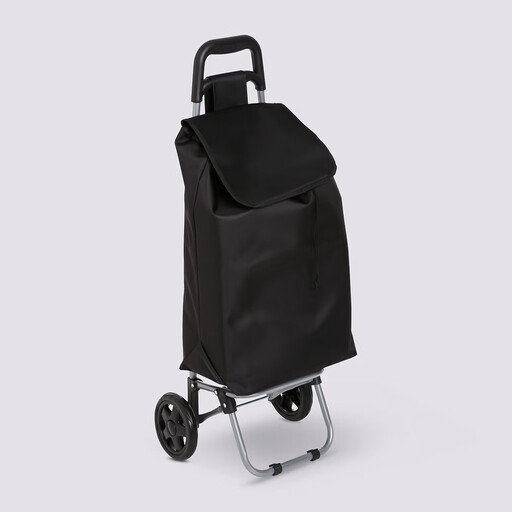
Why it suits this profile: This model is designed for smaller shops and everyday use. With a capacity of 30 litres and a stated product weight of 1.33 kg, it is a straightforward choice for anyone buying a shopping trolley for the first time.
The capacity and dimensions are clearly specified. This means you are not buying a large trolley without knowing how much it can hold. The manufacturer also states that the trolley is foldable.
30-litre capacity, two wheels, foldable design and a relatively low stated unladen weight.
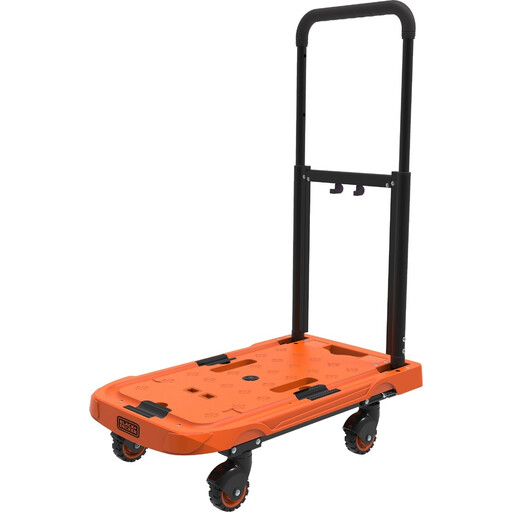
Why it suits this profile: The platform trolley is suitable for boxes, compost, bags and other items that do not need to go in a shopping bag. The push handle can be adjusted to 64, 76.7 or 89.4 cm.
The stated maximum load of 90 kg, loading platform measuring 61.4 × 37.3 cm and folding mechanism provide more specific information than a marketing term such as “heavy-duty” alone.
Maximum 90 kg according to the product information, adjustable handle and two fixed plus two swivel wheels.
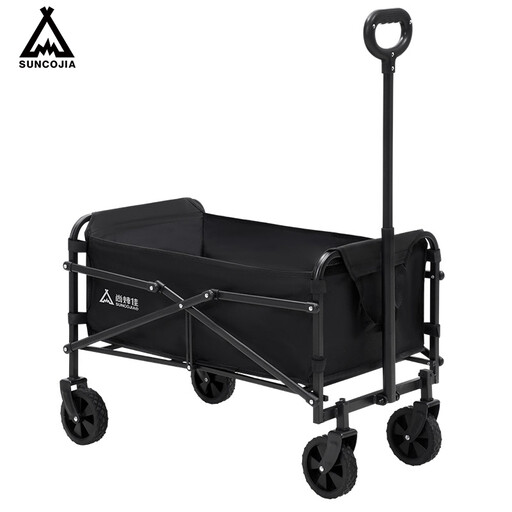
Why it suits this profile: This transport trolley is designed for camping, trips to the beach, fishing trips, picnics and larger shops. The product information states a 170-litre loading capacity and a maximum load of 100 kg.
The wide cargo design and multidirectional wheels are clearly intended for outdoor use. The maximum load is listed separately, avoiding confusion between capacity and load-bearing ability.
170-litre capacity, stated load of up to 100 kg, foldable frame and swivel wheels for different surfaces.
We have put together a complete, up-to-date list of products that fully meet these strict selection criteria and the applicable European safety regulations.
Fully unfold the frame and check that the locking mechanism is secure. Attach any loose wheels or the bag according to the instructions. Place heavy shopping at the bottom and check that the wheels turn freely before setting off. On a model with a brake, apply it when the trolley is stationary.
Its lifespan depends on the load, surface, moisture and maintenance. Regularly check the wheel axles, seams, hinges and handle. Allow a wet camping trolley to dry completely before folding it away. A trolley that is frequently used outdoors requires more maintenance than a model used on shop floors and pavements.
There are no fuel or electricity costs. However, parts such as wheels, fittings or the bag may wear out over time. When buying, therefore, consider replaceability, warranty information and the availability of clear maintenance instructions. Choosing a suitable load capacity also helps prevent unnecessary strain on the frame.
