
Vandaag of morgen in huis

Kwaliteit gegarandeerd

Welkomstaanbiedingen ontgrendelen: GRATIS bezorging | Tot 80% korting | Gratis 30 dagen JoyPlus-proefperiode
Download de app
A foldable shopping trolley can make it easier to carry groceries, market purchases and camping gear. However, models vary considerably in load capacity, wheel type, storage space and ease of use. A trolley that looks compact in the shop may turn out to be too heavy at home or not stable enough on pavements and steps.
Use this guide to compare the key features and spot common pitfalls before buying a shopping trolley.
A 50- or 60-litre bag tells you mainly how much space it offers. It doesn’t automatically mean you can fill it entirely with heavy bottles. Always check both the volume in litres and the maximum load capacity in kilograms.
Pay attention to how the load is distributed, too. A tall trolley with an uneven load can tip over if heavy items are placed at the top. A cover flap, drawstring or securing strap can help keep the contents in place.
A stair-climbing shopping trolley with three wheels on each side may move more easily over kerbs, uneven paving and some steps. That doesn’t mean you can pull it up every staircase without effort. The surface, step height, load and the way you hold the trolley all matter.
Take your time when using a fully loaded trolley on stairs, and keep the load secure. Also check that the wheels are suited to your everyday route, whether that includes cobbles, walkways or high pavements.
A folding shopping trolley takes up less space when folded, but check its dimensions both open and folded. The folded depth is especially important if you have a small hallway, meter cupboard or car boot. Check whether the bag is removable and whether the frame can be used without it as a foldable hand truck.
Two large wheels are often suitable for smooth shop floors and pavements. EVA wheels can roll quietly, while PU wheels are described in product information as suitable for a range of surfaces and, on some models, for use on stairs. A six-wheel system moves differently from a standard shopping trolley with wheels.
Check:
An aluminium frame can be relatively lightweight. Steel or rust-resistant metal can provide more structure, but often adds weight. For everyday use, the combination of frame, axle, joints and base support is particularly important.
An Oxford bag with a water-repellent coating is described in the product information as offering protection from dust and light rain. That doesn’t mean it’s waterproof. If you’re considering a shopping trolley with a cool bag, check how large the insulated compartment is, too. Insulation can help maintain the temperature for a certain period, but it’s no substitute for a fridge or actively cooled cool box.
A lightweight trolley is easier to lift into a car or carry up stairs if you use it often. A larger model can hold more shopping, but will naturally become heavier when fully loaded. Check both the unladen weight and the maximum load capacity.
An adjustable or ergonomically shaped handle can be comfortable for people of different heights. It’s a practical design feature, but it doesn’t guarantee the same experience for every user.
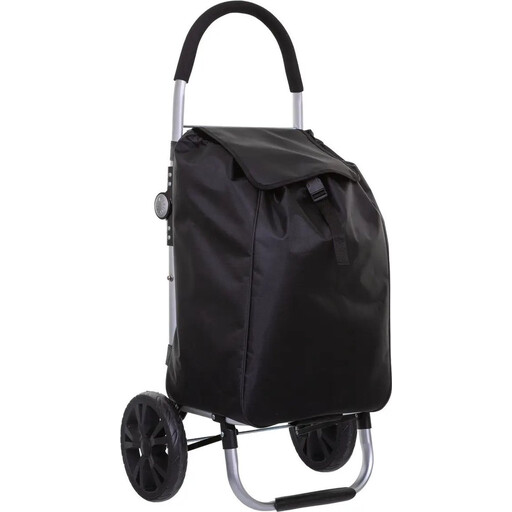
Why it suits this shopper: According to the product information, this model has a capacity of 51 litres, weighs 2,5 kg and comes with a removable bag. That makes it suitable for regular supermarket trips and homes with limited storage space.
The product specifications list the capacity, dimensions and weight. Before buying, check the permitted load, as the stated 51 litres doesn’t automatically tell you the weight limit.
51-litre capacity, foldable design, removable bag and two EVA foam wheels.
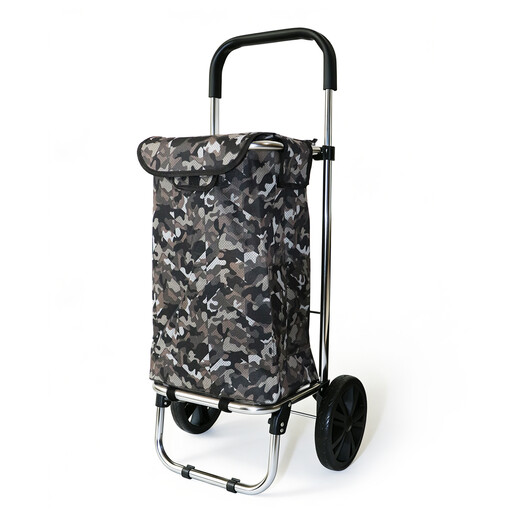
Why it suits this shopper: According to the product information, the bag has a capacity of around 45 litres and the frame is made from rust-resistant stainless steel. This trolley is designed for shopping, laundry and regular transport.
The product specifications list both the bag dimensions and the material. This lets you assess the storage space and construction separately, rather than relying on a marketing term alone.
Around 45-litre bag, 600D Oxford fabric, two EVA wheels and a foam handle at approximately 96 cm high.
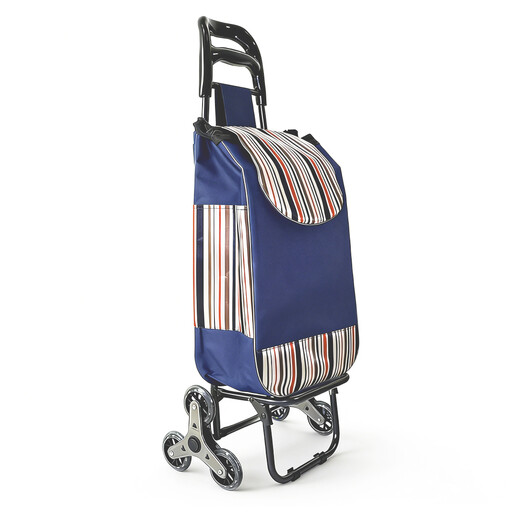
Why it suits this shopper: The 2-in-1 design combines a 38-litre Oxford bag with a hand truck function. Its six-wheel system is designed for stairs, kerbs and uneven paving.
The wheel type and stated hand truck capacity of 30 kg are clearly specified. Even so, distribute the load evenly when using it on stairs, and check your route beforehand.
38-litre capacity, six PU wheels, 30 kg hand truck capacity, removable bag and a frame that folds flat.
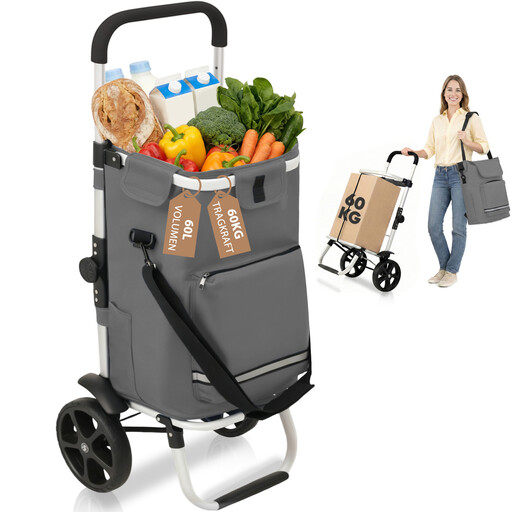
Why it suits this shopper: This model combines a trolley, hand truck and removable shoulder bag. It has a stated capacity of 60 litres and an insulated compartment with a cup holder, making it suitable for shopping, picnics and camping.
The product information describes the insulated compartment as helping to maintain the temperature. Don’t expect active cooling, and use a suitable cool pack for perishable food.
60-litre capacity, 3-in-1 design, aluminium frame, insulated compartment and securing strap.
We’ve put together a complete, up-to-date list of products that meet these strict selection criteria and the applicable European safety regulations.
Wipe the frame, wheels and outside with a slightly damp cloth. Always follow the care label for the bag. Some Oxford bags can be hand-washed, but shouldn’t be tumble-dried. Let all the parts dry completely before folding the trolley away.
Its lifespan depends on the load, surface, moisture and maintenance. Overloading puts particular strain on the wheels, axle and joints. Store the trolley somewhere dry, check the wheel attachments regularly, and don’t use it as a seat or step.
Not necessarily. A low unladen weight makes a trolley easier to lift, but doesn’t in itself tell you how much it can carry. Always compare the product weight with the stated maximum load capacity, and distribute heavy shopping evenly across the base.
