
Vandaag of morgen in huis

Kwaliteit gegarandeerd

Welkomstaanbiedingen ontgrendelen: GRATIS bezorging | Tot 80% korting | Gratis 30 dagen JoyPlus-proefperiode
Download de app
A foldable shopping trolley is handy for groceries, market trips, camping and carrying heavy items. Yet in practice, a trolley can disappoint. A nice product photo tells you little about its load capacity, wheel construction or storage space.
Pay particular attention to these three common pitfalls:
If you check the key specifications beforehand, you'll choose more wisely and avoid discovering the trolley is impractical after just a few shopping trips.
First, look at the maximum load capacity and then at the capacity. A 60-litre trolley might be suitable for a big supermarket shop, but also check whether the frame, bag and wheels can handle that load.
For everyday use, these questions are useful:
A transport trolley with wheels for garden gear or camping equipment often needs a different construction than a shopping trolley for older people. A large bag is nice, but a trolley that's too heavily loaded can be difficult to steer.
In British towns and cities, you'll encounter pavements, cycle paths, kerbs and sometimes stairs. A shopping trolley with stair-climbing wheels uses multiple wheels on the side of the frame. According to the product description of such models, PU wheels are designed for movement over stairs and uneven ground.
Check the following:
For smooth shop floors, a lightweight two-wheeled trolley may be sufficient. For cobbles, kerbs or a campsite, a wider base or a four-wheeled foldable camping trolley could be more practical.
A foldable shopping bag on wheels should not only be portable, but also easy to store. Check the folded dimensions if you plan to keep the trolley in a hallway, cupboard or boot.
Also look out for:
A sturdy shopping trolley isn't always the lightest choice. Aluminium can keep the weight down, while steel is often used for transport trolleys with a higher load rating. Choose based on how you'll use it, not just on the material shown on the product page.
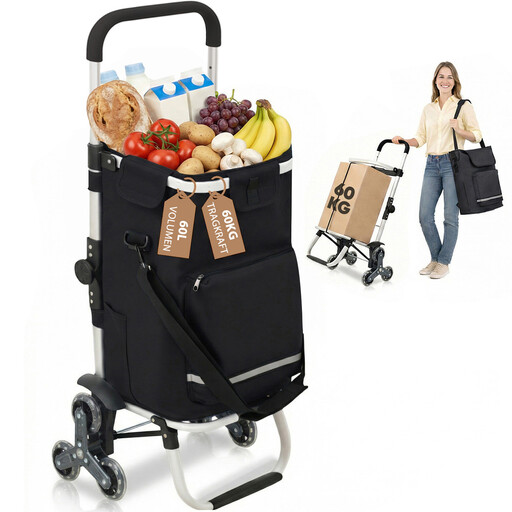
Why this fits the profile: The 60-litre capacity and 3-in-1 design suit regular grocery shopping and occasional transport around the home or on the go.
The product description states both a 60-litre capacity and a maximum load capacity of 60 kilograms. Don't treat these two values as the same thing.
Aluminium frame, adjustable handle, six PU wheels and dimensions of 36 × 42 × 98 cm according to the product data.
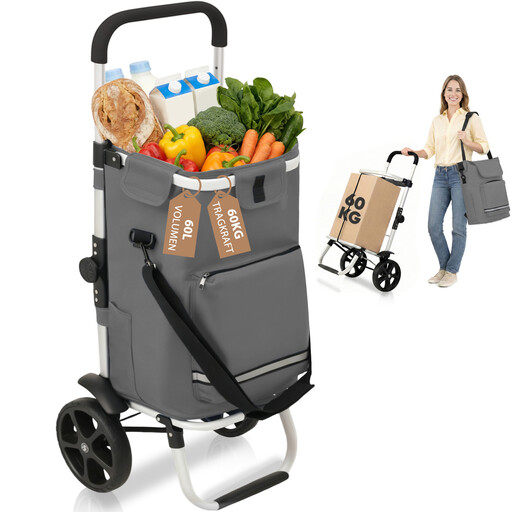
Why this fits the profile: This trolley combines grocery shopping with an insulated compartment for day trips, picnics and short outdoor activities.
The product data states a maximum weight of 60 kilograms and advises securing the load. The cool compartment should not be mistaken for a fully waterproof bag.
3-in-1 use, detachable shoulder bag, aluminium frame, Oxford fabric, adjustable handle and integrated insulation.
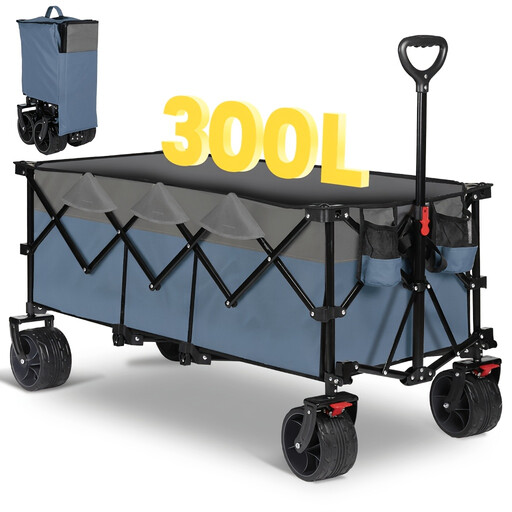
Why this fits the profile: This wagon is aimed at campers, gardeners and households who need to transport bulky or heavy items over flat ground.
The specifications state a maximum load of 200 kilograms and recommend even weight distribution. Use the wagon on stable ground and check that it is fully locked.
300-litre storage volume, 600D Oxford fabric, wide 7-inch tyres, brakes and a folding mechanism with no assembly required.
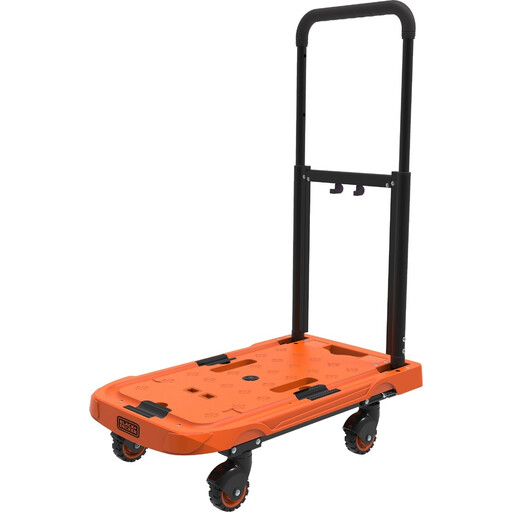
Why this fits the profile: The flat loading platform suits boxes, bags of compost and other items that don't need to go inside a shopping bag.
The product information states a load capacity of up to 90 kilograms, a foldable frame and three handle heights. The load remains visible, so securing it is important.
Loading surface of 61.4 × 37.3 cm, two fixed and two swivel castors, adjustable handle and compact storage.
We've put together a full, up-to-date list of products that fully meet these strict selection criteria and comply with current European safety regulations.
A model with six stair-climbing wheels can help with steps. The effort required depends on the weight, the height of the steps and the surface. Never exceed the stated load capacity and don't pull a heavily loaded trolley up abruptly.
The lifespan depends on load, surface, moisture and maintenance. Regularly check the wheels, joints, seams and folding mechanism. A trolley used frequently on rough pavements will generally wear out faster than one used mainly in shops.
Maintenance is usually limited to cleaning, drying and checking the attachment points. On a transport trolley with wheels, dirt and sand can build up around the wheel axles. Remove this promptly and store the trolley in a dry place.
