
Livraison le jour même et le lendemain

Qualité garantie

Débloquez vos offres de bienvenue: Livraison GRATUITE | Jusqu'à -80 % | 30 jours d'essai gratuits à JoyPlus
Téléchargez l'application
A foldable electric wheelchair can make a world of difference. It's the key to reclaiming your freedom for a day trip, a visit to family, or even a holiday. But the search can be frustrating. Manufacturers promise the world with terms like "ultra-lightweight" and "massive range." Unfortunately, this often leads to a purchase that disappoints in practice.
As a Joybuy Product Recommendation Officer, I'll help you see past the marketing jargon. We'll focus on the specifications that truly matter. Let's discuss the three most common pitfalls so you can make an informed decision.
To avoid buyer's remorse, it's crucial to look beyond the marketing slogans. Focus on the following three objective specifications before making a decision.
Always ask for the total transport weight. This is the weight of the frame plus the weight of the battery (or batteries). This is the actual weight you or a caregiver will have to handle when loading and unloading an electric wheelchair for the car. A 23 kg model sounds manageable, but if a 7 kg battery is added, you're lifting 30 kg. Also, check the folded dimensions to ensure the wheelchair fits in your car trunk.
The range is directly related to the battery capacity, expressed in Ampere-hours (Ah). A higher Ah value typically means a longer range. For a realistic estimate, you can reduce the advertised range by about 20-30% for daily use on varied terrain. The motor power, expressed in Watts (W), is also important. Dual motors (e.g., 2x 250W) offer better performance on slopes and uneven surfaces than a single motor.
Safety and comfort are non-negotiable. The maximum load capacity should be well above the user's body weight. An electric wheelchair 150 kg model offers a sturdier frame and more stability, providing a greater sense of security. Also, pay close attention to the seat width and seat depth. A seat that is too narrow or shallow quickly becomes uncomfortable, especially during extended use. Measure the hip width while seated and add a few centimetres for a comfortable fit.
Not everyone has the same needs. That's why we've highlighted several models and matched them to specific use cases based on their specifications.
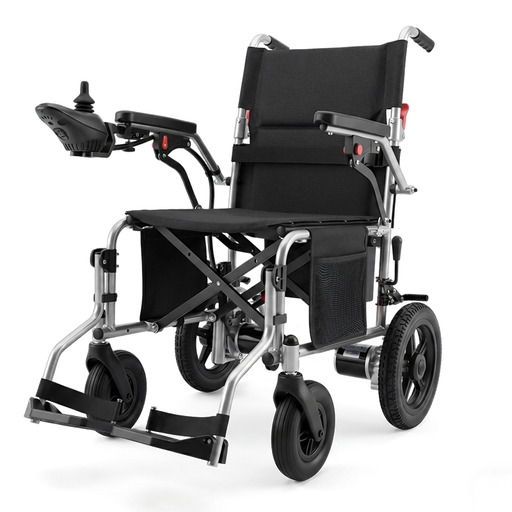
Why This Fits Their Persona: Ideal for those who often travel by car. Its relatively low net weight makes loading and unloading manageable for a caregiver or family member. Perfect for visits, shopping, or enjoying a café patio in the city.
The specifications list a net weight of 23.45 kg. This is a transparent declaration of the frame's weight, giving you a realistic idea of the lifting weight, excluding the battery.
A good balance between a full-featured power chair and a manageable weight for transport. The dual 250W motors provide enough power for most daily situations.
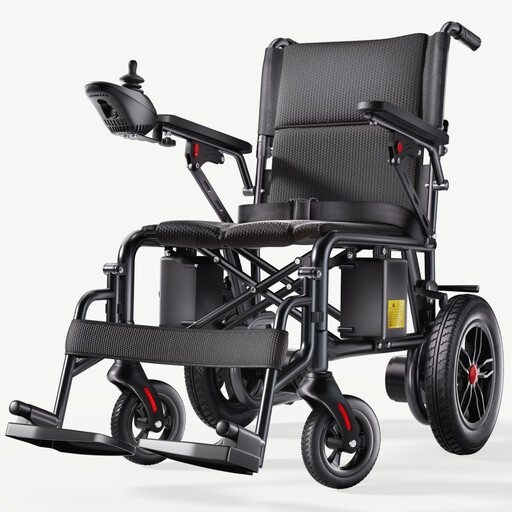
Why This Fits Their Persona: Suitable for heavier users or those seeking an extra sturdy and stable wheelchair. The powerful motors and high load capacity inspire confidence on varied terrain, such as grass, cobblestones, or gentle slopes.
This model focuses not just on weight, but on robustness. It specifies a maximum load capacity of 150 kg, a crucial safety factor that is sometimes overlooked in ultra-lightweight models.
The combination of a high load capacity and powerful 500W dual motors. According to the manufacturer, the wheelchair can handle slopes of up to 12 degrees.
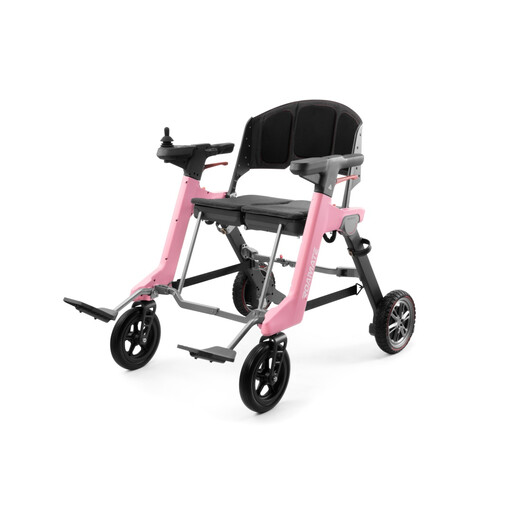
Why This Fits Their Persona: For the user seeking a modern and versatile mobility aid. This device combines the function of an electric wheelchair with a walker and a scooter mode, ideal for changing needs in an urban environment.
This model breaks the traditional category. It's not a standard foldable electric wheelchair for adults, but a multifunctional solution that adapts to the user's energy and mobility throughout the day.
Unique 3-in-1 functionality. According to the manufacturer, the design is compact enough to be taken as carry-on luggage on an aeroplane and features a one-handed folding system.
A foldable electric wheelchair is a personal choice. There are more models that meet strict criteria for functionality and ease of use.
Not always. While most models are designed for the trunk of an average passenger car, it's wise to check the folded dimensions (length x width x height). Compare these with the available space in your trunk, especially if you have a smaller car.
A battery's lifespan is expressed in charge cycles and depends on the type (usually lithium-ion) and usage. On average, a well-maintained battery lasts 2 to 4 years. To maximise its lifespan, it's advisable not to let the battery fully deplete and to charge it according to the manufacturer's instructions.
Insurance requirements vary by region. In many places, low-speed electric wheelchairs are covered by standard personal liability insurance. However, it's crucial to check with your own insurance provider. For models that can go faster, different rules may apply, and specific vehicle or mobility device insurance might be mandatory.
