
One-off potluck baker
You’re mainly making this one focaccia and want to know whether it’s worth buying a machine. A recipe that uses mixing and folding also offers a method that doesn’t require a machine, as described by King Arthur Baking.


You don’t necessarily need a stand mixer to make one focaccia: a King Arthur Baking recipe develops the dough through mixing, resting and folding. If you bake regularly or make larger batches, compare the flour and dough limits for the exact model, and consider how much storage space you have. Before buying, also check that the specific version carries the required CE marking.
You’re mainly making this one focaccia and want to know whether it’s worth buying a machine. A recipe that uses mixing and folding also offers a method that doesn’t require a machine, as described by King Arthur Baking.
You want to make a larger batch of dough. Compare the amount of flour and the total dough weight with the limits for the exact model, as these can vary between machines.
You expect to use the machine regularly, but have little space to leave it out or store it away. Its dimensions and the space needed to use the bowl are important considerations.
| What to consider | What should you check? | Who is this important for? |
|---|---|---|
| Amount of dough | Work out the flour weight and total dough weight for your recipe. Bosch lists a maximum of 1.0 kg of flour and 1.9 kg of yeast dough for the MUM58L20; these are different measures. | If I’m baking for a group, I want to know whether my recipe will fit in one batch. Around 36% of consumers prioritise portion size. |
| Value for occasional use | Consider whether you’ll make dough or batter again after the potluck. King Arthur Baking also describes a method that involves mixing, resting and folding. | If I’d mainly use the machine for this one focaccia, I’d weigh up the hands-on steps against the cost, storage and cleaning. Around 29% of consumers say the most important thing is whether the purchase is worth it. |
| Kitchen space | Measure the space where the machine will sit and where you’ll store it. Kenwood lists the Go as 30 cm tall and with a 4-litre bowl. | If my kitchen has limited worktop or cupboard space, I want to know in advance where the machine and bowl will fit. Around 21% of consumers put space and storage first. |
| Use after the potluck | Check which tools are included with the exact version. KitchenAid lists a dough hook, flat beater and whisk for the 5KSM125. | If I want to use the machine for other baking tasks too, the jobs the included attachments can handle matter. Around 14% of consumers give expected reuse their highest priority. |
Litres don’t tell you how much flour or yeast dough the manufacturer says the machine can handle. Exceeding the stated limits could damage the machine.
Work out the flour weight and total dough weight for your recipe, then compare both with the limits for the exact model. If necessary, make several batches.
A recipe can develop the dough through mixing, resting and folding, without machine kneading.
Choose a recipe first, then decide whether you’d use a machine often enough to take care of the mixing.
A machine also needs storage space and cleaning after use.
The model code and included parts should match the version you want to buy.
Check the full model code, included parts and product specifications for the specific version before treating different variants as identical.
The MUM58L20 is worth considering if you want to check your recipe quantity against the stated flour and yeast dough limits.
The Go is a compact option if height and storage space matter. Chef models are worth considering separately if you want to compare published bread dough limits.
The Artisan 5KSM125 is an option if you want to mix and whisk as well as make dough, using the included tools.
These product picks are stand mixers and dough mixers for anyone who wants to mix focaccia dough by machine. For the specific version, check the permitted dough load, the included parts and the required CE marking.
 No image available
The title describes this model as a stand mixer and dough mixer, for anyone who wants to mix dough by machine.
The product title lists a 5.5-litre bowl and 11 speeds; these figures alone don’t indicate the permitted dough load.
 No image available
The product title and description mention a stand mixer and dough hooks, for anyone who wants to knead dough by machine.
The title lists a 4.5-litre stainless steel bowl. Bowl capacity alone doesn’t determine how much dough is permitted.
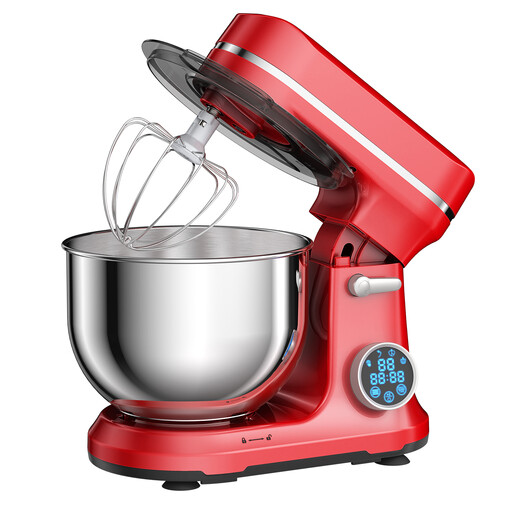 No image available
The product title describes this model as an electric kitchen stand mixer; the description mentions kneading.
The title lists a 5-litre capacity and 11 speeds. These figures don’t indicate the permitted dough load.
 No image available
This model is worth considering if you want to check the amount of yeast dough against a model-specific limit.
The product description lists a maximum of 1.9 kg of yeast dough and a maximum of 2.7 kg of kneaded dough. These are different measures.
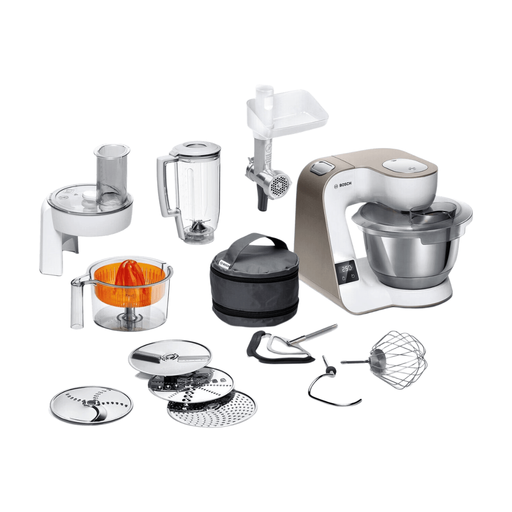 No image available
The product description mentions kneading with the multifunctional arm, for anyone who wants to prepare dough with a stand mixer.
The product information lists a maximum capacity of 2.7 kg. Check what this capacity refers to for the specific version before comparing it with a flour or yeast dough limit.
No. A King Arthur Baking recipe mixes the dough, lets it rest and then folds it. With this method, follow the steps and timings in your chosen recipe rather than automatically using the instructions for machine kneading.
No. Compare the flour and dough weights in your recipe with the limits for the exact model. For example, Bosch lists a 3.9-litre bowl, a maximum of 1.0 kg of flour and a maximum of 1.9 kg of yeast dough for the MUM58L20.
Work out the flour weight and total dough weight for your recipe, then check both against the limits for the exact model. Kenwood’s limits for the Chef and Chef XL, for example, are given as flour weight; don’t compare these figures directly with a maximum for total yeast dough.
The Netherlands Food and Consumer Product Safety Authority states that CE marking is mandatory for electrical products. Check the marking on the specific version; on its own, it doesn’t tell you how well a machine mixes focaccia dough.
KitchenAid recommends speed 2 for its mixers, with a maximum of 2 minutes of kneading at that speed and a maximum total mixing and kneading time of 4–6 minutes. This is the manufacturer’s advice, not a general setting for other brands.