
Vandaag of morgen in huis

Kwaliteit gegarandeerd

Welkomstaanbiedingen ontgrendelen: GRATIS bezorging | Tot 80% korting | Gratis 30 dagen JoyPlus-proefperiode
Download de app
If you're serious about predator fishing, you know that the fishing line is one of the most critical components of your gear. The wrong choice can be the difference between a successful day and one filled with frustration. Especially when choosing a fluorocarbon fishing line, it's easy to fall for marketing traps. Let's look at the most common mistakes and how you can avoid them.
The market is flooded with lines that promise unrealistic features. Two common pitfalls are:
strong fishing line is essential, but a line that is too thick can negatively affect the action of your lure and is more easily detected by wary fish. Some manufacturers exaggerate the breaking strength relative to the diameter, which can lead to unexpected line snaps in practice.To make a smart purchase, it's important to focus on objective and verifiable specifications. Here are the three most important parameters to check before you buy a fishing line.
One of the biggest advantages of a quality fluorocarbon fishing line is the high density of the material. This results in two key properties:
predator line can quickly get damaged.braided fishing line or nylon, fluorocarbon sinks. This provides more direct contact with your lure, especially with techniques where you are feeling the bottom. It also helps keep your line out of the wind and current, which improves bite detection.The ratio between the diameter (thickness) and the breaking strength (in kg or lb) is crucial. A thinner line offers a more natural lure presentation and is less visible, but a thicker line provides more security when fighting a large fish. Look for a line that offers a realistic breaking strength for its diameter. For most European predator fishing (perch, zander), a diameter between 0.20 mm and 0.35 mm is often a good balance.
Fluorocarbon has significantly less stretch than nylon, but more than a PE fishing line (braided line). This limited stretch provides better bite detection and more direct contact with your lure, which is essential for techniques like jigging or fishing a Carolina rig. A braided fishing line has virtually no stretch, offering maximum sensitivity, but fluorocarbon has the advantage of lower visibility and higher abrasion resistance, which is why it's often used as a leader in combination with a PE main line.
Below are a few product choices that suit different types of predator anglers, based on their specifications.
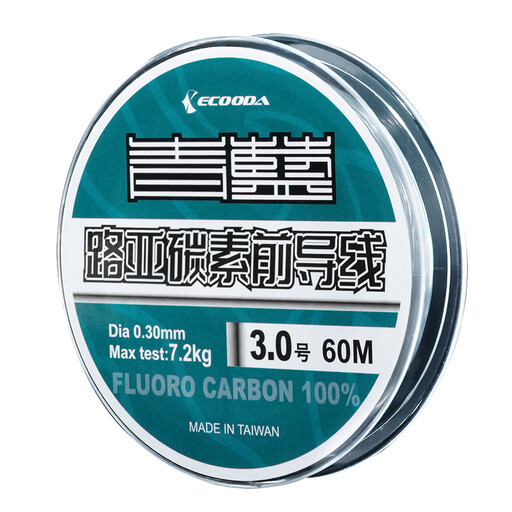
Why This Fits Their Persona: This angler needs a reliable line for various techniques, from casting plugs for pike to jigging for zander. A versatile fluorocarbon line that can be used as a main line or a leader is ideal.
This line offers an honest balance between diameter and breaking strength. You get a strong, abrasion-resistant line without it being unnecessarily thick and stiff, which preserves your lure's action.
Good abrasion resistance for fishing near cover. Sinking properties for direct bottom contact.

Why This Fits Their Persona: This angler needs maximum strength and sensitivity, for example, when fishing with heavy lures for pike or in dense vegetation. A braided PE line as the main line is the logical choice.
Instead of relying on an overly thick fluorocarbon, this angler combines the best of both worlds: the strength and sensitivity of a PE line with the abrasion resistance of a fluorocarbon leader.
Very high breaking strength at a thin diameter. Virtually no stretch for maximum sensitivity and direct hooksets.

Why This Fits Their Persona: This angler targets wary perch or zander in clear water with light lures. A thinner, nearly invisible fluorocarbon leader is essential here for a subtle lure presentation.
Instead of falling for the "completely invisible" myth, this angler consciously chooses a thinner diameter, knowing that this is the most important factor for low visibility in finesse techniques.
Low visibility due to the combination of material and thin diameter. Sufficient abrasion resistance for light applications.
We have compiled a complete, up-to-date list of products that meet these strict selection criteria and regulations.
The main difference lies in the material and its properties. Fluorocarbon is a single, dense line that sinks, is relatively invisible, and has good abrasion resistance. It has a small amount of stretch. Braided fishing line (PE line) consists of multiple, woven fibres. It is extremely strong for its diameter, has virtually no stretch, and floats. However, it is highly visible underwater.
Fluorocarbon can be used as a main line for techniques where its abrasion resistance and sinking properties are important, such as fishing with crankbaits or jerkbaits. More often, however, it is used as a leader in combination with a braided main line. This combines the sensitivity and strength of the braided line with the lower visibility and abrasion resistance of fluorocarbon on the final, crucial section to the lure.
This depends on the target species and the conditions.
