
For anyone who wants to capture the details of small flowers
You want to bring fine textures into focus. Compare the magnification and working distance of the lens you’ll actually be using.


When choosing a camera for the flower market, start with the smallest details you want to photograph and the distance from which you want to capture an entire stall. Check the specifications of the actual lens, not just the camera body. A compact camera with a fixed zoom means you won’t need to change lenses, while a mirrorless camera gives you more lens options, including a dedicated macro lens if needed. Image stabilisation helps reduce camera shake, but you’ll still need an appropriate shutter speed for moving flowers or people.
You want to bring fine textures into focus. Compare the magnification and working distance of the lens you’ll actually be using.
As you walk around, you’ll switch between bouquets, entire stalls and moments of movement. Framing, shutter speed and ease of carrying all play a part.
You’d rather not change lenses or carry a bulky kit. Compare a camera with a fixed lens with the weight of a complete mirrorless camera setup.
Magnification at your preferred distance, the ability to frame a stall and the weight of your complete kit all determine which camera is right for a visit to the market.
| What to consider | What should you check? | Who should consider this? |
|---|---|---|
| Flower details | Compare the lens’s maximum magnification and focusing distance at the zoom setting you want to use. | If you want to fill the frame with small flower details, prioritise magnification and working distance. Around 28% of consumers put this need first. |
| Framing a stall and bouquet | Check the zoom range or angle of view of the supplied lens, and think about how far away you’ll be when taking photos. | If you want to capture both a bouquet and the whole stall from a practical shooting position, pay attention to the lens’s range. Around 22% of consumers prioritise this type of framing. |
| Movement and camera shake | Check the stabilisation of the specific camera body and lens combination, and whether you can easily adjust the shutter speed. | When flowers or visitors are moving, you’ll need to reduce camera shake and account for subject movement. Around 22% of consumers prioritise sharp photos of moving subjects. |
| A portable kit | Compare the weight of the camera body, battery, memory card and the lens or lenses you’ll be taking. | If you’ll be doing a lot of walking during your visit, the weight of your complete setup matters, not just the body. Around 17% of consumers put ease of carrying first. |
| What’s included in the kit | Check which lens, battery and charging equipment are included with the exact version. | If you want to know what you can use straight away and whether you’ll need a separate lens for details later, check the full kit contents. Around 11% of consumers start by checking what’s included in the complete kit. |
For the Sony RX100 VII, the stated minimum focusing distance differs between wide angle and telephoto: approximately 8 cm versus approximately 100 cm, measured from the front of the lens.
Compare both the focusing distance and magnification at the zoom setting you’ll use for the flower.
The Canon RF-S 18-45mm kit zoom and the separate Nikon NIKKOR Z MC 50mm have different stated magnifications. The Nikon macro lens is a separate lens, not the standard zoom supplied in the kit.
First decide how large you want the subject to appear in the frame, then check which lens is included with the version you’ve chosen.
A separate macro lens also means one more lens to carry.
The lens and any other equipment you take also add to the weight you’ll carry around the market. Stated stabilisation figures apply to specific lenses or test conditions, and won’t stop a subject from moving.
Compare the weight of your complete kit and assess camera shake and subject movement separately.
The Nikon Z50II kit reviewed here states that a charger isn’t included; the Canon EOS R50 kit reviewed here does list a battery charger in the box.
Check what’s included with the exact version before choosing a kit.
With the Nikon kit mentioned, check in advance how you’ll charge the battery.
The RX100 VII is a compact camera with a fixed zoom, ideal if you don’t want to change lenses as you walk around.
The EOS R50 with the RF-S 18-45mm is a standard zoom kit; the RF 35mm F1.8 MACRO IS STM is a separate lens option.
The OM-5 Mark II with the M.Zuiko ED 12-45mm F4.0 PRO combines a zoom lens for wider scenes with the ability to get closer to your subject.
The Z50II with the 16-50mm VR is a standard zoom kit; the NIKKOR Z MC 50mm f/2.8 is a separate option for macro details.
The X-S20 is a mirrorless camera body for anyone who wants to choose an X-mount lens to suit their preferred framing and level of detail.
These product options mention zoom or stabilisation in the product title or description. Check each model to see whether the feature applies to still photography and whether the lens is suitable for the flower details you want to capture.
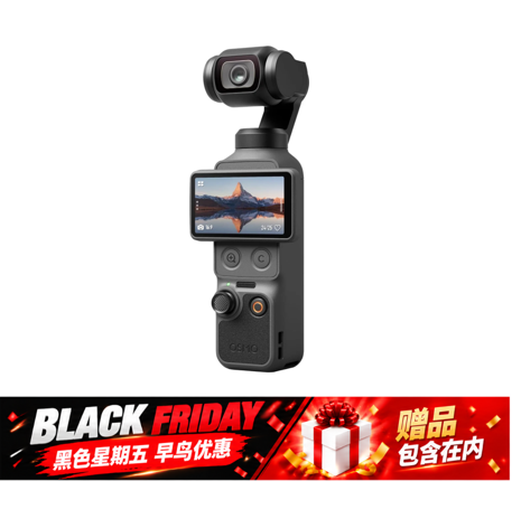 Image unavailable
The product title positions this model as a pocket gimbal camera for vlogging and photography; check which features suit your needs for still flower photography.
The title lists a 1-inch CMOS sensor, 2× lossless zoom and 3-axis stabilisation.
It also lists 107 GB of built-in storage and a 2-inch rotating screen.
 Image unavailable
Consider this model if you want to try different compositions; check whether the lens and controls suit the flower details you want to capture.
The product title lists 8× optical zoom, a dual-lens configuration, 5K and 64 MP.
The title also mentions autofocus and colour night vision.
 Image unavailable
The supplied zoom lens may be useful if you want to switch between bouquets and wider market scenes; check whether its range suits your shooting distance.
The kit description lists an APS-C sensor, 24.2 MP and a 16–50mm kit lens.
The Active Mode digital stabilisation mentioned is for handheld video recording; don’t take this as confirmation that still photos are stabilised.
No, not always. First check whether the zoom lens offers enough magnification at your preferred distance: Canon specifies a maximum of 0.16× at 45 mm with autofocus for the RF-S 18-45mm, while OM SYSTEM specifies a maximum of 0.25× for the 12-45mm F4.0 PRO. If that isn’t enough, compare a separate macro lens and its working distance.
Image stabilisation helps reduce camera movement, but it can’t compensate for a moving flower. In windy conditions, you may need a faster shutter speed. This lets in less light, so you’ll also need to consider the aperture or ISO.
Check whether the exact version includes a lens, battery and charging option, and take only the lenses you expect to use for wider scenes or close-up details. The Canon EOS R50 kit reviewed here lists a battery charger in the box; the Nikon Z50II kit reviewed here states that a charger isn’t included.
According to ACM ConsuWijzer, the seller is responsible for the legal guarantee if the product doesn’t meet what you could reasonably expect. A manufacturer’s warranty period doesn’t replace this right; raise the issue with the seller.
Don’t assume you can publish a photo simply because it was taken at a market. The Autoriteit Persoonsgegevens points out that identifiable people have a right to privacy and says that organisers photographing and publishing identifiable event visitors need a legal basis. Whether your specific photo and its publication are permitted depends, among other things, on your role, purpose and circumstances.