
Vandaag of morgen in huis

Kwaliteit gegarandeerd

Welkomstaanbiedingen ontgrendelen: GRATIS bezorging | Tot 80% korting | Gratis 30 dagen JoyPlus-proefperiode
Download de app
If you enjoy paper crafting, such as card making or scrapbooking, you know how a small detail can make a huge difference. A beautiful, sharply cut flower can elevate your project from 'nice' to 'stunning'. But with an overwhelming selection of flower cutting dies available, it can be difficult to decide which dies are the most practical for your projects.
This article is designed to help. We'll showcase several popular choices and provide practical tips, enabling you to make an informed decision that aligns with your crafting style.
Before we dive into the products, here are a few key considerations. These will help you find floral die-cuts that are not only beautiful but also functional and durable.
Most cutting dies are made from carbon steel. This material is sturdy and stays sharp for a long time, ensuring you get clean, precise cuts time after time. Verify that the die is made from a high-quality metal. This ensures your investment lasts longer, even with frequent use.
Not every die fits every machine. Most crafting dies for paper are designed to work with popular die-cutting machines like the Sizzix Big Shot, Cuttlebug, or Vaessen Creative Cut'Em Easy. It's wise to check the product description to ensure the dies are compatible with your device. This prevents disappointment and allows you to get started right away.
Consider the effect you want to achieve. Are you looking for a simple flower shape to use as a base, or a detailed die that also adds texture? Some dies are purely for cutting out shapes (floral die-cuts), while others also leave an embossed impression. These floral embossing dies give your creations extra depth and a professional finish. Sets with multiple separate parts offer the ability to create layered, 3D flowers.
Below is a selection of cutting dies that stand out for their design and versatility. We've chosen them based on their specifications and suitability for various paper hobbies.
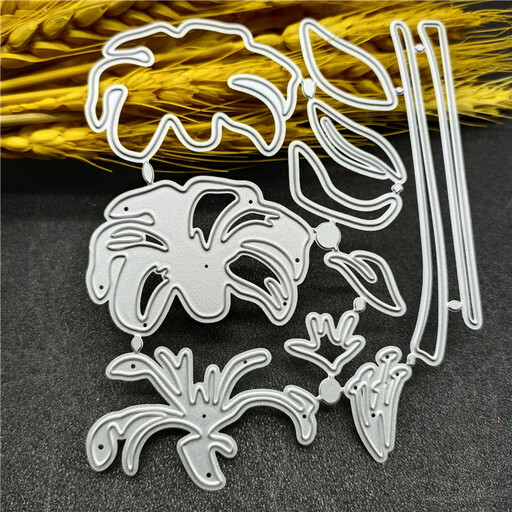
Why it stands out: This lily cutting die offers an elegant and detailed design of one of the most beloved flowers. The fine lines make it possible to create a realistic and graceful lily, adding a touch of class to any project.
Pros:
Who is it for?: Ideal for the crafter looking for a specific, botanical die for card making who appreciates an elegant and classic style.

Why it stands out: The rose is a timeless symbol, and this rose cutting die perfectly captures its classic shape. The set often includes not only the flower itself but also matching leaves, allowing you to create complete and harmonious compositions.
Pros:
Who is it for?: Perfect for hobbyists seeking scrapbooking dies with a romantic or traditional theme. An essential tool for anyone who loves to make heartfelt and personal creations.
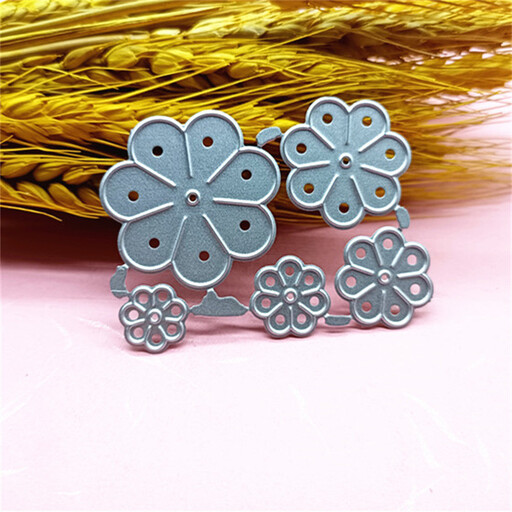
Why it stands out: This set goes beyond a simple flat shape. It includes multiple dies for petals and leaves of different sizes. This allows you to build layered flowers that add depth and a 3D effect to your work.
Pros:
Who is it for?: For the creative who loves to experiment and wants to literally add more dimension to their projects. Highly suitable for creating eye-catching focal points on cards or in journals.
The products mentioned above are just a small sample of the possibilities. Every project is unique and calls for its own style. If you're looking for other flower types, sizes, or styles, it's worth exploring a wider range.
Explore more crafting dies for cards and flowers here
A cutting die (or die-cut) is a metal shape with a sharp edge designed to cut a shape completely out of paper or other thin material. An embossing folder is typically a plastic folder with a raised pattern. The paper is placed inside the folder and run through the die-cutting machine, which presses the pattern into the paper without cutting it. Some floral embossing dies are metal dies that both cut an outline and press a light texture into the shape.
The process is generally straightforward:
Yes, many cutting dies are also suitable for other thin materials. Think of cardstock, vellum, thin felt, vinyl, shrink plastic, or thin craft foam. Always check the specifications of both your cutting die and your die-cutting machine to see which materials are supported. For thicker materials, you may need special, more robust dies.
