
Vandaag of morgen in huis

Kwaliteit gegarandeerd

Welkomstaanbiedingen ontgrendelen: GRATIS bezorging | Tot 80% korting | Gratis 30 dagen JoyPlus-proefperiode
Download de app
A floor cleaner can help you get through everyday cleaning faster, but not every appliance is suitable for every home. A robot vacuum with a mopping function is useful for routine maintenance, while a carpet cleaner may be needed for ingrained stains. If you focus only on high suction power or a large number of features, you risk buying an appliance that proves impractical in everyday use.
Specifications such as 10,000, 15,000 or 20,000 Pa sound impressive. However, this figure does not tell you everything about the cleaning results. The brush, airflow, filter, distance from the floor and nozzle all help determine how effectively dust and hair are picked up. A floor cleaner for hard floors also needs different features from a carpet cleaner.
Use a high suction setting selectively. With cordless appliances, battery life can be considerably shorter on the most powerful setting.
A robot vacuum with a mopping function is mainly designed for light, damp maintenance. A robot is not designed to suck up puddles, large liquid spills or wet dirt. For spilled drinks, pet accidents or deep stains, a spot cleaner or wet-and-dry vacuum is more suitable.
Also check whether the floor is suitable for moisture. Untreated wood, delicate joints and some laminate floors can be damaged by too much water.
Water tanks, filters, mop cloths and brushes must be cleaned and dried after use. With a carpet cleaner that leaves dirty water standing for a longer period, unpleasant smells can develop. A self-cleaning programme makes the job easier, but does not completely eliminate the need to empty and check the tanks.
Also consider the available storage space, cable length, hose length and the space required by a charging station.
Powerful suction is particularly relevant for deep-pile carpet, pet hair and heavier dirt. As well as Pa or kPa, look for an anti-tangle brush, a suitable carpet mode and an easily accessible filter. A stick vacuum is suitable for quick daily cleaning and furniture, while a vacuum for pet hair benefits from a motorised brush and an easy-to-empty dust container.
With a robot vacuum, navigation, threshold height, mapping functions and carpet detection are at least as important as suction power.
A wet floor cleaner uses clean and dirty water. A separate tank or clearly divided tank system prevents dirty water from being spread again. Check the capacity of both tanks and whether the components can be removed.
A steam cleaner uses heat to loosen dirt, but is not suitable for every floor or textile. Always follow the instructions and test delicate materials in an inconspicuous area first. According to the product description of the ASPIRON AS-CA019, this model has a 1.5-litre tank and a heating time of approximately five minutes; before buying, check that the accessories are suitable for your cleaning tasks.
A compact cordless model may be sufficient for a flat. In a large house, a long battery life, generous tank or long mains cable may be more practical. With a robot, you need to keep the area around the station clear. For example, the Lubluelu S1000 specifies 0.5 metres of clearance on both sides and 1.5 metres in front of the station.
Also consider the weight. A handy spot cleaner is useful for stairs, sofas and car seats, but less suitable for cleaning large floor areas.
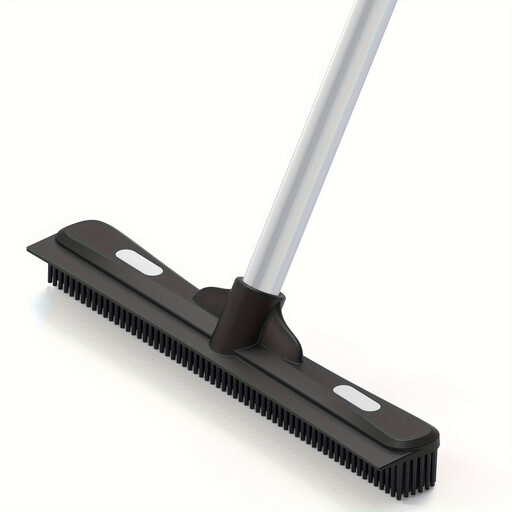
Why it suits this profile: For anyone who wants to tackle hair, dust and small liquid spills on carpets and hard floors without using mains power or a battery.
It is simple to use, with no battery, charging station or water tanks to maintain. According to the product description, the rubber head can be cleaned with water and mild soap.
Rubber bristles for collecting pet hair and an integrated squeegee edge for smooth surfaces. The handle extends to 61 inches according to the product information.

Why it suits this profile: For households with multiple floor types that want to vacuum and mop automatically.
The product description mentions automatic carpet detection, several cleaning modes and map management. This lets you set the mopping function by room instead of using the same moisture level everywhere.
According to the product details, the model offers 20,000 Pa suction power, rotating mops, an OMNI station, automatic dust emptying and mop washing with water at 75 °C.
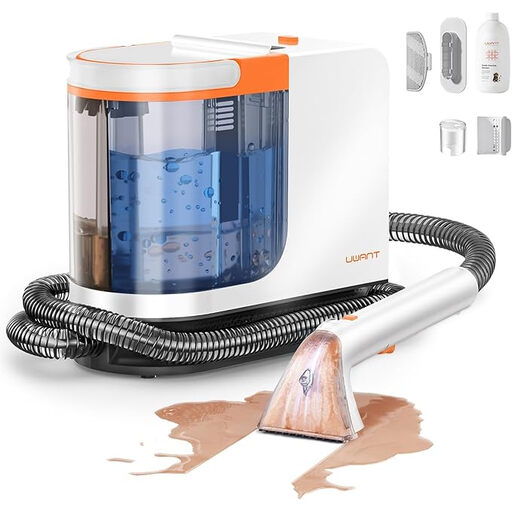
Why it suits this profile: For pet owners and families who regularly need to clean stains from carpets, sofas, rugs or car seats.
The model is specifically designed for wet cleaning, with separate clean- and dirty-water sections. This makes it more suitable for liquid stains than a standard stick vacuum or robot mop.
The product description lists 18 kPa suction power, a 14 cm brush, a 600W motor and a 2-in-1 water tank system. The noise level is listed as 75 dB.
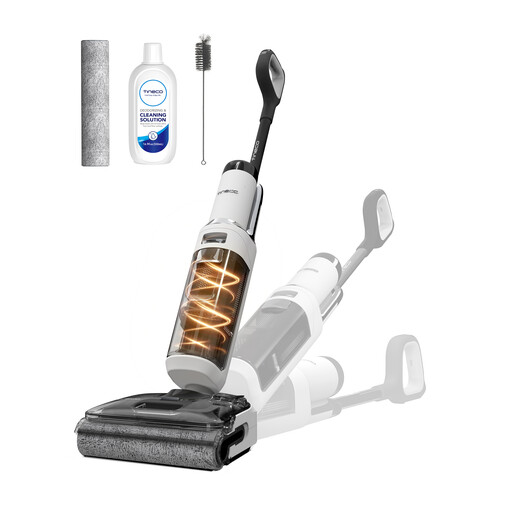
Why it suits this profile: For homes with mainly tiles, vinyl, laminate or sealed wood, where you want to tackle dust and spilled dirt in a single pass.
The product information limits use to suitable hard indoor floors and warns against flammable liquids, sharp objects and delicate, rough surfaces.
According to the product details, the appliance has a 180° lay-flat design, a height of 13 cm, up to 40 minutes of runtime and a self-cleaning and drying programme.
We have put together a complete, up-to-date list of products that fully meet these strict selection criteria and the applicable European safety regulations.
A model with self-cleaning can reduce maintenance, but it cannot replace it entirely. The availability of replacement filters, brushes and mop cloths is therefore a practical purchasing criterion.
That depends on the type of appliance. A standard floor cleaner for hard floors is not automatically suitable for carpet. For carpet, choose a carpet cleaner, spot cleaner or model whose product description explicitly mentions carpet. A robot can usually vacuum carpet dry, but its mopping function must be able to recognise carpet or be switched off manually.
With corded models, the main costs are electricity, water and any cleaning solution. Cordless appliances also require a battery, which may lose capacity over time. Robots use electricity for charging and may need consumables such as dust bags, filters and mop cloths. The actual costs depend on how often the appliance is used and how well it is maintained.
After every wet-cleaning session, empty the dirty-water tank and rinse the components that have come into contact with dirt. Clean the filters and brushes according to the instructions; this may need to be done more often in a household with pets. Allow wet components to dry completely before putting them back or storing them.
