
Vandaag of morgen in huis

Kwaliteit gegarandeerd

Welkomstaanbiedingen ontgrendelen: GRATIS bezorging | Tot 80% korting | Gratis 30 dagen JoyPlus-proefperiode
Download de app
A fleece hoodie is useful for brisk bike rides, walks, sport, working from home or relaxing on the sofa. However, hoodies can vary considerably in material, fit and finish. For example, a soft inside does not automatically mean that a model is warm enough for outdoor use. And a low price may prove less appealing if the fit changes quickly after washing.
As a Joybuy Product Recommendation Officer, I therefore focus mainly on verifiable information: material, fabric weight, fastening, pockets, fit, sizing and care instructions. This allows you to compare a men's hoodie or women's hoodie based on features that make a real difference in everyday use.
Fleece may refer to a brushed inside, synthetic fleece fabric or a thicker sweatshirt fabric. Always check the fibre composition. A cotton hoodie feels different from a model containing a high proportion of polyester. Cotton can feel comfortable, while polyester is often added to make the garment easier to care for and more shape-retaining. The exact ratio partly determines how a hoodie feels and how it should be looked after.
Words such as “extra warm” or “ultra-soft” are not measurable benchmarks in themselves. Instead, check whether the product description mentions a brushed inside, thick fleece lining or a fabric weight in g/m². For example, a 330 g/m² model provides more concrete information about fabric density than simply describing it as a “warm hoodie”.
A loose-fit, regular-fit and oversized hoodie will not fit in the same way. When layering under a coat, an overly roomy sweatshirt can feel cumbersome. If you are looking for a casual hoodie to wear at home, however, extra room may be more comfortable. Also pay attention to sleeve length, ribbed cuffs and the room around the shoulders and chest. Check the size guide for the specific model rather than simply ordering your usual size.
A fleece hooded sweatshirt is often made from cotton, polyester or a combination of the two. Product information for different models may specify 70% cotton and 30% polyester, 80% cotton and 20% polyester or 60% cotton and 40% polyester, for example. These percentages can be checked and give you more useful guidance than a general promise of comfort.
A brushed inside may feel softer according to the product description and is particularly relevant if you wear the hoodie directly over a T-shirt. If you want an easy-care, sporty hoodie, also check the washing instructions and drying advice.
When the weight is specified, it is usually given in g/m². A higher figure generally means a heavier fabric, but it does not indicate warmth on its own. The inside finish, fit and wind resistance of the outer layer also play a part. A hoodie is not a substitute for a waterproof coat in rainy weather.
The Urban Classics Fluffy Hoody, for example, is described as having a fabric weight of 330 g/m². The Urban Classics Ultra Heavy Hoody specifies 460 g/m² and 100% cotton. This makes the difference between an everyday layer and a heavier model clearer.
A zip-up hoodie is easy to put on and take off and is suitable for layering. A model without a zip keeps the front evenly covered and often has a kangaroo pocket. Check whether the hood has a drawstring, whether the pockets are positioned at the sides and whether the cuffs and hem are ribbed.
For cycling or walking, close-fitting cuffs and hems are practical. For relaxed wear, a roomier cut may be more comfortable. Also consider care requirements: some models can be washed at a maximum of 30 °C and must not be tumble-dried.
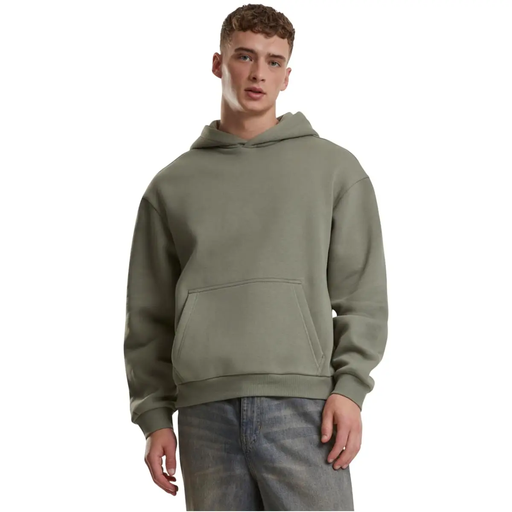
Why it suits this profile: This hoodie is designed for everyday wear and streetwear. Its composition of 70% cotton and 30% polyester provides clear information about the material.
The product information specifies the material, a fabric weight of 330 g/m² and care advice, rather than relying solely on general claims about warmth.
Cotton-polyester blend, ribbed cuffs and a relaxed fit with a hood and storage space.

Why it suits this profile: This model is aimed at a smart everyday style, with an embroidered logo and a design that, according to the product description, can be worn on its own or as a layer.
The composition of 60% cotton and 40% polyester and the thick fleece lining are clearly specified. This makes comparison easier.
Fleece lining, drawstring hood, kangaroo pocket and close-fitting cuffs and waistband.
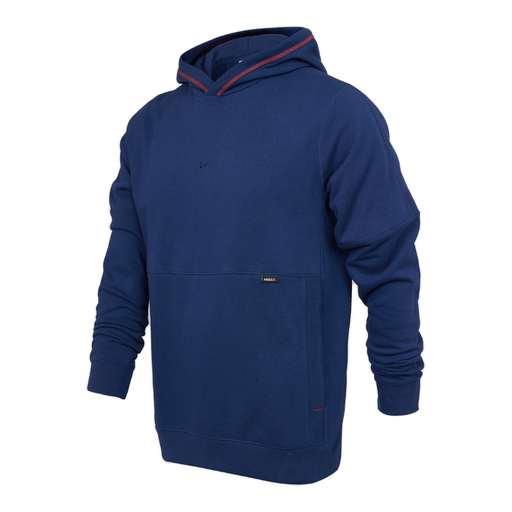
Why it suits this profile: The product description mentions a loose fit, adjustable hood and suitability for casual wear or light training.
The fit, hood, ribbed details and cotton-polyester fleece are described separately. You therefore do not have to rely solely on the brand or the photograph.
Loose fit for layering, adjustable hood and ribbed cuffs and hem.
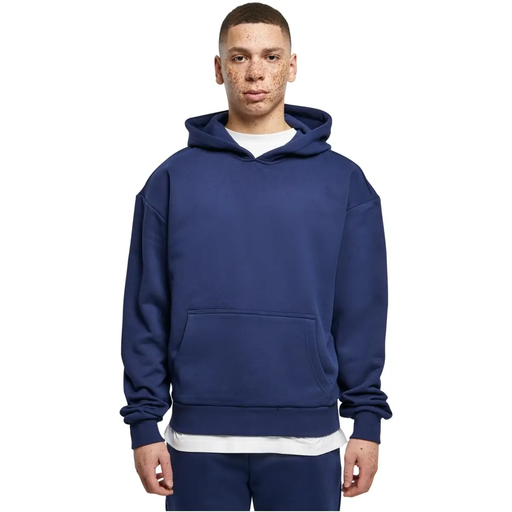
Why it suits this profile: This model is designed for anyone looking for an oversized hoodie with dropped shoulders and extra-long sleeves for everyday wear.
The weight of 460 g/m² and composition of 100% cotton are specified. This makes your choice less dependent on vague terms such as “extra thick”.
100% cotton, 460 g/m², oversized fit, hood and kangaroo pocket.
Always follow the care label for the model you choose. Many fleece hoodies should be washed at a maximum of 30 °C, with similar colours, and dried at a low temperature or left to air-dry. Avoid bleach when it is not recommended. Turn a printed hoodie inside out and do not use fabric softener if the label advises against it.
A hoodie that is worn regularly does not need to be washed after every short period of use. Airing it may be sufficient when there are no stains or unpleasant smells. This helps to reduce wear caused by washing and drying.
We have put together a complete, up-to-date list of products that fully meet these strict selection criteria and the applicable European safety regulations.
That depends on the fabric thickness, fit and weather. A fleece hoodie can be suitable as a warm mid-layer on cool, dry days. In rain or strong winds, a separate outer layer is more practical, as an ordinary hoodie is not automatically waterproof or windproof.
Measure your chest and compare it with the product's size guide. Also check whether the model has a regular, loose or oversized fit. For a zip-up hoodie worn under a coat, a less generous fit may be more practical; for a casual hoodie at home, extra room is often welcome.
This varies depending on the composition and care label. Polyester is often used as an easy-care fibre, while cotton may respond differently to washing and drying. Wash at the recommended temperature, use the correct drying method and avoid unnecessarily high heat to help the shape and fabric last longer.
