
Vandaag of morgen in huis

Kwaliteit gegarandeerd

Welkomstaanbiedingen ontgrendelen: GRATIS bezorging | Tot 80% korting | Gratis 30 dagen JoyPlus-proefperiode
Download de app
A fleece hoodie might seem easy to choose at first. But styles can vary considerably in fabric, thickness, fit and practicality. A soft lining doesn’t necessarily mean a hoodie will keep you warm for long. An oversized hoodie might also feel too roomy in practice, while a zipped style can be more useful as an extra layer.
As Joybuy Product Recommendation Officer, I focus on the product details that matter in everyday use. That way, you can compare women’s hoodies, men’s hoodies and fleece hoodies by their verifiable features rather than relying on brand names or marketing copy alone.
The term fleece hoodie is used for different types of fabric. Some styles have a brushed lining, while others are made from a thicker sweatshirt fabric. So always check the fabric composition. Cotton often feels familiar, while polyester can help a garment keep its shape and make it easier to care for. A cotton hoodie isn’t necessarily the same as a fleece hoodie with a high polyester content.
Sweatshirt fabric weight is often shown in g/m². A higher figure usually means a heavier, sturdier fabric, but it doesn’t tell you on its own how warm the hoodie will feel. A 460 g/m² style could be comfortable on cold days, but too heavy for light training or wearing indoors. So think about when you plan to wear it.
An oversized hoodie with dropped shoulders and extra-long sleeves can work well with streetwear, but may be less convenient under a coat. A regular fit is usually easier to wear as a mid-layer. Check the size guide too: EU, UK and US sizes can be shown differently across brands and product ranges.
Start by checking:
A hoodie made from 70% cotton and 30% polyester can be a practical middle ground for everyday wear. The Urban Classics Fluffy styles use this composition and state a fabric weight of 330 g/m². The Urban Classics Ultra Heavy Hoody is described as 100% cotton and 460 g/m². That’s a clearly heavier fabric, but always check whether the product page describes the style as sweatshirt fabric or fleece.
Choose according to how you plan to wear it:
Don’t rely on your usual size alone. If possible, measure a hoodie that fits you well and compare the chest, sleeve and overall length with the size guide.
An adjustable hood, rib-knit cuffs and a ribbed hem can help the hoodie keep its fit. A kangaroo pocket gives you somewhere to keep your hands warm. A zipped hoodie is easier to put on and take off, and works well as an extra layer. A pullover without a zip keeps the front simpler and more closed.
For men’s and women’s hoodies, these details aren’t necessarily different; fit, sizing and the product description matter more than the category.
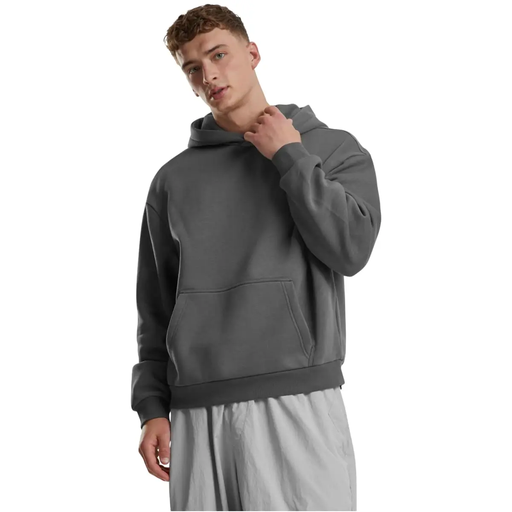
Why it suits this profile: The relaxed fit and 70% cotton, 30% polyester composition make it suitable for everyday wear, relaxing at home and casual outfits.
The product information gives both the cotton-polyester mix and the fabric weight of 330 g/m², so you don’t have to rely on the word fleece alone.
Relaxed fit, hood, rib-knit cuffs and a stated fabric weight of 330 g/m².
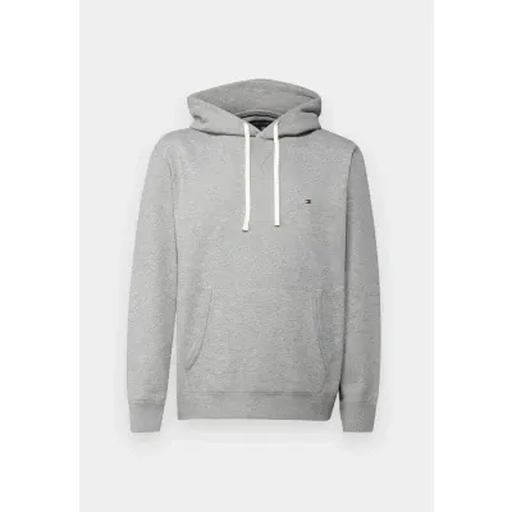
Why it suits this profile: This men’s hoodie has a classic design with an adjustable hood, and is intended for casual wear, workouts or as an extra layer.
The specifications list practical details such as cotton and polyester, a kangaroo pocket, ribbed trims and an adjustable drawcord.
Kangaroo pocket, ribbed trims and adjustable hood; check the composition on the label.
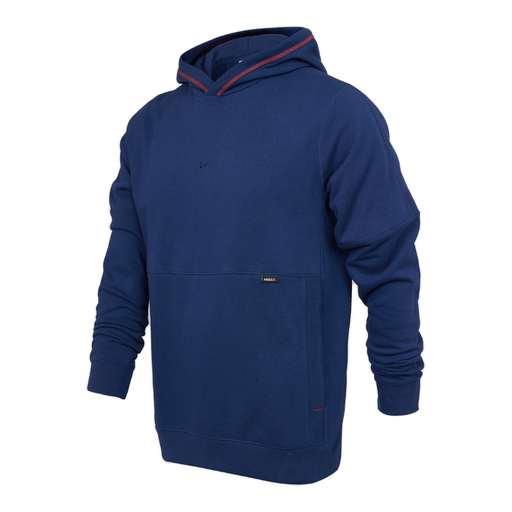
Why it suits this profile: According to the product information, the loose fit is designed for layering, everyday wear and light training.
The loose fit and adjustable hood are clearly stated; check the exact fabric percentages on the product page and care label.
Loose fit, adjustable hood, ribbed trims and deep navy, according to the product information.
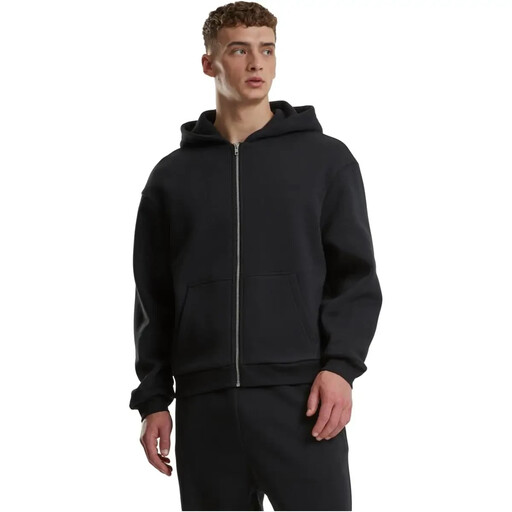
Why it suits this profile: A zipped hoodie is practical for commuting, changeable weather and layering over a T-shirt.
The full-length zip makes it easy to adjust how warm and covered you feel indoors or out. The composition is listed as 70% cotton and 30% polyester.
Full-length zip, side pockets, drawcord in the hood and a brushed lining, according to the product description.
We’ve put together a complete, up-to-date list of products that meet these strict selection criteria and the applicable European safety regulations.
Always follow the care label on your specific fleece hoodie. Many styles in this selection recommend washing at a low temperature with similar colours. Tumble-drying on a low heat or line-drying can help reduce unnecessary wear and energy use. Avoid bleach unless the care label says it’s safe, and use a low iron setting if needed.
After washing, check the hood, zip, cuffs and seams. If your hoodie has a zip, it’s a good idea to close it before washing. This helps stop the zip catching on other clothes.
Not always. Warmth depends on the fabric weight, the lining, the fit and what you wear with it. A heavyweight cotton sweatshirt fabric can feel warmer than a lightweight fleece hoodie. So compare the fabric and g/m² where that information is available.
A regular or loose fit usually works well as a layer under a coat. A zipped hoodie is even more versatile, as you can adjust how warm you feel more easily. With an oversized hoodie, check that the sleeves and shoulders still fit comfortably under your coat.
Follow the care label, don’t wash it at a higher temperature than stated, and don’t dry it at a higher temperature than recommended. Rib-knit hems and cuffs can help maintain the fit, but proper care remains important for the hoodie’s appearance and lifespan.
