
Carbohydrate-conscious snackers
You want to include flavoured coated peanuts in your carbohydrate plan. So compare the total carbohydrates in the exact variant and consider how much you actually eat. (diabetes.nl; Voedingscentrum)


Compare flavoured coated peanuts by the total carbohydrate content of the exact variant, then calculate this for your weighed portion; looking at sugars alone isn’t enough. If you’re mainly looking for an everyday nut snack, an uncoated, unsalted nut is a different choice from coated peanuts. A particular flavour or brand doesn’t automatically make a product suitable for everyone’s individual eating plan.
You want to include flavoured coated peanuts in your carbohydrate plan. So compare the total carbohydrates in the exact variant and consider how much you actually eat. (diabetes.nl; Voedingscentrum)
You want to decide in advance how much to have and which nutritional values apply to that portion. The contents of a bag aren’t the same as the amount you eat. (Voedingscentrum; Duyvis)
You’d rather compare coated peanuts with uncoated, unsalted nuts than just with other flavours of coated peanuts. (Diabetes Fonds; diabetes.nl)
Choose this option: if you’re specifically after a crunchy coating and savoury snack flavour; compare the nutritional information on the exact pack with your own eating plan.
Bear in mind: Diabetes Fonds points out that the coating adds extra carbohydrates and calories compared with plain nuts.
Choose this option: if you’re looking for an everyday nut snack and don’t need the coated-peanut crunch.
Bear in mind: you won’t get the crunchy coating and flavour of flavoured coated peanuts.
| What to consider | What should you check? | Who is this important for? |
|---|---|---|
| Total carbohydrates | Compare carbohydrates per 100 g for the exact variant and calculate the amount for your portion: carbohydrates per 100 g × portion in grams ÷ 100. | If you want to include carbohydrates in your eating plan, check the total amount in your portion. Around 31% of consumers put this carbohydrate calculation first. |
| Portion and energy | Weigh your portion and compare the nutritional values for that same amount. Voedingscentrum uses 25 g as an example portion; this isn’t a personal portion recommendation. | If you want to decide in advance how much you’ll eat and the energy intake that goes with it, check the amount you’ve weighed. Around 25% of consumers put portion size at the centre of their decision. |
| Flavour and recipe | Choose the flavour you want, then compare the nutritional information, including carbohydrates and salt, per 100 g. | If you want to keep enjoying a crunchy savoury snack while also taking its nutritional values into account, compare the exact flavour variant. Around 19% of consumers prioritise this combination. |
| Allergens | Read the ingredients and allergen information on the current packaging for that exact flavour. | If you have a relevant food allergy, check the specific packaging before choosing a variant. Around 13% of consumers put this check first. |
| Packaging and storage | Choose a pack size that suits how you’ll use it, and follow the storage advice on the packaging. | If you’re looking for an amount that suits your needs, check the pack size and storage instructions for that variant. Around 12% of consumers make this their main consideration. |
The sugar figure doesn’t show how many carbohydrates you eat in total. In Voedingscentrum’s general example, 25 g of coated peanuts contains 10.9 g of carbohydrates, of which 2 g are sugars; these figures don’t apply to every brand variant.
Check the total carbohydrates and calculate the amount for your weighed portion.
Diabetes Fonds points out that the coating adds extra carbohydrates and calories. Information about uncoated nuts therefore doesn’t necessarily apply to coated peanuts.
Assess coated peanuts as a separate product category. If you’re looking for an everyday nut snack, compare them with uncoated, unsalted nuts.
Duyvis lists several pack sizes for Cocktail, ranging from 125 g to 1000 g. The pack size doesn’t tell you how much you eat.
Choose a pack based on how you’ll use it, and decide on your eating portion separately.
A product brand with several flavours of coated peanuts.
A supermarket and own-label brand with a listed AH Borrelnoten cocktail variant.
A supermarket and own-label brand with a listed Jumbo Borrelnoten Cocktail 300 g.
A supermarket with a product page for coated peanuts.
A supermarket with listed Trader Joe’s coated peanuts in several flavour styles.
A supermarket and own-label brand with a listed PLUS Borrelnoten Ham Kaas 300 g.
These product options are flavoured Duyvis coated peanuts with a crunchy coating. Compare the nutritional values listed per 100 g with the amount you eat; the products aren’t an assessment of personal suitability.
 No image available
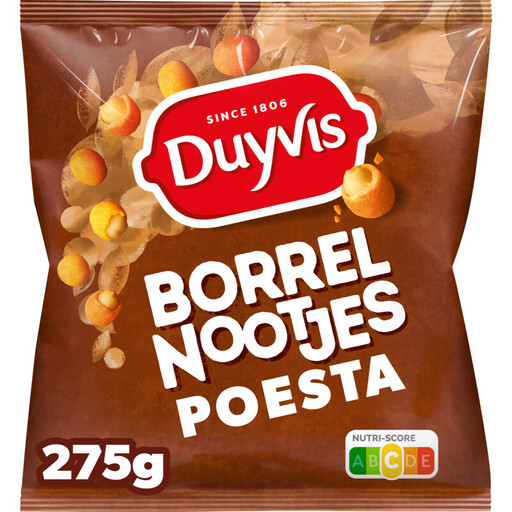
The product description lists seasoned peanuts with a crunchy coating; check the nutritional values for the portion you eat.
Nutritional values listed per 100 g: 41 g of carbohydrates, 6.4 g of sugars and 1.4 g of salt.
The product information lists peanuts, wheat, milk and celery; the product may contain traces of soya, mustard and other nuts.
 No image available
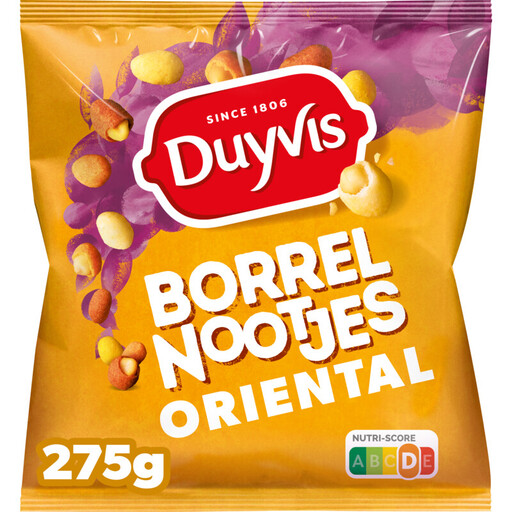
The product description lists peanuts with a crunchy coating and a mild curry flavour; compare the values with your own portion.
Nutritional values listed per 100 g: 41 g of carbohydrates, 6.3 g of sugars and 1.4 g of salt.
The product information lists peanuts, wheat, barley and soya; the product may contain milk, nuts and mustard.
 No image available
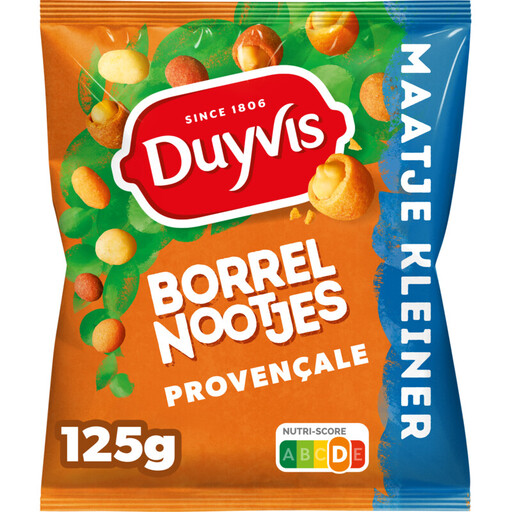
The product description lists peanuts with a crunchy coating and a 30 g portion; this is product information, not personal advice.
Nutritional values listed per 100 g: 43 g of carbohydrates, 6.8 g of sugars and 1.2 g of salt.
The product information lists peanuts and wheat; the product may contain milk, nuts, soya and mustard.
 No image available
The product description lists peanuts with a crunchy coating and Provençal flavour.
Nutritional values listed per 100 g: 41 g of carbohydrates, 6.3 g of sugars and 1.3 g of salt.
The product information lists peanuts and wheat; the product may contain milk, nuts, soya and mustard.
 No image available
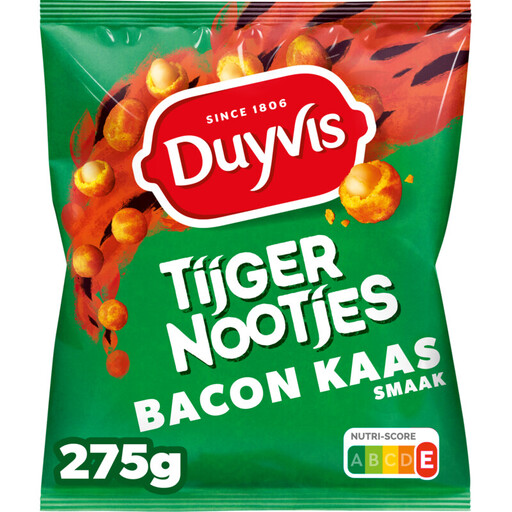
The product description lists peanuts with a double crunchy coating and a bacon and cheese flavour; it also gives a 30 g portion.
Nutritional values listed per 100 g: 42 g of carbohydrates, 6.9 g of sugars and 1.6 g of salt.
The product information lists peanuts, wheat and milk; the product may contain nuts, soya and mustard.
No. The 25 g is an example portion used by Voedingscentrum to show nutritional values, not personalised advice for people with diabetes. Choose an amount that fits your own eating plan and use the values for the exact variant.
Not without making a distinction. Diabetes Fonds points out that the coating on coated peanuts adds extra carbohydrates and calories. Diabetes.nl lists unsalted, unroasted nuts as a nut choice, so compare them as a different type of product.
Check the ingredients, allergens and any cross-contamination warnings on the current packaging for the exact flavour. Ingredients can vary between variants, so don’t rely on information for a different flavour.
Follow the storage advice on the packaging for your variant. The product pages for Jumbo Cocktail and PLUS Ham Kaas recommend storing them in a cool, dry, dark place; this doesn’t establish a general storage period after opening.
No. Check the total carbohydrates as well as the ‘of which sugars’ figure. Calculate the carbohydrates per 100 g for the amount you actually eat.