For an indoor workshop, choose an oven specifically designed for indoor use. If participants need to bake at the same time, compare the number of baking chambers and the usable stone surface. Gas and wood-fired ovens are for outdoor use, while a pan may be all you need for some flatbreads. For any oven, check the connection, workspace and suitability for your recipe.
Which oven option suits you?
Indoor workshop with small groups
If participants will be taking turns to bake, look for an oven explicitly designed for indoor use. Ooni describes the Volt 2 as an electric indoor oven; Unold lists flatbread as one of the uses for the Alfredo 68806. Bear in mind the space available on a single stone.
Workshop with lots of participants
If participants need to bake at the same time, compare the number of baking chambers and their dimensions with the size of your bread. HENDI lists two chambers for its compact oven; also check that the connection is suitable for your venue.
Outdoor workshop around a fire
This option suits a suitable outdoor venue where baking over a flame is part of the lesson. Ooni lists a gas version for the Netherlands; for wood-fired ovens, the Dutch government recommends checking the Stookwijzer and your local council's rules.
What should you look for when choosing?
Electric stone oven for indoor use
Choose this option: if the workshop is indoors and participants will be taking turns to bake. Ooni describes the Volt 2 as an electric indoor oven; Unold lists flatbread as one of the uses for the Alfredo 68806.
Bear in mind: a single stone could mean a queue for a group. Check that your bread and peel will fit.
Electric oven with multiple chambers
Choose this option: if baking several items at once is important; HENDI lists two chambers for its compact oven.
Bear in mind: two chambers don't tell you how many flatbreads made to your recipe will be ready per hour. Check the space required and the connection, too.
Outdoor gas oven
Choose this option: if the workshop can take place outdoors and baking over a flame suits the lesson. Ooni lists a 30 mbar version of the Koda 2 for the Netherlands.
Bear in mind: an outdoor oven isn't suitable for indoor use. Check the version, gas supply and available workspace.
Wood-fired outdoor oven
Choose this option: if lighting the fire is part of the workshop and the venue allows wood burning.
Bear in mind: the Dutch government recommends checking the Stookwijzer and local council rules; burning treated wood is prohibited.
Existing pan or oven
Choose this option: if participants mainly want to learn how to make and bake flatbread, and baking on a stone isn't a lesson objective. The Netherlands Nutrition Centre explains how to cook naan in a pan.
Bear in mind: cooking in a pan doesn't demonstrate baking on an oven stone.
| Consideration |
What to look for when buying |
Who is this important for? |
| Indoor baking |
Check that the exact model is designed for indoor use, how much space it needs around it and which connection it requires. |
If indoor baking is a must, I don't want to choose an oven that can only be used outdoors. Around 31% of consumers put indoor use first. |
| Throughput |
Compare the number of baking chambers and their usable dimensions with the size of your flatbread. |
If lots of participants need a turn, I want to know how many breads will fit at once. Around 25% of consumers give throughput their highest priority. |
| Bread settings |
Check the control options, stone surface and internal height against the recipe you've chosen. |
When I want to bake a particular type of flatbread, I want to be able to adjust the settings to suit the recipe. Around 19% of consumers start by looking at how much control they have over the baking process. |
| Outdoor baking |
For gas, check you have the right version; for wood, check local council rules and the Stookwijzer. |
If baking over a flame is part of my workshop, I need a suitable outdoor venue. Around 13% of consumers put outdoor baking first. |
| Purchase and equipment |
Consider whether an existing pan or oven will do, and check which accessories and facilities the version you choose requires. |
If I want to keep the equipment I need to a minimum, I first want to know whether a separate oven really suits the lesson objectives. Around 12% of consumers prioritise keeping purchase and running costs down. |
Common pitfalls
-
Assuming a short pizza baking time guarantees quick workshop sessions
The baking time for a pizza or a specific recipe doesn't tell you how many flatbreads your group can bake one after another. The number of baking positions and how quickly participants can prepare each one also make a difference.
Plan around the size of your own bread and the number of baking positions. Try a test run beforehand rather than comparing only maximum temperatures or pizza baking times.
-
Choosing a gas oven for a workshop that can only take place indoors
Ooni describes the Koda 2 as an outdoor oven and the Volt 2 as an indoor oven; these intended uses aren't interchangeable.
Decide on the workshop venue first, then check the intended use of the exact model.
-
Ordering a larger electric oven without checking the connection
HENDI lists 230 V and 3000 W for its compact oven with two chambers. Those model specifications don't automatically mean the facilities at your workshop venue are suitable.
Compare the information on the rating plate and in the manual for the exact version with the connection available at your venue.
Brands to compare when choosing an oven
HENDI
HENDI lists a compact electric oven with two chambers for baking several items at once.
- According to HENDI, model 220283 has two chambers, stone chamber floors and a 230 V, 3000 W connection.
- Check that the chamber dimensions and connection suit your bread size and venue; these specifications don't apply to all HENDI ovens.
Ooni
Ooni offers an electric indoor option with the Volt 2 and a gas-fired outdoor option with the Koda 2.
- Ooni lists a 12-inch baking size and a maximum temperature of 450 °C for the Volt 2; for the Koda 2, Ooni lists a 14-inch outdoor oven and a 30 mbar option for the Netherlands.
- Check which version and venue suit your workshop. Manufacturer claims about pizza aren't independent measurements for flatbread workshops.
Unold
Unold specifically lists flatbread as one of the uses for the Alfredo 68806 electric stone oven.
- According to Unold, the top and bottom heat can be controlled separately, and a stone and peel are included.
- The stone measures 32 × 32 cm; check that this surface suits your chosen bread and workshop layout.
Effeuno
Effeuno also positions the P134HA 509 PRO for bread and proofed dough.
- The taller chamber could be useful if the workshop covers taller dough as well as thin flatbread.
- Check the exact version, chamber dimensions and connection; the product positioning doesn't specify a set number of bakes per hour.
Gozney
Gozney is a relevant choice for outdoor workshops, and the brand also publishes a flatbread recipe.
- In its own flatbread recipe, Gozney recommends keeping an eye on the bread and turning it if necessary.
- That recipe advice doesn't determine the baking time for every model or type of dough; adapt your method to your own recipe.
Ovens at Joybuy
This selection includes electric oven options for flatbread workshops, from compact models to a built-in oven. Check that each model's setup and baking size suit your workshop venue.
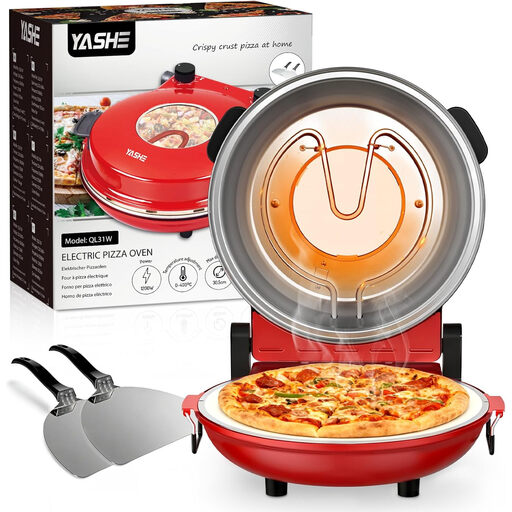 Image unavailable
YASHE QL31W pizza oven, 1200 W, 30 cm stone
A good fit if you want to bake flatbread on a ceramic stone and adjust the top and bottom heat separately.
The product title lists a 30 cm ceramic stone, a timer and a viewing window. Surfaces can get hot during use; wear heat-resistant gloves and keep the appliance away from flammable materials.
View at Joybuy
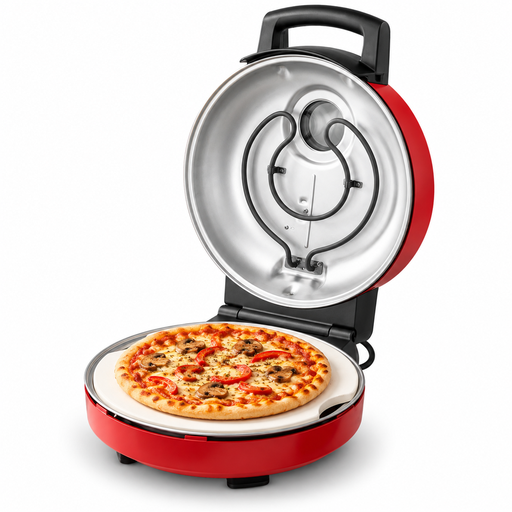 Image unavailable
Electric pizza oven, 1500 W, 32 cm stone
An option if you're looking for an electric oven with a removable stone for flatbread and kitchen use.
The product title lists a maximum temperature of 400 °C, a viewing window, an adjustable thermostat and a timer. For outdoor use, the product information specifies a sheltered outdoor space as a requirement.
View at Joybuy
 Image unavailable
Bosch HBG536EB4 Double Oven, 71 litres
Worth considering if you're looking for a permanent built-in setup rather than a compact stone oven.
The product title lists 3D Hot Air and a stainless steel finish. According to the product information, installation by a qualified electrician is required, along with sufficient ventilation; check the available space for installation beforehand, too.
View at Joybuy
Frequently asked questions
Do you need to buy a pizza oven for naan or other flatbread?
No, not for every recipe: the Netherlands Nutrition Centre explains how to cook naan in a pan. Choose an oven if baking on a stone, demonstrating the method or achieving the throughput you need is a specific lesson objective.
What temperature should you use for pita?
Follow the recipe you're using. Ooni's specific pita recipe aims for 315–370 °C on the pizza stone and recommends checking the stone temperature; this range isn't a general rule for all flatbreads.
What should you check before installation and cleaning?
Before installing the exact model, check its connection and intended use. HENDI lists 230 V and 3000 W for its compact oven with two chambers. Let the stone and oven cool down, and follow the manual for your chosen version when cleaning.
Are accessories or a particular connection included?
This varies by model and version. Unold lists a stone and pizza peel with the Alfredo 68806; HENDI lists 3000 W at 230 V for its compact oven with two chambers. Check the version on offer and the facilities at your workshop venue.
Can you use a wood-fired oven at your outdoor workshop?
Check the rules for the specific venue before burning wood. The Dutch government recommends checking the Stookwijzer and local council rules; some councils restrict wood burning under certain codes, and burning treated wood is prohibited.
Does a paid baking workshop need to register with the NVWA?
That depends on the nature of your business and how often you sell or provide food. According to the NVWA, a business that sells food several times a year must register and work with a food safety plan or hygiene code; its step-by-step guide says those requirements don't apply if you sell food once a year. Assess your situation against the NVWA's conditions.
Do you need to tell participants about allergens?
The NVWA explains that allergen information for non-prepacked food must be available before purchase. Check which ingredients you'll use for the workshop and how you'll share the information with participants.


