
If you prepare several lunches
You want to make several different flatbreads for lunchboxes in as few batches as possible. In that case, the usable baking area matters more than the oven’s capacity in litres alone.


Choose an oven based on the size of your flatbread and how many you want to bake at once. The usable baking tray or stone tells you more than the oven’s capacity in litres alone. A compact countertop oven suits small batches, while a larger oven may be more practical if you want to bake several breads at once. Also check the required clearance for ventilation and the conformity documents for the exact model.
You want to make several different flatbreads for lunchboxes in as few batches as possible. In that case, the usable baking area matters more than the oven’s capacity in litres alone.
You make smaller batches and need to consider both the oven’s external dimensions and the space required for ventilation.
You want to cook other dishes as well as flatbread, so you’re comparing oven settings, baking area and the accessories included.
Best for: small flatbreads or a few portions at a time, especially if you have limited kitchen space.
Bear in mind: you may need to bake in extra batches if the dough won’t fit on the tray.
Best for: anyone who regularly wants to bake larger flatbreads or several at once. Severin lists a 29 cm stone and a capacity of 42 litres for the TO 2058.
Bear in mind: the external dimensions and required ventilation clearance need to fit the space you’ve chosen.
Best for: anyone who also wants to use the appliance for other air-fried dishes. Tefal lists space for pizzas up to 27 cm in the Easy Fry Pizza FW4018E0.
Bear in mind: a pizza programme isn’t a tested programme for every flatbread recipe.
Best for: anyone who mainly wants to bake on a stone at high temperatures. Ooni lists a 12-inch cooking area and a temperature of up to 450 °C for the Volt 2.
Bear in mind: not every flatbread recipe needs such a high temperature; the Netherlands Nutrition Centre uses 200 °C for farinata.
First, measure your rolled-out dough and decide how many flatbreads you want to bake in each batch. Then compare the baking area and the space needed for the oven. Finally, match the features to the recipe you’re using.
| What to consider | What should you check? | Who should consider this? |
|---|---|---|
| Baking area | Measure your dough and compare it with the usable tray or stone. Rommelsbacher lists a baking tin of up to 20 cm for the BG 950; Severin lists a 29 cm stone for the TO 2058. | If I want to bake several lunch portions at once, I’ll focus on the space available on the tray or stone. Around 36% of consumers rank sufficient baking area as their top purchasing priority. |
| Worktop space | Compare the external dimensions with the space available and follow the model’s ventilation instructions in the manual. The Fire Service advises allowing heat from appliances to escape. | If my kitchen has little spare space, I want to know whether the oven will fit safely with the required ventilation clearance. Around 29% of consumers rank suitable placement as their top priority. |
| Baking controls | Check that the oven settings and adjustable temperature suit your recipe. The Netherlands Nutrition Centre gives 200 °C for farinata, while wholemeal naan is cooked in a pan. | If I want to follow a specific flatbread recipe, I want to be able to use the recommended method and temperature. Around 21% of consumers rank baking controls as their top priority. |
| Other uses and care | Check which accessories are included and the cleaning instructions for the parts of the exact model. | If you want to use the appliance for other dishes too, you may want to factor in its features and how easy it is to clean. Around 14% of consumers rank versatility and care as their top priority. |
The capacity doesn’t tell you how much rolled-out dough will fit on the tray or stone. An oven that takes a baking tin of up to 20 cm offers a different amount of room from a model with a 29 cm stone.
Measure your flatbread and check the dimensions of the included tray or stone before choosing a model.
If your dough won’t fit on the baking surface all at once, you may need to bake it in several batches.
Not all flatbread recipes call for an oven; the Netherlands Nutrition Centre describes wholemeal naan as a pan-cooked dish.
First decide which flatbread you want to make. Only buy an oven if oven cooking or other uses for it suit your plans.
If you can make a recipe in a pan, an extra appliance could take up space unnecessarily.
The external dimensions don’t include the ventilation clearance the appliance may need, as specified in the manual.
Check the manual for the exact model and measure the full space needed to position it.
The OV207B is a compact countertop oven for small to medium-sized batches.
The TO 2058 is designed for anyone looking for more baking space and a pizza stone.
The BG 950 is a small oven for limited batches and kitchens with little worktop space.
The Easy Fry Pizza FW4018E0 is an air fryer option for anyone who also wants to use the appliance for other air-fried dishes.
The electric Volt 2 is a specialist option for anyone who mainly wants to bake on a stone at high temperatures.
This selection includes pizza ovens and countertop ovens, an air fryer and oven combination, and a built-in oven. Compare the baking area, installation type and features with your recipe and available kitchen space.
 No image available
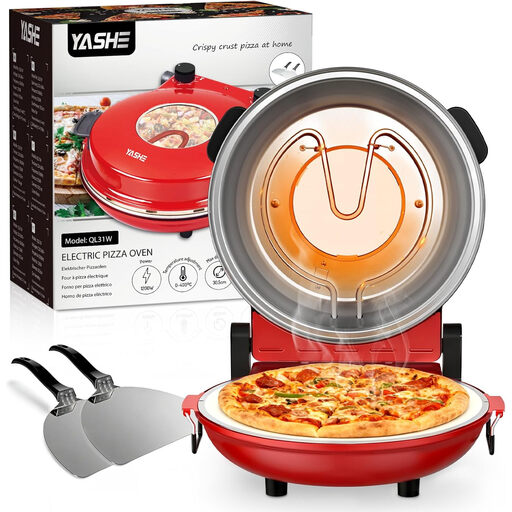
The 30 cm stone may be useful if you’re looking for a generous baking area for flatbread; check that your dough will fit on it.
The product name lists top and bottom heat, a built-in timer and a viewing window. The description gives an adjustable temperature of up to 400 °C.
 No image available
This oven could suit you if you have a suitable built-in space and want to use it for other oven functions as well as flatbread.
The product name lists 3 kW, fan-assisted cooking, a grill, a pizza function and AquaClean steam cleaning. Check that your built-in space is suitable for this model.
 No image available
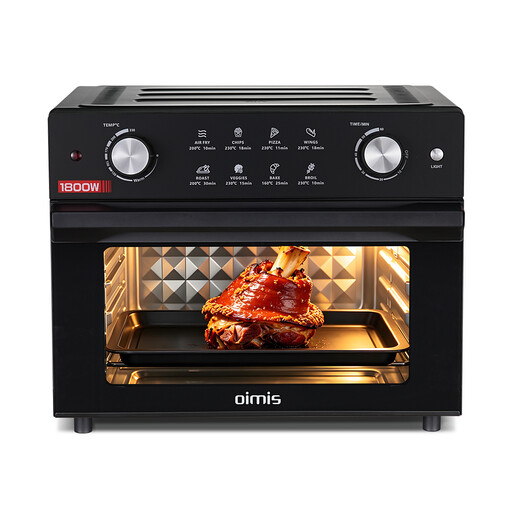
A combination appliance may suit anyone who wants to bake flatbread and use the other cooking functions listed.
The product name lists space for a 13-inch pizza and manual controls. The description mentions two dials for time and temperature.
 No image available
This model may suit you if you want to combine oven cooking with the use of its two hotplates.
The description lists a 30-litre capacity, a temperature range of 100–230 °C, top and bottom heat, a fan-assisted setting and two hotplates.
 No image available
This freestanding oven with hotplate may suit anyone who wants to combine baking with other cooking tasks.
The description lists top and bottom heat, a fan-assisted setting and a grill. Allow for the space needed to position and ventilate the oven.
It depends on the recipe. The Netherlands Nutrition Centre cooks farinata at 200 °C, but describes wholemeal naan as a pan-cooked dish. Choose a recipe first, then check the right oven setting and temperature.
Only if the position meets the requirements in the manual for the exact model. The Fire Service advises allowing heat from appliances to escape, so make sure you leave the required ventilation clearance as well as room for the oven’s external dimensions.
Keep the toppings chilled and use a small cool bag for a school lunch containing food that spoils quickly. That’s the advice from the Netherlands Nutrition Centre. It’s something to consider when packing lunch, rather than when choosing an oven.
No. The Netherlands doesn’t have a fixed statutory guarantee period. According to the Government of the Netherlands, a product must meet what you can reasonably expect from it; a manufacturer’s guarantee may provide additional cover.
Electrical equipment covered by EU low-voltage rules must meet the applicable safety requirements and carry the CE marking. The Dutch government’s Business.gov.nl and EUR-Lex describe these rules. Check the documentation for the exact product to confirm that model’s compliance.