Who is this relevant to?

Home baker making fresh pitta

You bake flatbread using a recipe that calls for a hot, preheated baking tray. Good Food recommends this for one pitta recipe and also specifies a fan setting; compare guidance like this with the oven settings on the model you’re considering.

Baking for a group

You want to bake several breads at once or one batch after another. Check the usable internal dimensions, the size of the baking tray and the number of available shelf levels, rather than looking only at the capacity in litres.

Baker without a built-in housing

You’re looking for a freestanding oven and need to consider the space on your worktop, the baking tray and the room needed for ventilation. Brandweer Nederland stresses that heat from appliances needs to be able to escape.

What should you look for when choosing?

Freestanding fan oven

A good fit if: you don’t have a suitable built-in housing or bake a limited number of breads at a time.

Bear in mind: measure the baking tray and internal space, and follow the positioning instructions for the required ventilation clearance.

Built-in fan oven

A good fit if: you have a suitable housing and also want to use the oven for larger batches or other dishes.

Bear in mind: check both the housing dimensions and the genuinely usable baking area; the stated capacity won’t tell you how many breads will fit on a tray.

What to consider What to look for Who it matters to
Heat and oven setting Compare the fan setting, adjustable temperature and preheating instructions with your own recipe. For one pitta recipe, Good Food recommends 230 °C with the fan on. If I’m making pitta using a recipe that calls for a hot baking tray, I want to be able to select the recommended setting. Around 31% of consumers focus mainly on recipe temperature and oven settings.
Baking space per batch Measure your breads and compare them with the usable internal dimensions and baking tray. If there are several shelf levels, also check which ones the manual says can be used at the same time. For anyone baking for several people, it matters how many breads will actually fit on the tray. Around 31% of consumers focus mainly on baking area and the number of batches.
A suitable setup Measure the available housing or worktop space, and check the positioning instructions and the exact model’s ventilation clearance requirements. If my kitchen has limited space, the oven needs to fit in the space available and allow heat to escape. Around 23% of consumers see the setup as their main consideration.
Energy use and aftercare Where applicable, compare energy use per cycle. Milieu Centraal recommends comparing ovens by energy use per use or per year. Also read the warranty terms; the Rijksoverheid distinguishes between statutory rights and additional manufacturer’s warranties. If I mainly bake at weekends, I want to take energy use and post-purchase cover into account. Around 15% of consumers see these costs and aftercare as their main consideration.

Common buying mistakes

  • Comparing capacity in litres alone

    The usable internal space may be smaller than the stated capacity. As a result, the baking tray may have less room than you’d expect from the number of litres. Consumentenbond recommends checking the internal dimensions.

    Measure your shaped breads and compare them with the tray and internal space of the exact model.

    If the breads won’t fit side by side, you may need to bake an extra batch.

  • Assuming a pizza setting is suitable for every flatbread

    A pizza programme or the temperature of a pizza stone doesn’t automatically tell you which setting is right for your dough. For example, ETNA distinguishes between the oven temperature and the stated temperature of the pizza stone.

    Follow the recipe and the manual, and check which temperature applies to the oven and which to a separate stone.

  • Putting a freestanding oven in a cramped corner

    An oven gives off heat and needs a suitable place. Brandweer Nederland recommends allowing for ventilation around appliances that give off heat.

    Before buying, check the positioning instructions and leave the required ventilation clearance unobstructed.

  • Buying an extended warranty without comparing the cover

    An additional manufacturer’s warranty doesn’t replace your statutory rights in the Netherlands. According to the Rijksoverheid, there is no fixed statutory warranty period; what you can reasonably expect from a product is also taken into account.

    Check what additional cover is offered and keep your proof of purchase. If a product is faulty, contact the seller.

Brands to consider

Inventum

Freestanding fan ovens, including the Inventum OV457B.

  • Inventum says the OV457B has a 45-litre capacity, a fan setting, a temperature setting of up to 230 °C and a baking tray included.
  • The maximum setting doesn’t tell you how many breads will fit on the tray or what results you’ll get. Measure the usable space for your own bread size.

Severin

Freestanding mini ovens and toaster ovens, including the Severin TO 2058.

  • Severin lists a 42-litre capacity, four shelf positions and a 29 cm pizza stone for the TO 2058.
  • Check whether the stone and bread size suit the way you plan to use the oven; a pizza stone isn’t automatically necessary for every flatbread.

ETNA

Built-in ovens, including the OM916MZ and the separate OPZ916MZ.

  • ETNA lists a 77-litre capacity and five shelf positions for both models. For the OPZ916MZ, ETNA also lists a pizza stone as included.
  • The pizza stone is part of the OPZ916MZ specifications and isn’t automatically included with the OM916MZ. Check the housing dimensions and usable baking area.

Siemens

Built-in ovens with a range of cooking settings, including the Siemens HB572ABS3.

  • Siemens says the HB572ABS3 has a 71-litre capacity, 3D hot air, a pizza setting and a temperature range of 30–275 °C.
  • These model specifications don’t show how many pittas will bake evenly at the same time. Check the internal dimensions and settings that suit your recipe.

Ovens at Joybuy

These models include freestanding and built-in ovens for baking flatbread; compare the setup, baking space and stated oven settings with the way you plan to use yours.
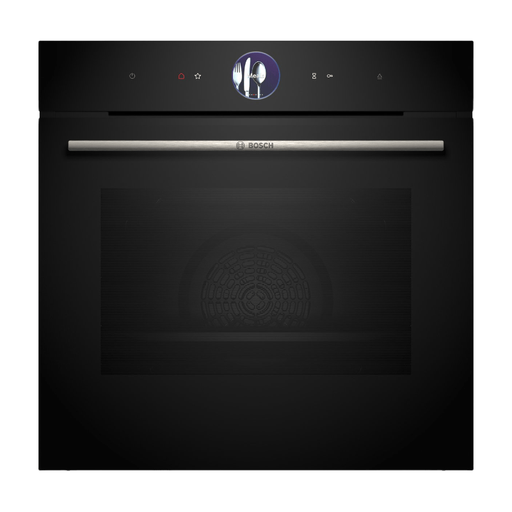
Bosch HSG7364B1 Series 8 built-in steam oven

Bosch HSG7364B1 Series 8 built-in steam oven

A good fit if you’re looking for a built-in oven with a fan setting and several shelf levels.

71-litre capacity, five shelf levels, baking tray, fan setting and a maximum temperature of 250 °C. The stated housing dimensions are 59,5 × 56,8 × 55 cm; the installation information says it should be installed by a qualified electrician.

View at Joybuy

Wiggo WMO-E657(B) freestanding oven, 65 litres

Wiggo WMO-E657(B) freestanding oven, 65 litres

A good fit if you’re looking for a freestanding oven and using a recipe where a high adjustable temperature is important.

65-litre capacity, six cooking functions and a maximum temperature of 250 °C; the product information also lists a turbo fan. Don’t block the ventilation openings while the oven is in use.

View at Joybuy
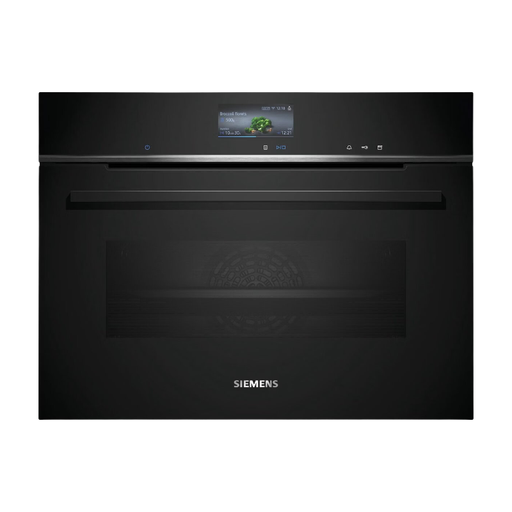
Siemens CS736G1B1 built-in steam oven, 47 litres

Siemens CS736G1B1 built-in steam oven, 47 litres

A good fit if you’re looking for a built-in model with a fan setting and want to bake on several levels.

47-litre capacity, 4D hot air, a maximum temperature of 250 °C and baking on four levels, according to the product information. The stated housing dimensions are 45,5 × 56,8 × 55 cm.

View at Joybuy

Bosch HBA514BB3 built-in oven, 71 litres

Bosch HBA514BB3 built-in oven, 71 litres

A good fit if you’re looking for a built-in oven with a fan setting and want to use several levels.

71-litre capacity, 3D hot air, a maximum temperature of 275 °C and baking on up to three levels at once, according to the product information. The stated housing dimensions are 59,5 × 56,8 × 54 cm.

View at Joybuy
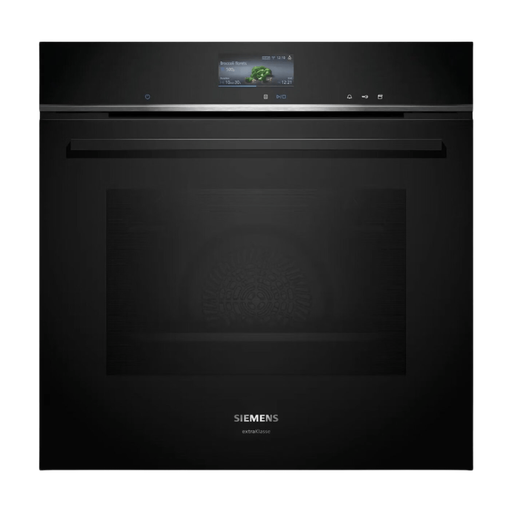
Siemens HS736GDB1 built-in oven, 60 litres

Siemens HS736GDB1 built-in oven, 60 litres

A good fit if you’re looking for a built-in oven with 4D hot air and several shelf levels.

60-litre capacity, five shelf levels, a fan setting and a maximum temperature of 250 °C, according to the product information. Check the housing dimensions and the usable space for your baking tray.

View at Joybuy

Frequently asked questions

Does an oven for flatbread need to reach 300 °C?

No, that isn’t a general requirement when buying an oven. For one pitta recipe, Good Food recommends 250 °C using conventional top and bottom heat, or 230 °C with the fan on, and calls for a hot baking tray. For the OPZ916MZ, ETNA distinguishes between the oven temperature and the stated temperature of the pizza stone; the stone temperature isn’t a general oven temperature.

Can I skip preheating when baking flatbread?

Not if your recipe calls for a preheated baking tray. Good Food specifies this for the pitta recipe mentioned above; for other doughs, follow the relevant recipe and your oven’s manual.

What should I consider when positioning a freestanding oven?

Follow the positioning instructions for the exact model and leave the required ventilation clearance unobstructed. Brandweer Nederland points out that heat from appliances, including ovens, needs to be able to escape.

Do I only get a two-year warranty on an oven in the Netherlands?

No. According to the Rijksoverheid, there is no fixed statutory warranty period in the Netherlands; what you could reasonably expect from the product is also important. A manufacturer’s warranty is additional, and if a product is faulty, you should contact the seller.

Does every freestanding mini oven need a European energy label?

No, this doesn’t automatically apply to every small model. The European Commission lists small ovens as outside the scope of the product group covered by oven energy labels. Check which label or product information sheet applies to the specific model.
