
Flatbread maker without a usable cooker
If you want to make flatbread from scratch in your holiday cottage, consider the size of the usable cooking surface, the worktop space available and the electrical connection.


First, choose a smooth cooking surface that’s large enough for your rolled-out flatbread, then check the available power connection and worktop space. A flat griddle gives you an open cooking surface, a crêpe maker is designed for flat dough-based dishes, and a deep electric frying pan is more versatile for other meals. These differences alone don’t prove which appliance will give you the best results. Before buying, check the details and safety information for the exact model.
If you want to make flatbread from scratch in your holiday cottage, consider the size of the usable cooking surface, the worktop space available and the electrical connection.
If you’re cooking for several people, a large, smooth cooking surface makes it easier to compare your preferred bread size with the space available. Small cooking areas aren’t the same as one large, uninterrupted surface.
If you want to make other meals as well as flatbread, weigh up the versatility of a pan against the space the appliance takes up and how you’ll clean it after use.
Choose this if: you want an open, smooth cooking surface that makes it easy to fit your dough to the available space.
Things to consider: check that the shorter side of the cooking surface is wide enough for your flatbread, and that the appliance is suitable for the available power connection and worktop space.
Choose this if: you mainly make smaller, flat dough-based dishes. Tefal lists naan and pitta as suitable uses for the PY900D12.
Things to consider: the interchangeable plates have different layouts; the plate with six small cooking areas isn’t one large, uninterrupted surface.
Choose this if: you want to use the same appliance for other meals too. According to Tristar, the Tristar PZ-9145 has a round cooking surface measuring Ø 40 cm, a lid and a removable divider.
Things to consider: the high sides may make it harder to turn larger, thinner flatbreads; use the undivided cooking surface for flatbread.
For anyone wanting to make flatbread in a holiday cottage, the main things to consider are size, power connection, cleaning and whether you’ll use the appliance for other meals too.
| What to consider | What should you check? | Who should pay particular attention? |
|---|---|---|
| Cooking surface size | Compare the dimensions of your rolled-out dough with the uninterrupted cooking surface. Check the shorter side, edges and any dividers. | If I want to make flatbread in a particular size, I want to know that the dough will lie flat and leave room to turn it. Around 37% of consumers prioritise the size of the cooking surface. |
| Power connection and positioning | Check the stated power rating, cord length, clearance space and the type of connection available at your holiday accommodation. | If I’m cooking while away, I want to know in advance whether the appliance can be set up somewhere suitable and connected safely. Around 27% of consumers give top priority to electrical compatibility and positioning. |
| Cleaning and transport | Check the dimensions of the whole appliance and which parts the manufacturer says are removable or dishwasher-safe. | If I have limited luggage space or don’t know what cleaning facilities will be available, I want an appliance that’s practical to clean and store. Around 18% of consumers prioritise maintenance and portability. |
| Making other meals too | Decide whether you’ll mainly make flatbread or also want to cook one-pot meals; compare the usable cooking surface and the height of the pan sides. | If I only want to take one appliance, versatility may matter more to me than an open griddle just for flatbread. Around 18% of consumers give top priority to using their appliance for meals other than flatbread. |
The stated wattage doesn’t provide a comparison of cooking results. The Fire Service advises plugging high-power appliances directly into a suitable socket rather than using an extension lead or cable reel. Check the rules at your holiday accommodation too.
The capacity in litres doesn’t tell you whether rolled-out dough will fit flat on the base. The dimensions and shape of the usable cooking surface are more relevant.
Compare the uninterrupted cooking surface with the size of your flatbread, and check separately how much usable space any supplied divider takes up.
A stated power rating doesn’t compare how evenly the temperature is distributed or the cooking results.
Consider the power rating alongside the cooking surface, temperature control and the power connection available in your holiday cottage.
Cleaning instructions vary by model. A detachable plug or temperature control isn’t automatically suitable for washing with water or in the dishwasher.
Read the instructions for the exact model and keep electrical controls away from washing water.
Electric frying pans, including the PZ-9145 for anyone who wants to cook other dishes in the same pan as well as flatbread.
Flat Table Chef griddles, such as version 01.102300.01.500 of the 102300 Table Chef Pro.
Electric crêpe makers, including the PY900D12, which Tefal also recommends for making dishes such as naan and pitta.
Nedis offers both electric frying pans and separate flat teppanyaki griddles; the models differ in shape and intended use.
This selection mainly features flat plancha and grill plates, alongside a deep electric frying pan for anyone who wants to cook other dishes too. Before buying, check the safety information and CE marking for the exact model; product specifications alone don’t confirm that a particular item meets all applicable requirements.
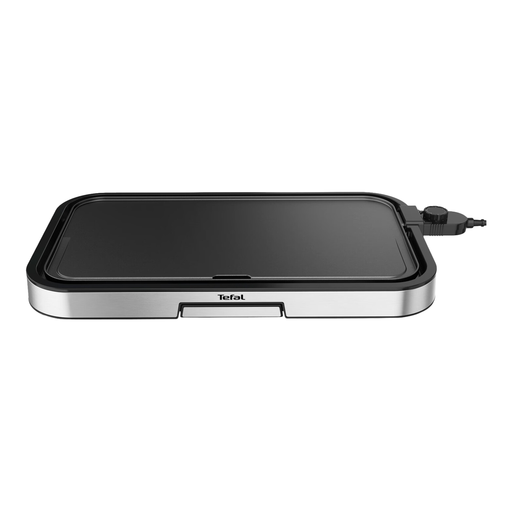 Image unavailable
The product information lists a smooth plate and adjustable temperature, making it a good fit for anyone looking for an open cooking surface.
The product description says it can be used for up to 12 people; this alone doesn’t tell you how many flatbreads will fit at once. The product is described as having a non-stick coating and a stainless-steel finish.
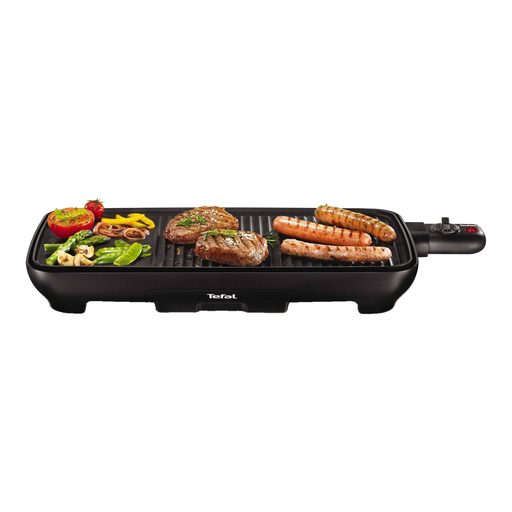 Image unavailable
According to the product information, this plancha has a flat section and a ridged grill section. Check that the flat part is wide enough for your dough.
The cooking surface measures 19 × 23.5 cm, and only a third of it is flat. The description lists a detachable thermostat with six settings.
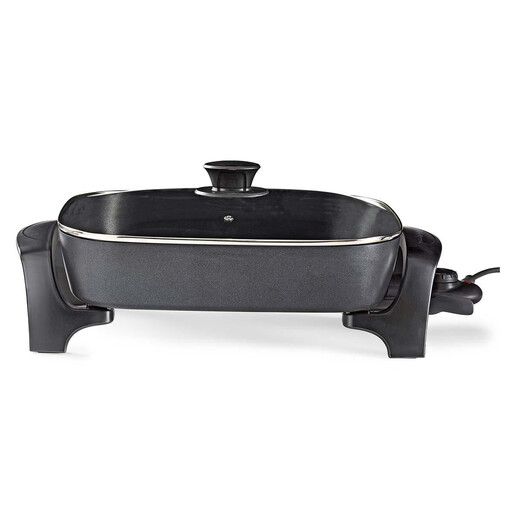 Image unavailable
This deep pan is an option if you want to cook other dishes in the same appliance as well as flatbread. According to the product information, the round pan has a diameter of 40 cm and an internal height of 80 mm.
The high sides may make it harder to turn thin flatbread. The product information says the pan and lid are dishwasher-safe; the temperature-control plug must not be immersed in water or put in the dishwasher.
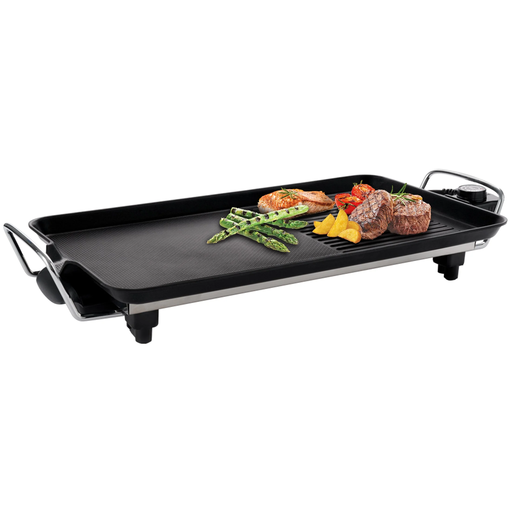 Image unavailable
This plate combines a smooth teppanyaki section with a ridged grill section; the smooth part is the one to use if you want to make flatbread.
The plate measures 48 × 20 cm, with two-thirds of the surface smooth. According to the product information, the thermostat has five settings; one-third of the surface is ridged, so it isn’t flat enough for flatbread.
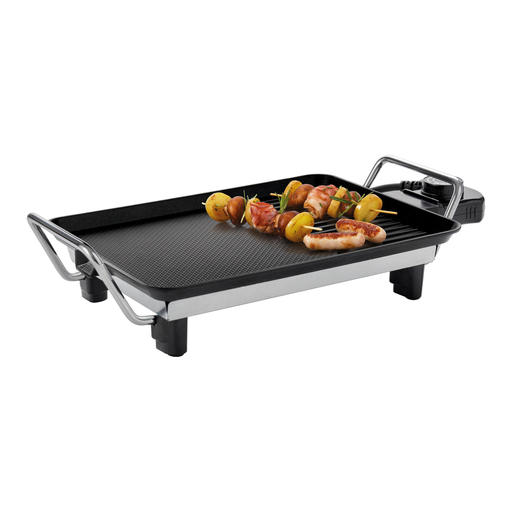 Image unavailable
This plate is designed for anyone looking for a combination of a smooth teppanyaki section and a ridged grill section. Check that the flat part is large enough for your flatbread.
The plate measures 28 × 20 cm and, according to the product information, two-thirds of its surface is smooth. The thermostat has five settings; the ridged section isn’t flat enough for flatbread.
Compare the diameter of your rolled-out dough with that of a round, undivided cooking surface, or check the shorter side of a rectangular one. A plate with six small cooking areas isn’t one large, flat surface.
The Fire Service advises plugging high-power appliances directly into a suitable socket wherever possible. Check the power connection and any rules at your holiday accommodation too.
This varies by model. Tristar says the PZ-9145 isn’t dishwasher-safe. For the FCSP110EBK40, Nedis says the pan and lid are dishwasher-safe, but the temperature-control plug isn’t.
According to the Dutch government, you’re entitled to a product that works as you’d reasonably expect; if there’s a fault, the retailer is your point of contact. There’s no fixed statutory two-year guarantee period in the Netherlands. For an online consumer purchase, ACM ConsuWijzer says you generally have up to 14 days after delivery to change your mind, subject to exceptions.
According to the Dutch government, electrical appliances placed on the market in the EU must carry a CE marking. Check the information for the exact model, and don’t assume it complies just because of the title on a retailer’s website. Tristar has issued an EU declaration of conformity for the PZ-9145 model, dated 2025.