What should you consider when choosing?
Start with the size and condition of your poems. Then assess how well a test scan preserves detail, before checking the connection, software and storage options.
| What to consider |
What should you check? |
Who is this important for? |
| Handwriting and visual details |
Make a colour test scan and view fine details at actual size. Compare any image enhancement with an unedited scan. |
If I want to preserve corrections, faint lines and ink colours, I’ll check a test scan first. Around 42% of consumers put preserving visual details first. |
| Paper size and positioning |
Measure your largest sheet and check that it can lie flat safely on the scanning area. Also consider the space available on your desk. |
If I have limited workspace or fragile sheets, I want to know in advance whether the original will fit safely. Around 33% of consumers prioritise size, handling and positioning. |
| Files and computer use |
Check that the software and connection work with your computer. Decide how you want to name and store your files, and whether you may want them transcribed. |
If I want to find my poems again later, I need usable files and want to distinguish an image scan from a transcription. Around 25% of consumers prioritise archiving and computer use. |
Joybuy products
This selection focuses on flatbed scanners for individual poems and for keeping digital copies of your scans. For each model, check that the scanning area, software and connection suit your originals and computer.
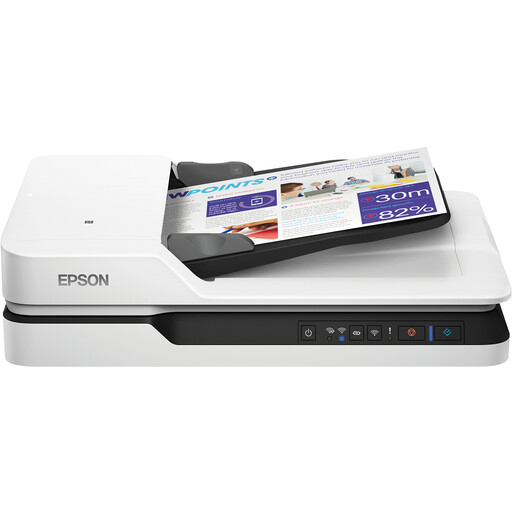 Image unavailable
Epson WorkForce DS-1660W, 1200 × 1200 DPI, A4
An option to compare if you want to scan individual A4 poems. The product name lists 1200 × 1200 DPI; check that the connection and software work with your computer.
View on Joybuy
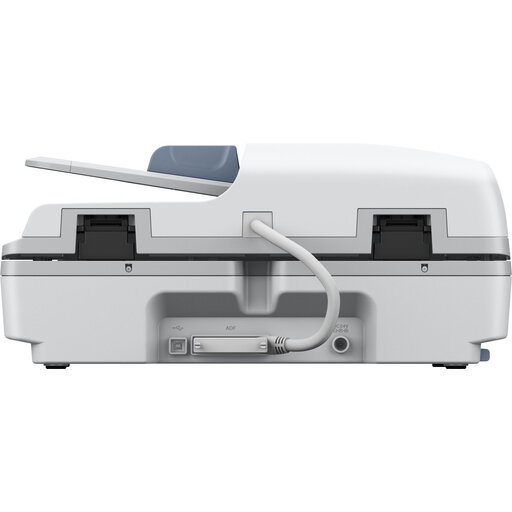 Image unavailable
Epson WorkForce DS-6500 Power PDF
This may suit a workflow where you scan individual poems on a flatbed and store them digitally. Before buying, check which software and file formats work with your computer and archive.
View on Joybuy
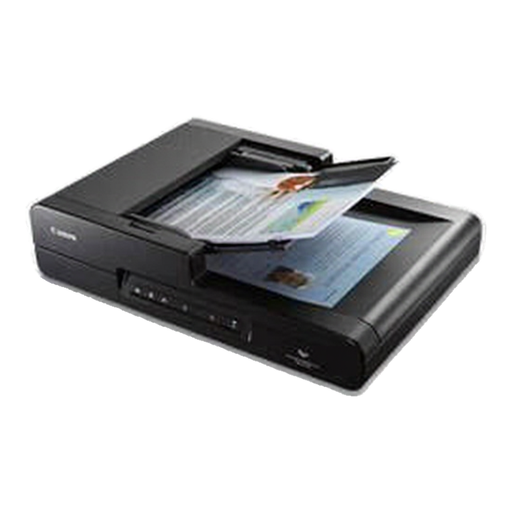 Image unavailable
Canon imageFORMULA DR-F120, A4, 600 × 600 DPI
The product name lists an A4 flatbed scanner with an ADF. If you also want to scan fragile poems, consider whether you can place them safely on the flatbed one at a time.
View on Joybuy
Frequently asked questions
Which scan setting should I use for a poem with faint corrections or different ink colours?
Start with a colour test scan and check the faintest marks at actual size. The US National Archives recommends at least 400 pixels per inch at the original document size for paper with fine detail, in the context of digitising US federal archive material. This is not a UK requirement and doesn’t guarantee that every scanner will capture handwriting clearly.
Can I press a fragile or bound original flat under the scanner lid?
Don’t do this without first checking that the original can be handled safely. The Library of Congress advises digitisation projects to consider the condition of the material and the risk of damage. This is precautionary advice, not a legal requirement for home use.
Will OCR automatically make my handwritten poems accurately searchable?
Don’t assume so: a scan may be only an image of the poem, while transcription is a separate step. The National Archives describes specialist handwriting recognition and notes that using the open-source solution mentioned requires above-average IT skills. Check any transcription against the original.
What can I do if my scanner develops a fault after purchase?
If the product is faulty, contact the seller about your statutory rights. According to the Dutch government, the Netherlands has no fixed statutory guarantee period; what you can reasonably expect depends on the product and the circumstances. An additional manufacturer’s guarantee does not replace those statutory rights.
Can I publish someone else’s scanned poems online?
Not without the required permission. The Dutch government states that you may copy other people’s texts for personal use, but you may not share or publish them without permission. According to the Dutch government, copyright automatically applies to texts you write yourself.


