
Readers who want to preserve handwriting accurately
You want to capture the strokes of the ink, annotations and the whole letter as an image. Any text recognition is a separate step and does not replace the image scan.


First, choose a scanning bed that fits the letter and decide whether the paper can be laid flat safely. A compact A4 scanner is designed for letters within that size, while larger sheets need a larger scanning bed. Canon lists a maximum scan area of 216 × 297 mm for the CanoScan LiDE 400; Plustek lists 297 × 431,8 mm for the OpticSlim 1180. Keep the image scan separate from any transcript, and agree with others in the shared studio who can access the files.
You want to capture the strokes of the ink, annotations and the whole letter as an image. Any text recognition is a separate step and does not replace the image scan.
You work with folded or damaged paper. First, check whether the original is safe to handle before placing it on a scanning bed; the Library of Congress highlights safe handling as a consideration when digitising materials.
You share a desk and equipment with others. As well as considering how much space the scanner takes up, it’s important to agree where files are stored and who can access personal letters.
| What to consider | What to look for when buying | Who is this important for? |
|---|---|---|
| Image quality for handwriting | Compare the scanning settings and check with a test scan that pale ink and notes in the margins remain visible. | If I want to preserve handwriting and annotations as an image, I look at the scan itself rather than a promise of automatic transcription. Around 33% of consumers prioritise image fidelity. |
| Fragile paper | Check the condition of the letter and decide whether it can lie flat on the glass without being forced. | For folded or damaged letters, I first want to know whether I can handle the paper safely. Around 25% of consumers prioritise protecting the original. |
| Shared workspace | Check that the connection and software work with the computers being used. Also agree where files will be stored, who can access them and how they will be cleared away. | If several people use the same scanning station, I want to agree in advance where scans will be saved and who can open them. Around 25% of consumers prioritise an orderly, secure workflow. |
| Letter size | Measure the largest sheet, including its edges, and compare the dimensions with the maximum scan area. | For an unfolded letter or an enclosure, I want to know whether it will fit fully in a single scan. Around 17% of consumers prioritise a larger scan area. |
Optical resolution is a device specification. The Netherlands’ National Archives describes handwriting recognition as a separate software task in which the software is trained using transcripts.
First, assess an image scan of a representative letter, then check any transcript separately against the original.
A sheet larger than the scan area will not fit fully in a single scan. Measure the largest document and compare millimetres with millimetres.
If the scan area is too small, you may need to spend extra time combining partial scans, or find that you need a scanner with a larger scan area later on.
In a shared space, personal letters could end up with people they were not intended for.
Agree a suitable storage location and access permissions for each user. If personal data is being processed as part of an organisation’s activities, check which GDPR obligations apply.
The Canon CanoScan LiDE 300 and LiDE 400 are A4 flatbed scanners for individual documents. These features apply to these models, not the entire range.
The Perfection V39II is a compact A4 flatbed scanner with a built-in stand, making it easy to put away between scanning tasks.
The OpticSlim 1180 is a larger flatbed option for unfolded letters and enclosures that do not fit within A4.
These Joybuy product options may suit scanning letters and documents. Check each model to make sure its stated document feed and scanning bed are suitable for the paper you want to digitise.
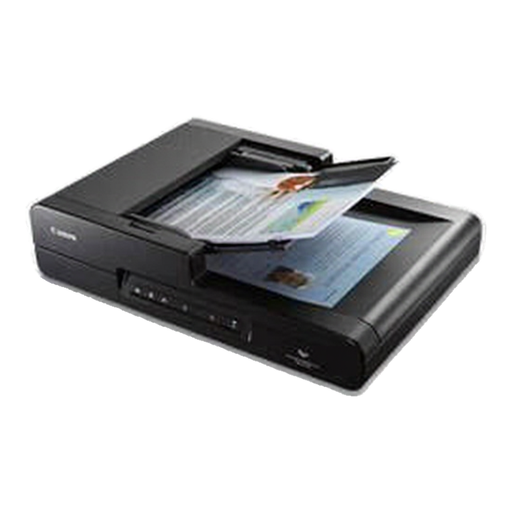 Image unavailable
The product description mentions a flatbed for delicate materials; you should still check whether the letter is safe to handle.
The product listing specifies A4, a flatbed, an automatic document feeder, duplex scanning and 600 × 600 dpi. The stated document feeder capacity is 50 sheets.
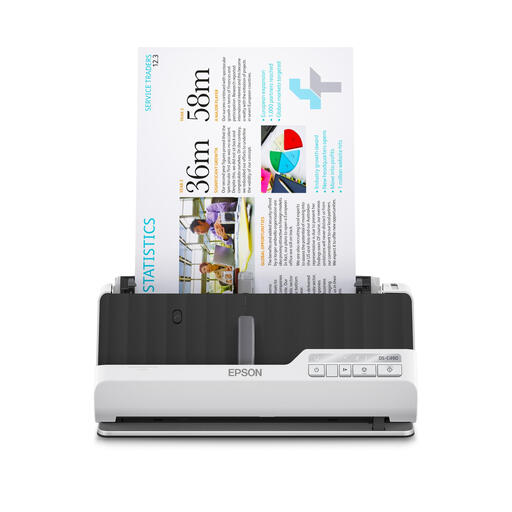 Image unavailable
The product name specifies ADF and sheet-fed scanning. Before buying, check whether this version also has a glass scanning bed, if you need one for fragile letters.
The product name specifies A4 and 600 × 600 dpi.
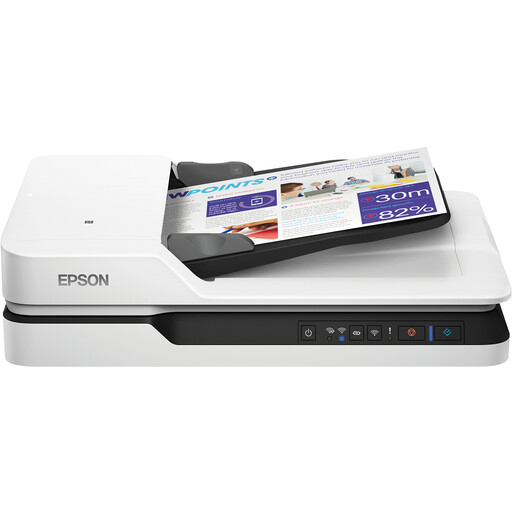 Image unavailable
The product description mentions a flatbed for delicate documents; check the condition of a fragile letter before placing it on the glass.
The listing specifies A4, a flatbed and 1200 × 1200 dpi. It also mentions wireless connectivity and USB 3.0; check that the connection and software work with the computers in your studio.
Not without checking the results. The Netherlands’ National Archives describes handwriting recognition as a separate process in which software is trained using transcripts. Keep the image scan and compare any automatic transcript with the original.
Check that the driver and software work with the operating system the studio actually uses, and agree on a set, secure location for files. A USB connection or scan button alone does not prove that the scanner will work with every studio system or storage destination.
First, check whether the paper is safe to handle, and look for tears and folds. The Netherlands’ National Archives assesses the physical condition of materials before digitisation, while the Library of Congress highlights safe handling as an important preliminary consideration. Do not force fragile paper onto the scanning bed.
Not to have statutory rights when buying a product that works properly. According to the Dutch Government, there is no fixed statutory warranty period in the Netherlands. Whether an extended warranty offers anything extra depends on its terms and any additional rights it includes.
Not automatically. According to the Dutch Data Protection Authority, processing personal data as part of an organisation’s activities must follow GDPR principles, and an appropriate lawful basis must be established in advance. The Authority describes an exception for publishing solely for personal or household purposes; simply sharing a studio does not determine whether that exception applies. For the letters in question, agree on the purpose, access and retention period.