Choose an A4 flatbed scanner if you mainly scan individual letters that fit on the scan bed. For bound documents or larger sheets, a book scanner or a larger scan bed may be a better fit. Compare the OCR and software options too, and check that scans are complete: manufacturer specifications don’t guarantee archive-quality results. For correspondence containing personal data, retention periods, access and sharing are separate organisational decisions.
Who are these scanners suitable for?
Someone caring for delicate letters
You want to capture individual old letters and possibly bound documents carefully, and check the scans page by page. The National Archives describes checking image quality and identifying skipped pages as part of its digitisation process.
A volunteer who needs to find documents again
You want to search correspondence by name, date or text, so you look beyond image quality to OCR and consistent filing. Plustek lists OCR and searchable PDFs for the OpticBook 4800; check how well it recognises your own letters.
Someone looking after larger documents
You may also have sheets or spreads that won’t fit on an A4 scan bed, so you want to compare the size of your originals with the scan area. Canon lists the CanoScan LiDE 400’s maximum scan area as 216 × 297 mm.
What should you look for?
Compact A4 flatbed scanner
Choose this option: if you mainly scan individual letters up to A4 size. Canon lists a scan area of 216 × 297 mm and USB power for the CanoScan LiDE 400; Epson describes the Perfection V39II as an A4 model with a stand.
Bear in mind: originals larger than the scan area won’t fit in a single scan. Canon’s stated scan time applies to an A4 colour scan at 300 dpi and doesn’t include transfer to the computer.
Book-friendly flatbed scanner
Choose this option: if the correspondence is in bound registers or scrapbooks. Plustek describes the OpticBook 4800 as having a 2 mm book edge.
Bear in mind: this model specification doesn’t prove that every delicate book can be laid flat safely. Assess the condition and positioning of each original.
A3 flatbed scanner
Choose this option: if full-size sheets or spreads won’t fit on an A4 glass bed. Plustek describes the OpticPro A320E as an A3 flatbed scanner.
Bear in mind: measure your largest originals and compare them with the scan area of the exact model variant. A larger format may be unnecessary for individual A4 letters.
| What to consider |
What should you check? |
Who should pay particular attention? |
| Delicate or bound originals |
Assess the paper and binding, how the item sits on the glass bed, and the results of a test scan. |
I want to handle old or delicate documents carefully and check every page. Around 28% of consumers put careful handling of delicate originals first. |
| Finding documents again |
Check whether the software for the exact model supports OCR or searchable files; test names and dates on one of your own letters. |
If I want to search by name, date or text later, I need recognition and consistent filing as well as scans. Around 22% of consumers give finding documents again their top priority. |
| Confidentiality |
Decide who will have access, why the files are being kept and for how long; assess storage and sharing separately from the scanner. |
I want to avoid making correspondence containing personal data more widely accessible than necessary. Around 22% of consumers put confidentiality first. |
| Size of the originals |
Measure the width and height of the largest sheet or spread you want to scan, then compare it with the scan area. |
If I want to capture a large sheet in full in a single scan, the scan area needs to match the original. Around 11% of consumers cite a larger format as their top purchasing priority. |
| Workspace and ease of use |
Check the dimensions, connection and software for your computer; allow time for placing, naming and checking files. |
In a shared or small workspace, I want to be able to manage regular scanning tasks practically. Around 17% of consumers give workspace and ease of use their top priority. |
Common pitfalls
-
Choosing based only on the highest dpi figure
A quoted resolution doesn’t tell you whether every page will be legible, complete and easy to find again. Canon notes that the maximum scan area gets smaller at higher scan resolutions.
Test the level of legibility you need using representative letters, and check that the whole page and your chosen file format are suitable.
-
Choosing an A4 model without measuring your largest original
Canon gives the maximum document size for the CanoScan LiDE 400 as 216 × 297 mm. A larger original won’t fit in a single scan.
Measure the width and height of your largest letter, enclosure or spread in advance, then compare them with the stated scan area for the exact model.
-
Mistaking a sharing or cloud feature for an archiving policy
A scanner feature doesn’t determine who can access files or how long correspondence containing personal data is kept. The Dutch Data Protection Authority points out that organisations must decide on appropriate security measures.
Separately record who has access, why the scans are being used and how long they’ll be kept. Assess any sharing or storage workflow before using it.
Brands to consider
Canon
The CanoScan LiDE 400 is a compact A4 flatbed scanner for individual correspondence that fits within 216 × 297 mm.
- Canon lists USB power, five scan buttons and an approximate scan time of 8 seconds for an A4 colour scan at 300 dpi. This scan time doesn’t include transfer to the computer.
- The A4 scan area isn’t large enough to capture larger sheets in a single scan. These are model specifications, not the results of an independent quality test.
Epson
Epson describes the Perfection V39II as an A4 flatbed scanner for documents and photos, with a stand for limited workspace.
- Epson lists USB power, four task buttons and text enhancement features.
- Check which software is available for your computer and archiving workflow, and test the results on your own letters. Text enhancement doesn’t guarantee that every letter will be searchable.
Plustek
Plustek describes the OpticBook 4800 as a book scanner and the OpticPro A320E as an A3 flatbed scanner for larger originals.
- According to Plustek, the OpticBook 4800 has a 2 mm book edge and supports searchable PDFs. For the OpticPro A320E, Plustek lists a CCD sensor and OCR.
- These descriptions apply to the models named and don’t prove that delicate originals can always be laid flat safely, or that every scanner from the brand has the same features.
Joybuy products for correspondence and archiving
This selection includes scanners for individual A4 correspondence, batches of documents fed through the scanner and capturing larger A3 sheets. Check that each model’s supported originals, software and computer connection suit your workflow.
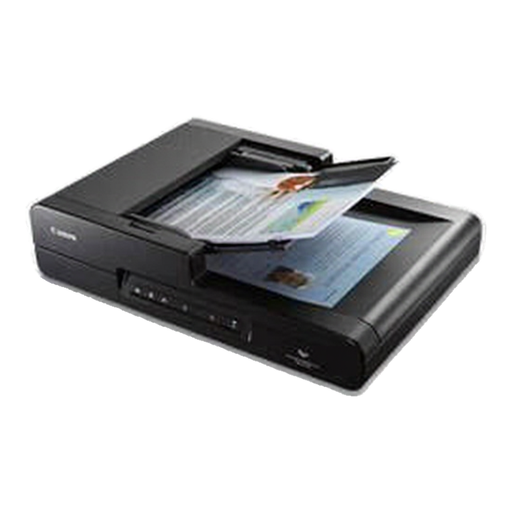 Image unavailable
Canon imageFORMULA DR-F120
The flatbed is designed for delicate materials, while the automatic document feeder (ADF) is suitable for stacks of individual documents.
A4 flatbed scanner; the product name states 600 × 600 dpi. The description lists automatic duplex scanning, a 50-sheet ADF and output to editable PDF. Use the flatbed for thick or bound documents.
View at Joybuy
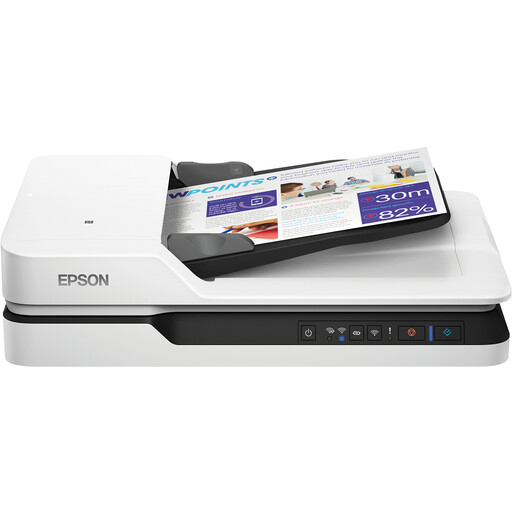 Image unavailable
Epson WorkForce DS-1660W
This A4 flatbed scanner may suit individual letters and documents processed through the feeder. Check the workflow for delicate or bound items.
The product name states 1200 × 1200 dpi. The description lists automatic duplex scanning, an ADF and suitability for delicate pages and bound documents, as well as wireless and USB connections.
View at Joybuy
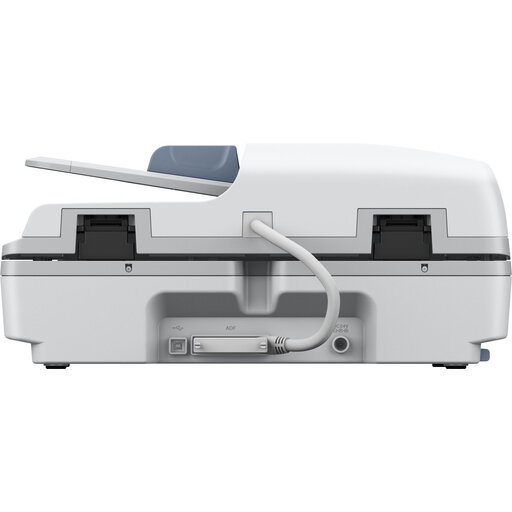 Image unavailable
Epson WorkForce DS-6500 Power PDF
The ADF and automatic duplex function described may suit batches of correspondence. Check that the software and connection work with your group’s computer.
The description lists a 100-sheet ADF, automatic duplex scanning and searchable PDFs. It also mentions output to PDF, JPG and TIFF, and an optional network interface.
View at Joybuy
 Image unavailable
CZUR Shine 800 A3 Pro
This model may be worth considering if your group wants to capture A3 and A4 sheets and needs OCR. Before buying, check that the workflow is suitable for your originals.
The description lists OCR, automatic cropping and page splitting, a USB connection and a foot pedal. Windows and macOS are listed as compatible. The description advises against scanning glossy materials, such as glossy photos and magazines.
View at Joybuy
Frequently asked questions
Do we need an A3 scanner for letters?
Not if all the originals fit within the A4 scan area of the model you choose. Measure your largest letter, enclosure or spread: Canon lists a maximum of 216 × 297 mm for the LiDE 400, while Plustek describes the A320E as an A3 flatbed scanner.
Will the scanner automatically make an archive searchable?
No. A scanned image doesn’t automatically become a searchable text file. Check whether the software for the exact model supports OCR or searchable files, and test names and dates on your own letters. Consistent filing and checking for missing pages are also part of the process.
How should we prepare originals and check the scans?
Before scanning, check each original for folds, tears and materials that could damage the glass bed. Afterwards, check the image quality and make sure every page has been captured. The National Archives describes these checks as part of its own digitisation process; apply them carefully to your group’s documents.
What should we check before connecting the scanner to our computer?
Check which drivers and software are available for your computer and model, and allow time for filing, checking OCR and quality control. Canon provides model-specific downloads and support, but this alone doesn’t determine how long the whole archiving project will take.
Can we keep or share scanned letters containing personal data indefinitely?
No, not simply because the letters have been scanned. According to the Dutch Data Protection Authority, personal data must not be kept for longer than necessary for the purpose of processing. You should also decide on appropriate security measures and assess disclosure separately. Consent is one possible legal basis under the GDPR, but it isn’t automatically the only one.


