What should you look for?
First, compare the keyboard’s size on your desk and in your bag. Then consider typing comfort, how it connects to your writing device and what’s involved in keeping it powered.
| What to consider |
What should you check? |
Who should pay extra attention? |
| Quiet typing |
Compare the key mechanism and, if possible, try the keyboard on a hard table. Don’t treat ‘quiet’ as a decibel measurement. |
When I’m writing in a shared space, I want to be considerate of others without assuming that my typing is inaudible. Around 28% of consumers prioritise quiet typing. |
| Pack size |
Compare the dimensions when in use and when packed away; check whether a cover or case is included. |
If my bag is already full of study materials, I want to know how much space the keyboard will take up when I carry it. Pack size is a top priority for around 22% of consumers. |
| Typing comfort |
Try the letters, punctuation and shortcut keys you use when writing and editing seminar questions. |
When writing longer texts, I want enough space between the keys and a layout that feels comfortable to use. Around 22% of consumers give typing comfort top priority. |
| Device connection |
Check Bluetooth or the available USB port, the operating system and your preferred keyboard layout. |
If I switch between a tablet and a laptop, the connection and key functions need to work with both devices. Around 17% of consumers start by checking device compatibility. |
| Power and maintenance |
Check whether the model has a rechargeable battery or uses replaceable batteries, and what’s needed to charge or replace them. |
If I don’t want to be interrupted during a study session, I want to know in advance how to charge the keyboard or replace its batteries. Power management is the first thing around 11% of consumers look at. |
Joybuy products
This Joybuy selection includes keyboards for certain iPad models and wireless keyboards with different connection options. Before choosing, check that the model and layout suit your writing device.
 No image available
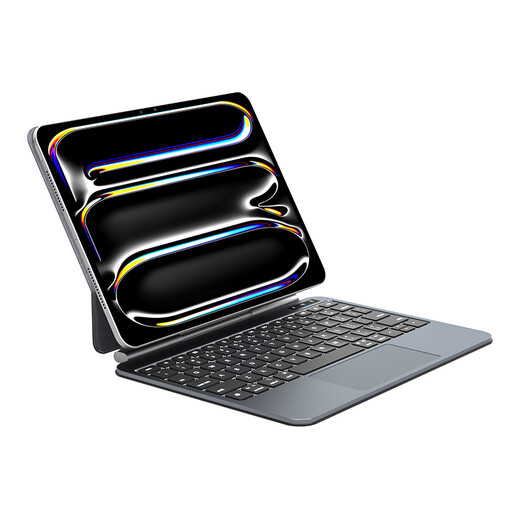
VoxorAI / Apple Magic Keyboard for iPad Pro 11-inch, M4/M5
An option to compare if you use one of the iPad Pro models listed and are looking for a wireless keyboard.
The title lists compatibility with iPad Pro 11-inch models with an M4 or M5 chip. The description mentions Bluetooth, iOS, 78 keys and a weight of 0.85 kg.
Joybuy
 No image available
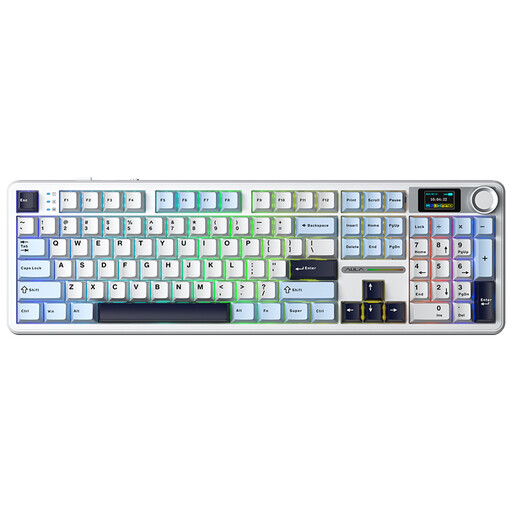
AULA F108 Pro wireless mechanical gaming keyboard, light blue
Could be a good fit if you want to compare different connection types; check the typing feel and noise before using it in a library.
The product name lists Bluetooth, 2.4G and USB-C, a Smart LCD Screen, a rotary knob and Reaper Linear Switch. The title also specifies a hot-swappable version.
Joybuy
 No image available
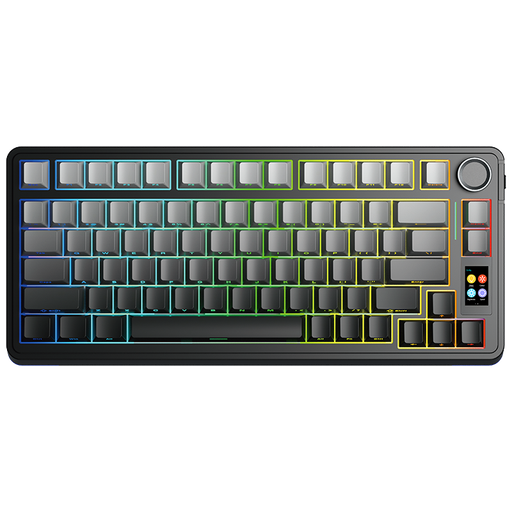
AULA S75 Pro wireless mechanical keyboard, 75% layout
An option to compare if a compact keyboard layout and a choice of connection types suit the way you work.
The product name lists Bluetooth, 2.4G and USB-C, a TFT display, a rotary knob and a hot-swappable Star Vektor Switch.
Joybuy
 No image available
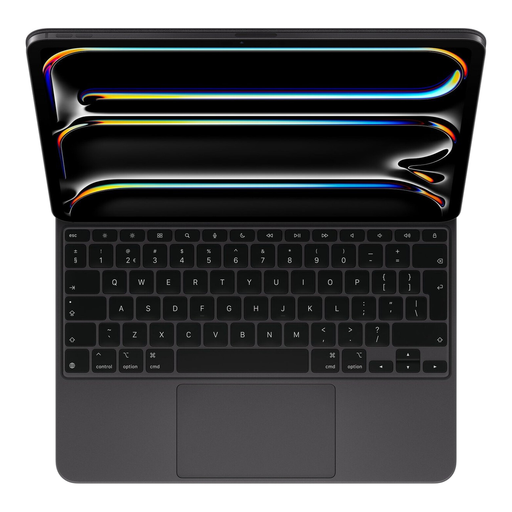
Apple Magic Keyboard for iPad Pro 13-inch, M4, Dutch QWERTY layout
A tablet-focused option if you use the iPad Pro version listed and would also like a trackpad while you write.
The description lists a Dutch QWERTY layout, trackpad, adjustable viewing angles and a protective cover for 2024 iPad Pro models.
Joybuy
 No image available
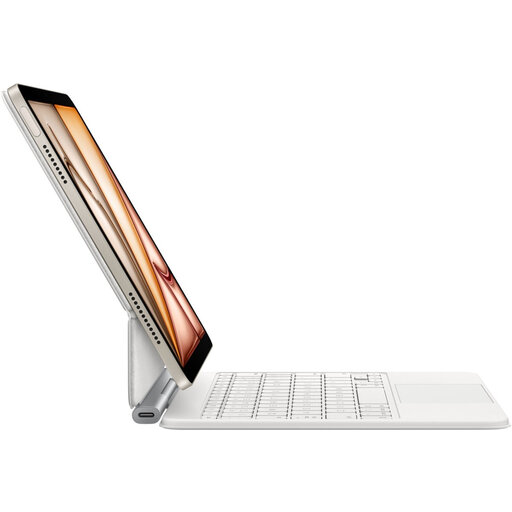
Apple Magic Keyboard for iPad Air 11-inch M3, Dutch layout, white
A tablet-focused option if you use the iPad Air version listed and are looking for a Dutch keyboard layout.
The product name lists iPad Air 11-inch M3, a Dutch layout and the colour white.
Joybuy
Frequently asked questions
Can I assume that a keyboard described as ‘quiet’ is suitable for every library?
No. That description doesn’t guarantee that your keyboard will sound quiet in every study space. Leiden University Libraries asks visitors to be considerate of others; try the keyboard yourself where possible and follow the library’s guidance.
How do I connect the universal Logitech Keys-To-Go 2 to my device?
According to the Logitech manual, select Keys-To-Go 2 in your device’s Bluetooth settings. For Android, Logitech describes holding Fn + G for three seconds to enable the Android layout.
What should I do with empty replacement batteries?
Take empty batteries to a collection point, such as a shop or supermarket that sells batteries. The Dutch government says that empty batteries can be handed in at these locations.
What if a keyboard bought online is uncomfortable to type on or breaks quickly?
For online purchases, you generally have a statutory cooling-off period of up to 14 days after delivery. This is separate from your rights if, during normal use, the product doesn’t meet what you could reasonably expect from it: according to ACM ConsuWijzer, the seller must then offer an appropriate solution. Before buying, check how you can try the product and return it.


