
Brunch shoppers planning quantities
If you’re feeding several guests, you’ll want to know how many grams are in a pack and whether you’ll have enough of your chosen variety to serve everyone.


For Easter brunch, first choose a type of flakes that suits your guests, then work out how many grams you’ll need. When comparing different packs, check the fibre, sugar and salt per 100 g. Check the ingredients and allergen information separately: cornflakes aren’t automatically gluten-free, and a hot cereal breakfast isn’t a direct substitute for crunchy flakes.
If you’re feeding several guests, you’ll want to know how many grams are in a pack and whether you’ll have enough of your chosen variety to serve everyone.
You check the fibre, sugar and salt per 100 g and read the ingredients list, rather than relying on words such as wholegrain or unsweetened.
You check the ingredients and allergen information on the current pack for your guests, even when maize is the main ingredient.
First decide whether you want to serve crunchy flakes, another type of cereal or a hot breakfast option alongside them. Then compare the contents and labels of the packs that suit your choice.
| What to consider | What should you check? | Who is this important for? |
|---|---|---|
| Quantity | Check the weight per pack and work out how many guests will eat the flakes you’ve chosen. | If I’m serving flakes to several guests, I want to have enough without ending up with lots left over. For around 36% of consumers, quantity comes first. |
| Nutritional information | Compare the fibre, sugar and salt per 100 g, and check which grains or sweeteners are listed in the ingredients. | I want to see how the varieties differ in these nutritional values, even if the front of the pack says wholegrain or unsweetened. Around 29% of consumers prioritise this comparison. |
| Allergens | Read the ingredients and allergen warnings on the current pack. If you need a gluten-free option, check that the packaging explicitly says so. | If guests need to avoid certain ingredients, I don’t want to assume that cornflakes are automatically suitable. For around 21% of consumers, checking allergens comes first. |
| Variety | Choose deliberately between crunchy flakes and a hot cereal breakfast that needs to be prepared separately. | I want to offer guests different breakfast options, but I don’t want to accidentally buy a hot cereal breakfast when everyone is expecting crunchy flakes. For around 14% of consumers, variety is the main concern. |
A larger pack doesn’t tell you how many guests will eat that particular type of flakes. You could still end up short of the variety you want or with some left over.
Check the weight on the pack and decide in advance which types you want to serve at brunch.
According to Albert Heijn, AH Cornflakes contains barley malt extract. So the name of the grain on the front doesn’t tell you everything about the ingredients.
Check the current label and, if you need a gluten-free product, look for an explicit gluten-free statement.
Jumbo states that Special Flakes contains 7.2 g of fibre per 100 g, but the ingredients list also includes maltitol. Different label details answer different questions.
Read the ingredients and compare the nutritional information per 100 g before choosing a variety.
Brinta Volkoren cereal breakfast is a different option from crunchy cornflakes; Jumbo lists wholemeal wheat flour as an ingredient.
Serve it as a separate hot option, and choose flakes too if guests are expecting a crunchy bowl.
Otherwise, an unopened pack could be left behind while you run out of the flakes everyone wanted.
Compare specific products within these brands: their ingredients and nutritional values aren’t interchangeable.
Corn Flakes and Special K Original are two different cereal varieties from the same brand.
AH Cornflakes is a maize-flake variety whose ingredients are worth checking when you’re looking for allergens.
Jumbo offers regular Cornflakes as well as Special Flakes, which has a different recipe.
Golden Bridge Cornflakes is a cornflake variety listed by ALDI Netherlands.
Smaakt Bio Cornflakes Ongezoet is an option for anyone comparing the ingredients in maize flakes.
Brinta Volkoren cereal breakfast is a hot breakfast option, not a crunchy cornflake cereal.
These two packs give you a choice between Kellogg's Cornflakes and Kellogg's Frosties. As well as checking the weight, look at the ingredients and nutritional information for the variety you’re considering for your guests.
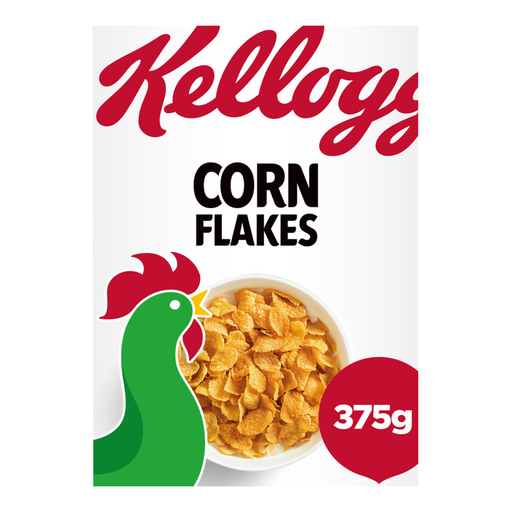 No image available
A cornflake option for a brunch where guests can help themselves to a bowl of cereal.
Pack size: 375 g. If you’re choosing this for several guests, check the ingredients and allergen information on the current pack.
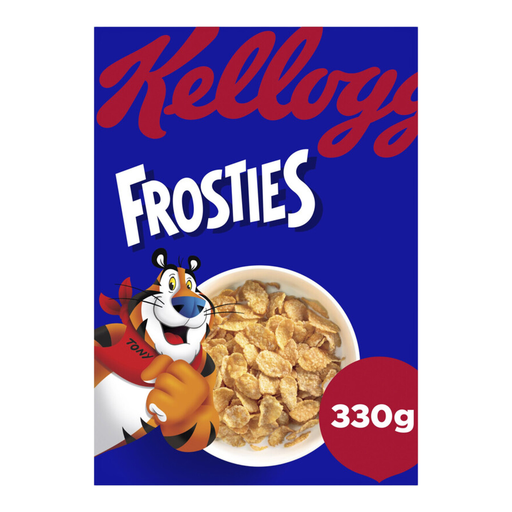 No image available
A different flakes option for guests who don’t all want the same cereal.
Pack size: 330 g. Compare the nutritional information per 100 g and check the label for allergens.
For flakes, it’s best to compare products per 100 g. According to the Voedingscentrum, this lets you compare products on the same basis without different serving sizes skewing the results. Look at sugar, fibre and salt, among other things.
No, having maize as the main ingredient isn’t enough to make them gluten-free. For example, Albert Heijn lists barley malt extract in AH Cornflakes. For gluten-free products, the Voedingscentrum recommends checking the packaging for the ‘gluten-free’ label or the Crossed Grain symbol.
Check the current ingredients list and allergen warnings for every variety you choose. Look out for ingredients that matter to your guests, including cereals containing gluten, milk, nuts, peanuts, soya or sesame.
Follow the storage instructions on the pack and seal it well after use. Albert Heijn recommends storing AH Cornflakes in a cool, dark and dry place.