
Quiz writer with limited desk space
You want to view questions and sources without the monitor stand taking up space needed for your laptop, keyboard or notes. So measure your desk and the entire setup.


If your workspace stays set up, measure the available space first and compare a compact fixed monitor with the room its stand takes up. For long questionnaires, a 16:10 screen can give you more vertical workspace. If you want to clear your desk afterwards, a portable second screen may suit you better, provided it works with your laptop’s connections. Whichever you choose, check the adjustability and cables you’ll need.
You want to view questions and sources without the monitor stand taking up space needed for your laptop, keyboard or notes. So measure your desk and the entire setup.
You work with lots of text arranged vertically and want to weigh up whether extra vertical screen space and adjustability matter more than simply having a larger screen.
You use a second screen while writing, but want to put it away afterwards. Your laptop’s connections and the smaller screen are important considerations.
Compare the options based on the desk space available, how much text you want to see at once and how you plan to store the screen after use.
| What to consider | What should you check? | Who should consider this most? |
|---|---|---|
| Desk space | Measure the available width and depth. Check the monitor’s dimensions with its stand, and leave room for your laptop, keyboard and notes. | If you want everything to fit on a small desk, the stand matters just as much as the screen. Around 33% of consumers say desk space is their main priority. |
| Space for text | Compare the resolution, aspect ratio and text scaling you use. Consider whether you mainly want to view documents vertically or side by side. | If you work with long questions, answers and sources, extra vertical space can make text easier to view. Around 27% of consumers prioritise this extra space for text. |
| Laptop connection | Check your laptop’s video output, whether it supports DP Alt Mode, its power delivery requirements and which cables you’ll need. | If you want to keep cables to a minimum, check that your laptop can actually support video and sufficient power through the connection you choose. Around 20% of consumers prioritise easy connectivity. |
| Storage and adjustment | Check the stand, viewing height, cable routing and any drivers you may need. Arboportaal recommends positioning the screen directly in front of you, with the top just below eye level. | If you want to clear your desk after writing the quiz, storage matters. Compare this benefit with the screen’s adjustment options. Around 20% of consumers mainly want to be able to put their screen away. |
The diagonal measurement doesn’t tell you how much space the stand takes up or how much room will be left for your laptop and input devices.
Measure the usable desk surface and check the dimensions of the exact model, including its stand.
Depending on the connection, you may need a separate power adapter or a different cable.
ASUS states that the ZenScreen MB16ACE has no height adjustment. This matters if you’ll be using the screen for long periods while writing questions.
Assess the viewing height and stand in your own setup, and weigh them against the benefit of being able to put the screen away after use.
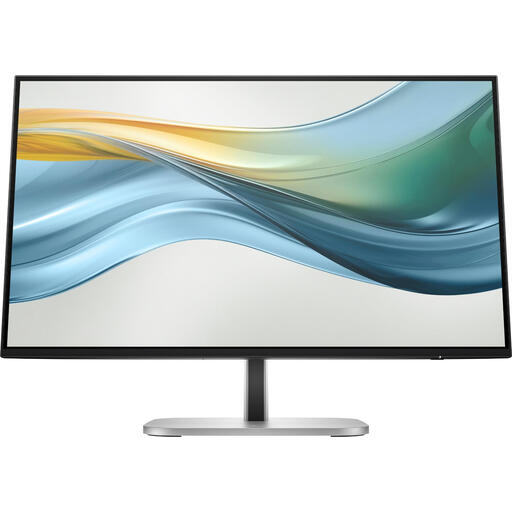
The P2425 is a fixed 16:10 option for anyone who edits lots of quiz text arranged vertically.
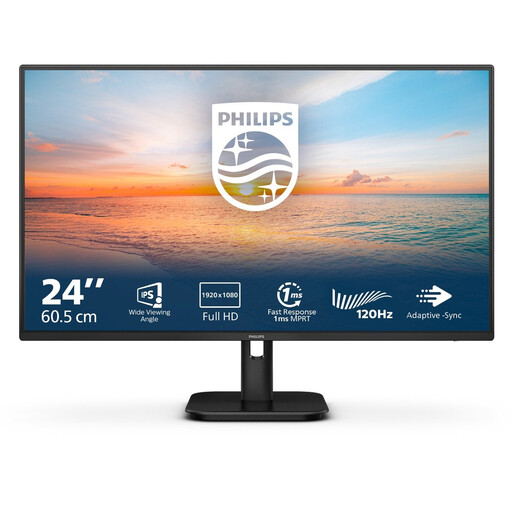
The 24E1N1100A/00 is a fixed 23.8-inch Full HD option. The separate 24E1N1300AE/00 is worth considering if you need USB-C video and power.
The ZenScreen MB16ACE is a portable second-screen option if you want to clear your desk after writing your quiz.
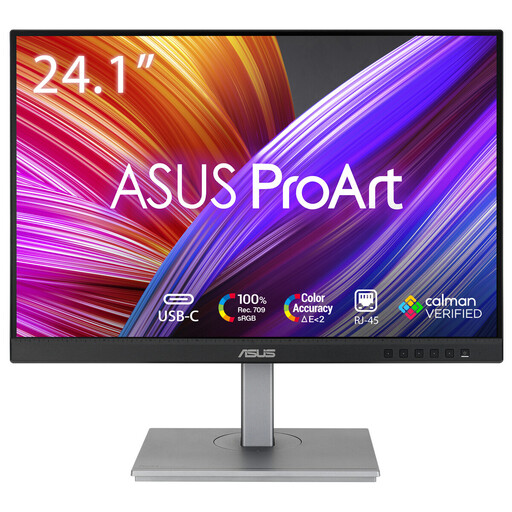
The 24P3CW is a fixed 23.8-inch option to consider if you want a USB-C setup that can power your laptop.
This selection includes portable screens and fixed monitors, from compact Full HD models to 16:10 options with USB-C. Check which connections, adjustment options and dimensions will suit your desk and laptop.
 No image available
A portable option if you want to put the screen away after creating quiz materials.
16:10 aspect ratio and 2.5K resolution.
2 USB-C ports, Mini HDMI and built-in kickstand.
The product name specifies 144Hz.
 No image available
A fixed monitor option if you want to write quiz questions on a separate screen using USB-C video and power.
23.8 inches and 1920 × 1080 pixels.
The product information lists USB-C Power Delivery up to 100 W and an adjustable stand. Your laptop must support the required functions and power.
A power adapter or charger isn’t included and must be purchased separately.
 No image available
A compact fixed monitor option if you want to view quiz questions on a separate screen.
23.8 inches, IPS and 1920 × 1080 pixels.
The product information lists HDMI and VGA; the product name specifies 100Hz and built-in speakers.
 No image available
A fixed 16:10 option to compare if you want extra vertical workspace while writing.
24.1 inches and 1920 × 1200 pixels.
The product information lists a stand with height, tilt, swivel and pivot adjustment, as well as USB-C Power Delivery up to 90 W. Video and power via USB-C depend on your laptop’s compatibility and power requirements.
 No image available
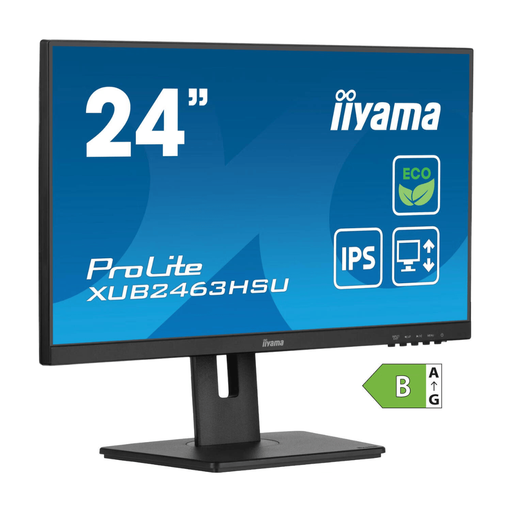
A fixed monitor option if you want to create quiz materials on a separate screen and adjust its height.
24 inches, IPS and 1920 × 1080 pixels.
The product information lists 150 mm of height adjustment.
No, it depends on your workspace and preferred text size. Dell lists a resolution of 1920 × 1200 pixels for the P2425; the Philips Full HD models mentioned have a resolution of 1920 × 1080 pixels. Compare the vertical workspace with the desk space available and the connections you need.
ASUS states that a DisplayLink driver is required to use the ASUS ZenScreen MB16ACE via USB Type-A. Check whether you can install that driver on your laptop; don’t assume it’s compatible just because the plug fits.
Arboportaal recommends positioning the screen directly in front of you, with the top just below eye level, and tilting it so you’re looking straight at the screen. This is ergonomic advice, not a guarantee that you won’t experience discomfort.
According to the Dutch government, when you buy online from a business, you generally have a 14-day cooling-off period. You’re also entitled to a product that is fit for purpose; there is no fixed statutory warranty period in the Netherlands. If a product is faulty, contact the seller. Check the terms and conditions that apply to your purchase.
The obligations under the Working Conditions Decree described by Arboportaal apply to employers and employees. Don’t automatically treat them as a legal requirement for a personal home setup. For employees who work at a screen for more than two hours a day, Arboportaal describes specific workplace requirements, including that the screen and keyboard must not be attached to one another.