
Vandaag of morgen in huis

Kwaliteit gegarandeerd

Welkomstaanbiedingen ontgrendelen: GRATIS bezorging | Tot 80% korting | Gratis 30 dagen JoyPlus-proefperiode
Download de app
Choosing the right fitness weights for your home gym can be daunting. The wrong purchase often leads to unused dumbbells collecting dust in a corner or weights that aren't comfortable for your workouts. The goal is to find equipment that matches your goals, space, and fitness level, ensuring you'll actually use it. This guide will help you make an informed choice for home strength training, with no-nonsense advice.
We'll focus on the specifications and practical usability of different types of weights, so you can find a set that supports your training rather than getting in the way.
Before you buy dumbbells, it's helpful to consider a few key criteria. This ensures you choose a product that truly fits your needs.
Type of Weight: The two most common types for home use are dumbbells and ankle or wrist weights.
Material and Grip: The material determines both comfort and durability. Neoprene dumbbells are popular because the coating provides a comfortable, non-slip grip, even with sweaty hands. Cast iron is durable but can damage floors without a protective layer.
Weight and Adjustability: Beginners often start with lighter weights (1-5 kg). A dumbbell set with various weights is a great starting point. Adjustable weights, such as ankle weights with removable pouches, allow you to gradually increase the resistance.
Storage: In a home environment, space is often limited. A dumbbell set with a rack is an efficient solution to keep your weights organized and off the floor. Compact, hexagonal dumbbells won't roll away and are easy to store.
Below is a selection of home weights that excel in functionality and design, based on their specifications.
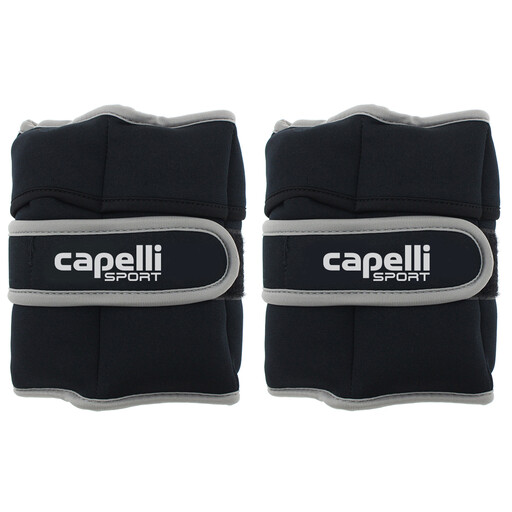
Why We Chose It: This set is designed for versatility. The weights can be used as both ankle weights and wrist weights. Its unique feature is the adjustability; each weight contains five removable sandbags of approximately 0.45 kg (1 lb) each. This allows you to adjust the total weight per piece from light up to a maximum of 2.5 kg (5 lbs).
Benefits:
Who It's For: Ideal for athletes looking to add extra resistance to their cardio or bodyweight exercises. Also highly suitable for rehabilitation programs where the load needs to be increased gradually.
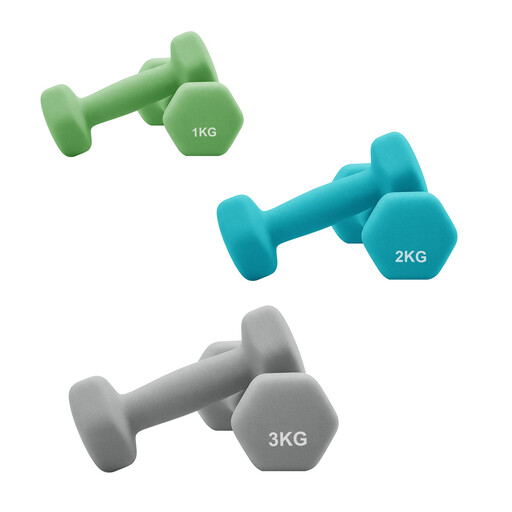
Why We Chose It: This dumbbell set offers a complete starter solution for home strength training. The set includes three pairs of dumbbells in different weights (2x1 kg, 2x2 kg, 2x3 kg) and a matching rack. This makes it an organized and space-saving choice.
Benefits:
Who It's For: Perfect for beginner to intermediate home athletes looking for a versatile and tidy set to get started right away.
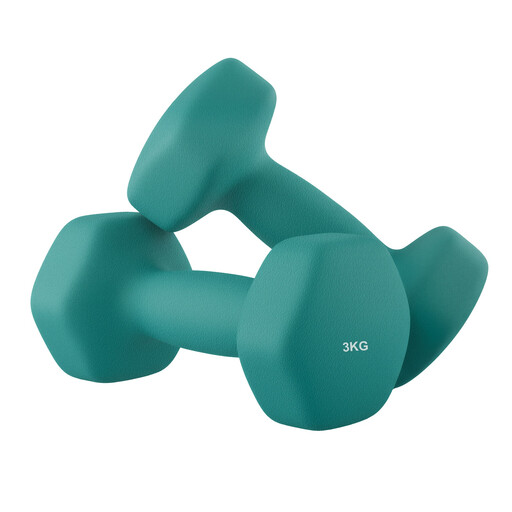
Why We Chose It: This set of two 3 kg dumbbells is a solid choice for those seeking a specific weight. The hexagonal (hex) design is a key practical advantage: the weights won't roll away when you set them down.
Benefits:
Who It's For: Suitable for athletes who want to expand their existing collection or need a specific weight for exercises like arm and shoulder training. Their stability also makes them a great choice for floor exercises.
The products above offer a great starting point, but perhaps you're looking for a different weight, type, or material. Consider heavier dumbbells, kettlebells for dynamic workouts, or complete barbell sets for serious strength training. For a broader overview of the options, you can browse our main category.
Explore All Weights and Dumbbells Here
1. What weight do I need as a beginner? For beginners, it's often recommended to start with a weight that allows you to perform an exercise 12 to 15 times with proper form. For women, this is typically between 1 and 4 kg per dumbbell, and for men, between 4 and 8 kg. A set with multiple weights, like the Ochamaxsongmics set, is a great option to discover what works for you.
2. Can I lose weight by only training with weights? Strength training is an effective part of a weight loss strategy. It builds muscle mass, and muscles burn more calories at rest than fat does. According to various fitness sources, a combination of strength training and cardiovascular exercise (like walking, running, or cycling) yields the most effective results for weight loss, when paired with a balanced diet.
3. How many times a week should I do strength training at home? For most beginners and intermediate athletes, strength training 2 to 3 times a week is a good starting point. It's important to give your muscle groups enough rest to recover and grow. Ensure there is at least one rest day between training sessions for the same muscle group.
