
Vandaag of morgen in huis

Kwaliteit gegarandeerd

Welkomstaanbiedingen ontgrendelen: GRATIS bezorging | Tot 80% korting | Gratis 30 dagen JoyPlus-proefperiode
Download de app
A yoga mat, fitness ball or Pilates ring might seem simple to choose. Yet many people buy fitness accessories that go unused after just a few weeks. Often, this isn't down to a lack of motivation, but to the wrong size, insufficient grip, or a product that doesn't suit the space available.
Three common pitfalls keep cropping up:
So start with your training goal, your height and the space you have available. Then you can make a more informed comparison of home fitness equipment or gym accessories.
For yoga, Pilates, stretching and floor exercises, length, width, thickness and grip are the most important factors. A mat of 183 to 190 cm offers enough room for most adults. If you have longer limbs or make larger movements, you may benefit from an extra-wide version.
A thickness of 6 mm is a practical middle ground. The mat provides some cushioning for exercises on your knees, elbows or back, but generally remains stable enough for standing poses. A thicker mat can be more comfortable, but may also give you less direct contact with the floor.
Also pay attention to the underside. A double-sided texture can help reduce slipping, but the surface underneath needs to be flat, clean and dry. No mat automatically prevents sliding on every floor.
A fitness ball is useful for core training, balance, stretching and certain seated exercises. The diameter should match your height and the height of your chair or desk if you plan to use the ball as a seat.
Check the maximum load in the product information. According to the product description, the Capelli Sport balls have a weight capacity of up to 330 pounds, which is roughly 150 kg. That is a product specification, not a guarantee that the ball will perform the same in every condition. Use the ball on a floor free of sharp objects, do not over-inflate it, and stop using it if you notice visible damage.
During pregnancy, therapy or recovery from an injury, it is wise to consult a qualified healthcare professional beforehand. A product description mentioning “physical therapy” is not medical advice.
A Pilates ring takes up very little space and adds resistance to exercises for your arms, legs and core. Check the material, the diameter and whether the ring is comfortable to hold. According to the specifications, the Capelli Sport Pilates Ring has a diameter of 40 cm and is made from PP and PE.
A stretch band with multiple loops gives you more options for leg and flexibility exercises than a simple straight band. Look at the length, the number of loops and the fibre used. The Artan stretch band is listed with eight loops and a length of 68 inches. Check the band for fraying or damage before each use.
For heavier strength training, a pull-up bar or resistance bands are worth considering. With a freestanding pull-up bar, you should pay particular attention to the footprint, stability, maximum load and the floor surface. If these details aren't clear on the product page, ask for more information before you order.
TPE mats are light and flexible. A TPE yoga mat can therefore be handy for home, the studio or on the go. PVC mats are often sturdy, but can feel different and sometimes take longer to lie completely flat. A cork surface, like the one on the Miss Lulu mat, can absorb moisture. According to the product description, this mat has cork on the top, TPE on the bottom and a polyester mesh layer.
Care affects the lifespan of almost all yoga accessories:
A foldable mat saves space, but pay attention to the difference between its folded and unfolded size. According to the product data, the Good Nite Foldable TPE Yoga Mat measures 183 × 61 × 0.6 cm when unfolded and 37 × 30 × 6 cm when folded.
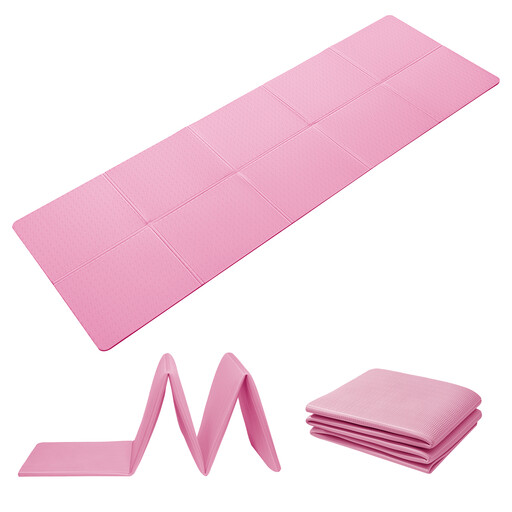
Why this fits the profile: This mat is suitable for anyone starting out at home who also wants to take it to the gym, studio or park. Its foldable design takes up very little storage space.
The dimensions, 6 mm thickness and care instructions are clearly stated. This prevents you from finding out that a compact mat is too small in use.
TPE material, double-sided texture and a folded size of 37 × 30 × 6 cm.

Why this fits the profile: The combination of cork, TPE and polyester mesh suits users who care about material construction and grip during longer yoga sessions.
The product description specifies the three layers and the size of 183 × 61 × 0.6 cm instead of relying on vague grip claims.
Cork on the top layer, TPE base layer, polyester mesh and a weight of 750 grams.
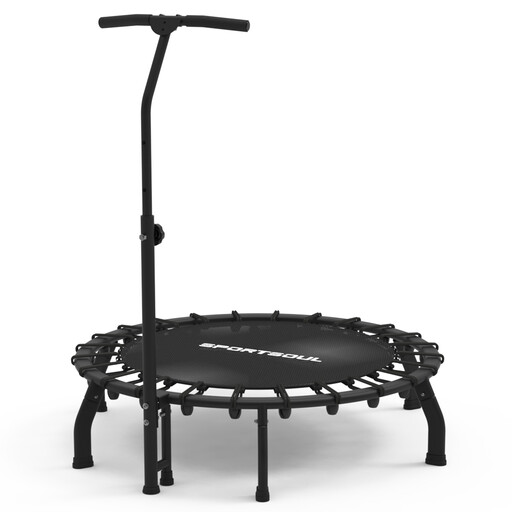
Why this fits the profile: This fitness trampoline is designed for users who want to do cardio training indoors and have enough free floor and headroom.
The product information states a maximum user weight of 120 kg, dimensions of 1068 × 1068 mm and safety instructions for placement and inspection.
Steel frame, PP jumping mat, elastic resistance bands and listed standards EN ISO 20957-1, GB 17498.1-2008 and ASTM F2276-10(2015).
We've put together a full, up-to-date list of products that fully meet these strict selection criteria and current European safety regulations.
Start with a yoga mat or training mat that you can comfortably lie and stand on. Then add one small aid, such as a Pilates ring or stretch band. A fitness ball is useful if you specifically want to work on balance, core training or mobility. Don't buy several accessories at once without a fixed training plan.
Wipe the mat down with a soft, damp cloth and a little mild soap if needed. Always follow the manufacturer's care instructions. Let the mat dry completely and store it in a ventilated area, out of prolonged direct sunlight. A TPE or PVC mat should not go in the washing machine.
The lifespan depends on the material, how often you use them, storage and care. Check mats for tears and peeling layers, stretch bands for fraying, and fitness balls for damage or deformation. With a trampoline, also check the frame, springs or elastic parts. Replace an accessory as soon as the material no longer feels reliable or shows visible damage.
