
Vandaag of morgen in huis

Kwaliteit gegarandeerd

Welkomstaanbiedingen ontgrendelen: GRATIS bezorging | Tot 80% korting | Gratis 30 dagen JoyPlus-proefperiode
Download de app
Fitness accessories might seem straightforward to choose. Yet a poorly chosen yoga mat can slip, a resistance band can wear out faster than expected, and a set of gym floor mats can take up more space than you planned. With the right specifications, you can avoid a purchase that ends up unused in the cupboard after just a few sessions.
This guide helps beginners and experienced athletes, yogis, Pilates practitioners and home users compare products objectively. The focus is on material, dimensions, intended use and maintenance – not on generic marketing claims.
A non-slip yoga mat can feel different on tiles compared to laminate or a wooden floor. So look at the texture on both sides. A line pattern on the top and a wave pattern on the bottom give you more information than just the word “non-slip” on the packaging.
Always use a fitness mat on a flat, clean surface. Dust, moisture and loose hairs can reduce grip.
A thin yoga mat is often easier to roll up and carry, but offers less cushioning for exercises on your knees, elbows or back. An extra-thick mat can be more comfortable, but may feel less stable during balance poses.
Also check the length and width. A standard size of around 183 × 61 cm is suitable for many exercises. If you perform wide movements, you may benefit from an extra-wide mat measuring 190 × 80 cm.
With resistance bands, the actual resistance is more important than the colour. Check whether the set includes multiple levels, whether the resistance is adjustable and how the handles are attached. Clips, buckles and seams are practical points to inspect.
Latex can cause an allergic reaction in some people. So always check the material and inspect the band for tears, damage or thin spots before each use.
A thickness of 6 mm is a practical middle ground for yoga, Pilates, stretching and light fitness training. A 10 mm yoga mat offers more cushioning according to the product description, but may feel softer during balance movements. A 3 mm PVC mat is thinner and easier to store.
For floor protection, tiles around 1.2 cm thick are a different type of product. They are designed to cover a larger area and interlock with each other, not to be carried in a sports bag.
A yoga mat with a carry strap is handy for commuting, classes and travel. A foldable yoga mat takes up less space than a rolled-up model. Check the folded dimensions of a foldable mat; these determine whether the mat fits in a rucksack or suitcase.
Clean mats usually with a damp cloth and mild soap. Allow them to air dry completely and do not store them in direct sunlight for long periods. Store resistance bands in a cool, dry place, away from sharp edges.
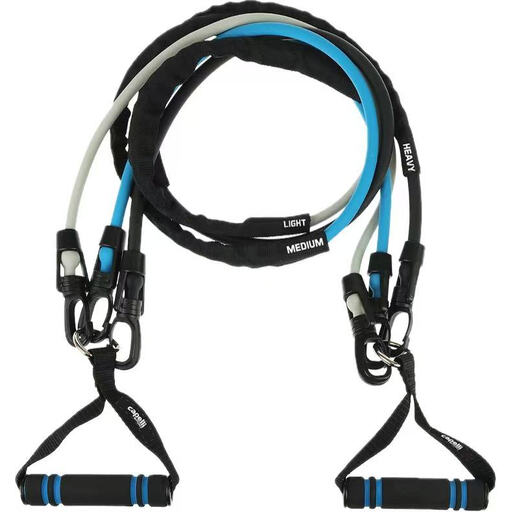
Why this fits the profile: The set includes three latex bands of 120 cm with light, medium and heavy resistance. Beginners can start with one band and add more later.
The resistance is not limited to one fixed level. The clips allow you to add or remove bands. Do check the latex before each use.
Three resistance levels, foam handles and adjustable clips in one set.

Why this fits the profile: This mat combines a cork top layer with a TPE underside and a polyester mesh layer. The dimensions are 183 × 61 cm with a thickness of 6 mm.
The construction doesn’t just say “non-slip” – it specifies cork on top, TPE on the bottom and an intermediate layer. This makes the material choice verifiable.
Cork-TPE construction, 6 mm thickness and a stated weight of 750 grams.
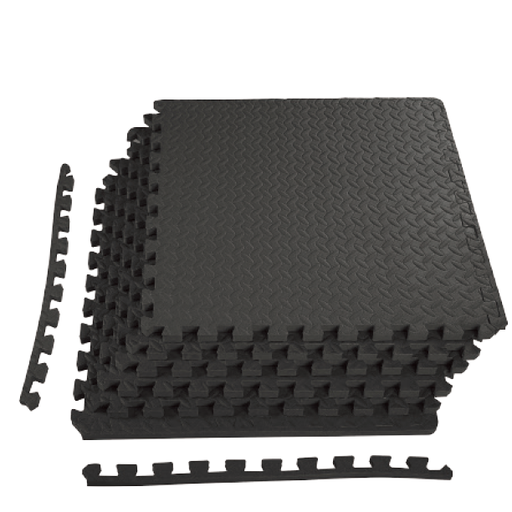
Why this fits the profile: These puzzle mats are designed for a permanent training area, fitness equipment or a home gym. Six tiles of 60 × 60 cm together cover approximately 24 square feet.
The coverage, thickness and connection method are specified in advance. This allows you to calculate how many sets you need for your space.
1.2 cm PE foam, puzzle connection and a surface that can be cleaned with a damp cloth.
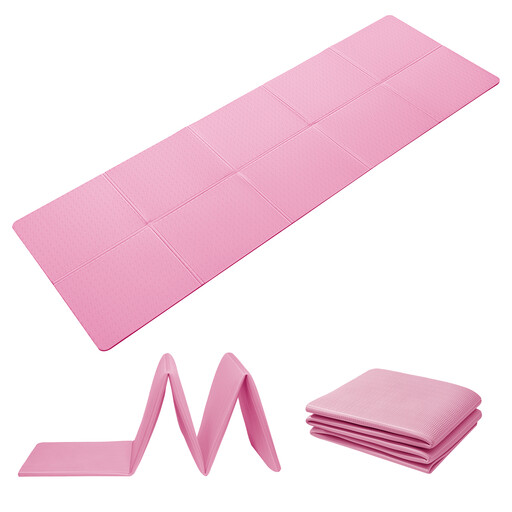
Why this fits the profile: The TPE mat measures 183 × 61 × 0.6 cm when unfolded and, according to the product information, 37 × 30 × 6 cm when folded. This fits more easily into luggage or a large sports bag.
The folded dimensions are stated clearly. So you don’t have to rely solely on the general claim of “compact”.
Foldable design, double-sided texture and a thickness of 6 mm.
We’ve put together a full, up-to-date list of products that fully meet these strict selection criteria and comply with current European safety regulations.
Not every workout requires a large set. A Pilates ring of around 40 cm can be used for Pilates and strength training for legs, arms and core. A loop resistance band offers multiple hand positions; the model mentioned has eight loops and is 68 inches long according to the product information.
For targeted strength training, a resistance band with handles is practical. A single heavy band is suitable for users who already know which resistance level they want. If you are still building up, it is better to choose a set with multiple levels. When using for physiotherapy or rehabilitation, it is wise to coordinate exercises with a practitioner; product information does not replace personal advice.
The lifespan depends on use, material, storage and maintenance. Frequent training, wearing shoes or leaving the mat in direct sunlight for long periods can accelerate wear. Replace a mat when the top layer peels, the texture becomes noticeably smooth or cracks appear.
For yoga, Pilates and floor exercises, a 6 mm TPE mat or a 3 mm PVC mat are possible choices. For a permanent training corner with weights or fitness equipment, modular gym floor mats are more practical. First measure the space and check that all tiles interlock fully.
Yes, when you start with a light resistance and use the band in a controlled manner. Choose a model with clear resistance levels, inspect the latex before use and do not let the band snap back suddenly. If you have a latex allergy, a latex product is not suitable.
