
Vandaag of morgen in huis

Kwaliteit gegarandeerd

Welkomstaanbiedingen ontgrendelen: GRATIS bezorging | Tot 80% korting | Gratis 30 dagen JoyPlus-proefperiode
Download de app
Choosing a yoga mat, foam roller or set of dumbbells might seem straightforward. Yet, many people buy fitness accessories that end up gathering dust after just a few weeks. This often isn't due to a lack of motivation, but rather choosing the wrong size, an unsuitable material, or a product that doesn't match your workout style.
A low price can be tempting, but it's important to check what you're actually getting for your money. For example, with a resistance band, check if it includes handles, clips and multiple resistance levels. With dumbbells, you need to verify whether the price is for a single weight or a pair.
Terms like “professional”, “therapeutic” or “anti-slip” mean very little without measurable information. Instead, you should check:
When a brand mentions a specific feature, you should treat it as a claim from the product description. For instance, the description for some exercise balls might mention an anti-burst construction; this is not a guarantee that damage or incorrect use poses no risk.
A 6 mm yoga mat can be comfortable for yoga, Pilates and floor exercises, but a thick mat feels different during balancing poses compared to a thinner one. Likewise, a fitness ball or stability ball needs to be the right size for your height and how you plan to use it. That's why you should look beyond the colour or shape and pay close attention to the dimensions.
For yoga mats, TPE and PVC are common materials. TPE models are often lightweight and flexible. A PVC mat can feel sturdy and is suitable for regular use, but the texture varies from product to product. Check that the mat will remain stable on your floor and see if the top and bottom surfaces have different patterns.
Latex is commonly used for resistance bands. If you have a latex sensitivity, you should read the material information carefully. Inspect the band for any tears before each workout and do not use it if the material is damaged.
A yoga mat measuring around 183 x 61 cm provides enough space for most standard poses. A carrying strap is handy if you're taking it to the gym, a studio or the park. For muscle recovery on the go, a 30 cm foam roller can be more practical than a longer model, especially if it comes with a storage bag.
With a Pilates ring, pay attention to the diameter. A ring of about 40 cm is compact and can be used for leg, arm and core exercises. The product should not be compressed or stretched excessively.
For an exercise ball, the diameter, maximum load and the surface you'll use it on are important factors. A 65 cm ball isn't suitable for every user; the right size depends on your height and intended use. A 75 cm model will offer a different sitting height and range of motion.
Use fitness accessories on a flat surface, away from sharp objects. For exercises during pregnancy or if you have physical health conditions, it's wise to first seek advice from a suitable healthcare or fitness professional. Fitness and stretching products are not a substitute for medical guidance.
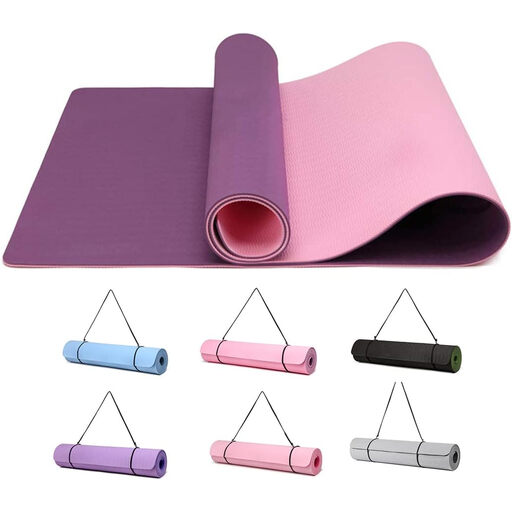
Why it's a good fit: A lightweight mat for yoga, Pilates, stretching and general home fitness, including a carrying strap for use on the go.
The product description specifies the size, thickness, TPE material and a dual-sided texture. This means you don't have to rely solely on a generic anti-slip claim.
183 x 61 cm, 6 mm thick, weighs approx. 0.7 kg and includes a carrying strap.
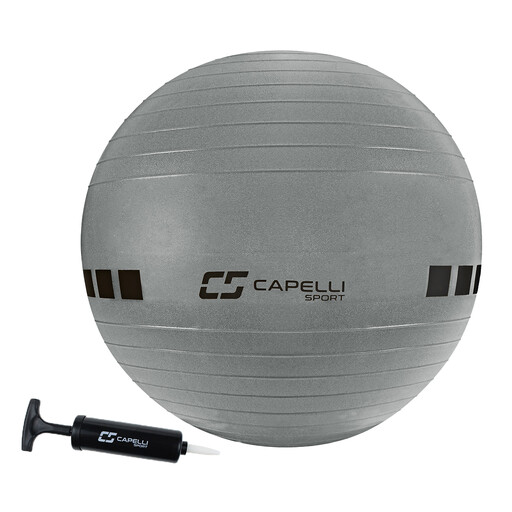
Why it's a good fit: Suitable for core training, balance, Pilates, stretching and for use as a ball chair, provided the size is right for your height.
The description mentions a 65 cm diameter, a maximum load of 330 pounds and a foot pump. Always check the size, surface and condition yourself before use.
PVC, anti-slip and anti-burst according to the product specifications; includes a foot pump.
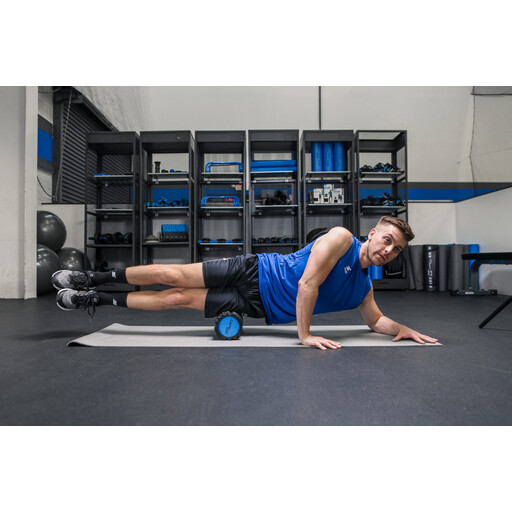
Why it's a good fit: A firm roller for athletes, runners and anyone looking for a practical tool for mobility and post-workout relaxation.
The roller has a length of 30 cm and a high-density PVC and PE core. This provides more clarity than a vague “deep tissue” description.
Compact size, sturdy construction according to the product information, and a nylon mesh storage bag.
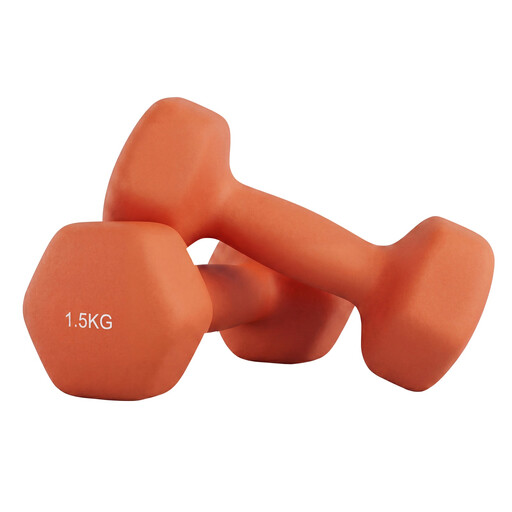
Why it's a good fit: A fixed-weight set for simple strength and cardio training in a small home gym space.
This is a pair of 1.5 kg weights, not a single item. The description also mentions a possible weight deviation of 3%, which is something to bear in mind.
Cast iron core, neoprene coating and a hexagonal shape that helps prevent them from rolling away.
We have compiled a complete, up-to-date list of products that fully meet these strict selection criteria and comply with current European safety regulations.
For targeted flexibility, a stretch strap with eight loops can help you maintain a consistent hand position during a stretch. A Pilates ring is ideal if you want to add extra resistance to core, arm or thigh exercises. For strength training, adjustable bands offer more variety than a single band with a fixed resistance.
A pair of fitness gloves can be comfortable for exercises with dumbbells. According to the product information, the Body & Fit Gym Lifting Gloves L have a hook-and-loop fastening and are covered by the statutory minimum two-year EU guarantee. Be sure to check the size and washing instructions before you order.
Proper maintenance prevents unnecessary wear and tear:
A yoga mat, a light resistance band and a pair of light dumbbells are a great starting point. With these, you can do yoga, stretching, simple strength training and home workouts without needing a lot of space. It's best to choose accessories that suit your planned exercises first, rather than buying a large set straight away.
There's no fixed replacement schedule. Instead, you should assess the condition of the material: loss of grip, tears, permanent indentations or a damaged outer layer are all signs that it's time to stop using the product. With a foam roller, look for cracks and distortion; with a mat, watch out for smooth, worn patches and peeling layers.
A foam roller and a stretch strap can be used for gentle self-massage and stretching exercises. A foam roller's product description might mention muscle recovery or myofascial release, but this should not be interpreted as a medical claim. If you experience pain, stop immediately, and if you have an injury or persistent issues, seek advice from a healthcare professional.
