
Vandaag of morgen in huis

Kwaliteit gegarandeerd

Welkomstaanbiedingen ontgrendelen: GRATIS bezorging | Tot 80% korting | Gratis 30 dagen JoyPlus-proefperiode
Download de app
Buying a fishing rod seems straightforward, until you have to choose between carbon rods, lure rods, a sea bass rod or a boat rod. Product names often sound promising, but they don’t always tell you enough about how a rod performs in practice. For example, a rod that’s comfortable to use from the bank may be less convenient on a small boat.
So focus on details you can check. The right choice depends on where you fish, your technique, your lures, your line and the space you have.
A carbon rod is often promoted as lightweight and sensitive. That can be an advantage, but carbon alone doesn’t determine how a rod fishes. Length, casting weight, action, transport length and handle all play a part too.
A longer rod can give you greater casting distance, but it’s less practical on a boat. A shorter rod is easier to handle, but may give you less control when casting from a high bank.
A lure rod for light plugs or soft baits needs different features from a rod for fishing heavy rubber jigs. A Tenya rod is also designed for a specific style of fishing where feel and control of the bait are important.
Check that the product information specifies what the rod is designed for. Does it say only “fishing rod”, without giving the casting weight, action or intended use? If so, important details are missing to help you make an informed choice.
A freshwater rod may be well suited to fishing in canals, lakes and rivers. For a saltwater rod or sea-fishing rod, the conditions you’ll use it in matter too: wind, spray, sand and salt deposits all call for careful maintenance.
Don’t automatically assume a product is suitable for frequent sea fishing just because “sea” appears in its name. Check the product details and components, and rinse the rod with fresh water after use.
The casting weight indicates the weight of lure the rod is designed for. It’s a useful starting point:
Don’t regularly use lures that are heavier than the stated casting weight. Also check that your line and reel are a good match. Pairing a light rod with heavy line and a heavy weight can affect its balance and casting performance.
Length affects both your casting and how you work the lure. A longer casting rod can be useful when fishing from the bank. On a boat, a more compact boat rod is often easier to handle, especially when several anglers are standing alongside one another.
The action describes where the rod bends. A fast action bends mainly towards the tip and can give you direct control over your lure. A more parabolic action spreads the bend further along the blank. Also check the number of sections and the transport length. For example, a two-piece rod is easier to carry than a long, one-piece model.
Carbon can help keep a rod lightweight, but look beyond the material name. Check:
After saltwater use, it’s a good idea to rinse the rod with fresh water. Dry it before putting it away and regularly check the line guides for damage. Sand in the joints or a loose tip can cause problems while you’re fishing.
The selection below is based on the uses mentioned in the product names. Before buying, always check the current product page for the casting weight, length, action and available options.
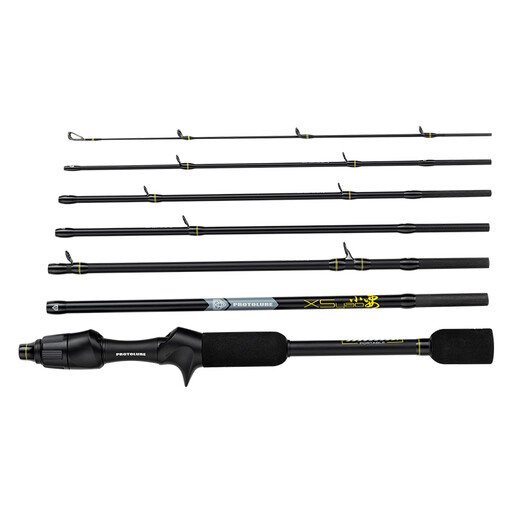
Why it suits this profile: The product name specifies carbon, bass and freshwater lure fishing. This makes it a good fit for beginners who want to focus on lure fishing in freshwater and are looking for a rod to get started with.
Its intended use is more clearly specified than that of a completely general-purpose rod. Be sure to check the stated length and casting weight first.
Carbon construction, according to the product name; clearly identified for freshwater lure fishing.
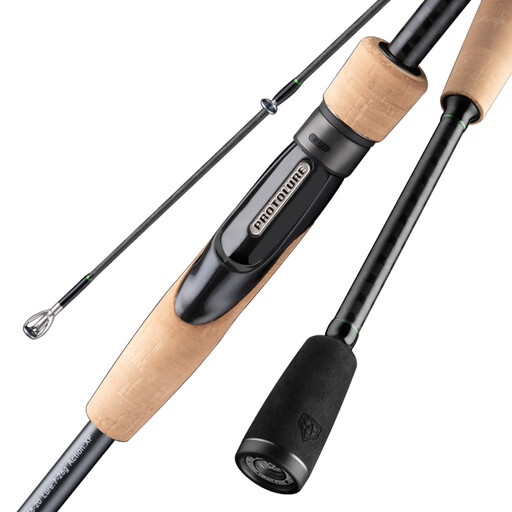
Why it suits this profile: According to its product name, this two-piece sea bass rod is suitable for both freshwater and saltwater. It’s a good option for anglers who fish in a range of locations.
The product name explicitly mentions two types of water and a two-piece design. Still, check the components and rinse the rod after saltwater use.
Two-piece construction, according to the product name; specified for freshwater and saltwater fishing.
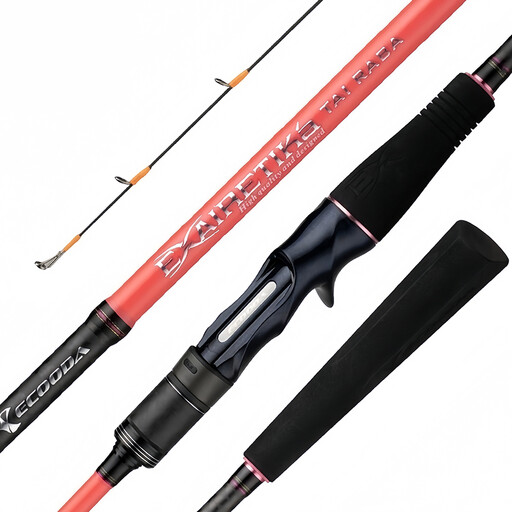
Why it suits this profile: The product name refers to rubber jig fishing and Tenya. It’s a specialised option for anglers who want more than a general-purpose casting rod and need one designed for a particular technique.
The intended use is clear from the name. Before buying, compare the casting weight with the weight of your jig or Tenya rig.
Clearly specified for rubber jig fishing; the product name also mentions Tenya fishing.
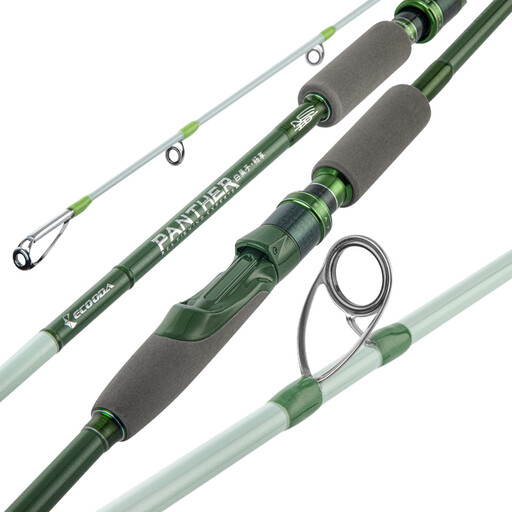
Why it suits this profile: The name describes a lightweight sea-fishing rod for boat use and long casts. It’s a good match for anglers fishing in saltwater from a boat.
The product name specifies boat and sea fishing. Check the available sizes, casting weight and care instructions for saltwater use.
Lightweight and long-cast are mentioned in the product name; designed for sea and boat fishing.
We’ve put together a complete, up-to-date list of products that meet these strict selection criteria and current European safety requirements.
Choose a lure rod with a casting weight suited to your plugs, spoons, soft baits or jigs. Also consider its length and action. A longer casting rod can be useful when fishing from the bank, while a compact model is often more comfortable to use on a boat.
Rinse the rod with clean, lukewarm water after every session and let it dry completely. Check the line guides, joints and reel seat. Avoid stiff brushes and harsh cleaning products, as these can damage the finish.
That depends on more than the weight of the rod. Check the stated casting weight, line class, action and maximum load. A lightweight rod may be suitable for a particular technique, but that doesn’t automatically mean it’s designed for heavy lures or large catches.
