
Vandaag of morgen in huis

Kwaliteit gegarandeerd

Welkomstaanbiedingen ontgrendelen: GRATIS bezorging | Tot 80% korting | Gratis 30 dagen JoyPlus-proefperiode
Download de app
Anyone looking for fish food for dogs will soon come across terms such as “grain-free”, “hypoallergenic” and “rich in omega 3”. These descriptions can be useful, but they do not always tell the whole story. The difference often lies in the complete ingredients list, the age group the food is intended for and whether you are buying a complete meal or simply a snack.
Check the full composition. A product may contain salmon or ocean fish as its main protein source, while also including other animal ingredients. For example, Farmina N&D Ocean Salmon Adult Mini lists fresh and dried salmon, herring and fish oil, but also chicken fat. This is important if you are specifically looking for chicken-free dog food.
Grain-free recipes often use other sources of carbohydrates, such as peas, chickpeas, sweet potato or potato. Grain-free dog food with fish may therefore still contain ingredients your dog is sensitive to. You should also not treat “hypoallergenic” as a medical guarantee. If symptoms keep returning, it is wiser to speak to a vet than to keep switching brands.
Salmon dog biscuits and dried fish strips are complementary feed. They are intended as rewards or treats and do not provide the same nutritional function as complete dry food. Give snacks in moderation and take your dog’s daily energy intake into account.
First, choose a product that is suitable for your dog’s life stage:
According to the product description, the Eukanuba Grain Free puppy version with ocean fish is intended for small and medium-sized puppies aged 1 to 12 months. The adult version is described by the same source as being intended for small and medium-sized dogs aged 1 to 7 years.
“Fish” is a broad description. Check whether the packaging specifies salmon, cod, herring, sea bass or a combination, for example. According to the product information, Farmina N&D Ocean Cod and Pumpkin contains, among other ingredients, 25% cod and 25% dehydrated cod protein. The herring and orange version lists fresh and dehydrated herring as its main ingredients.
Clear information about the source makes it easier to compare recipes and avoid ingredients your dog has not tolerated well in the past.
Fish oil and oily fish provide omega 3 fatty acids. For example, Farmina N&D Sea Bass, Spirulina and Fennel lists 2.30% omega 3, 1.00% DHA and 0.70% EPA in its analytical composition. Figures like these are easier to compare than simply seeing the words “omega 3 dog food”.
According to brand product information, omega 3 fatty acids can contribute to normal skin and a glossy coat. This is a manufacturer’s product claim, not a medical guarantee. Always compare the complete nutritional analysis and do not automatically add extra fish oil alongside a complete food.
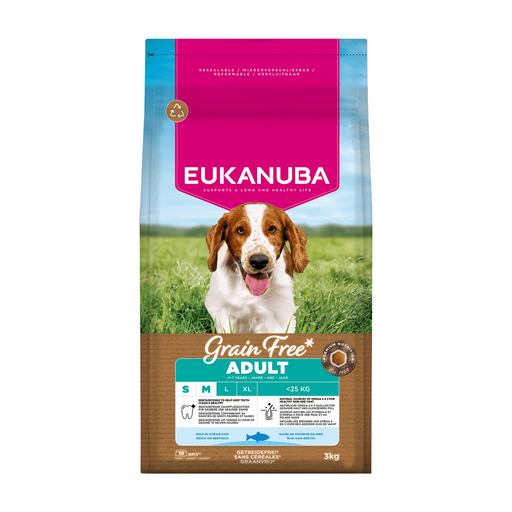
Why it suits this profile: A practical option for owners of small or medium-sized adult dogs who are considering a grain-free formula with ocean fish.
The product description mentions ocean fish, a grain-free composition and a chicken-free formula. Always check the current packaging yourself before ordering.
For adult small and medium-sized dogs; according to the product description, contains prebiotics and sources of omega 3 and omega 6.
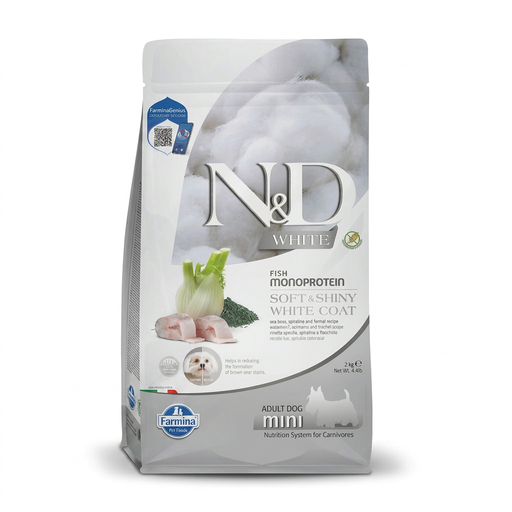
Why it suits this profile: Designed for owners who want to compare a distinctive fish recipe and detailed analytical information for an adult mini dog.
The composition lists sea bass and dehydrated sea bass protein separately. This gives you a clearer view of which fish sources are included in the recipe.
Mini format for adult dogs; lists omega 3, DHA and EPA in the analytical composition.
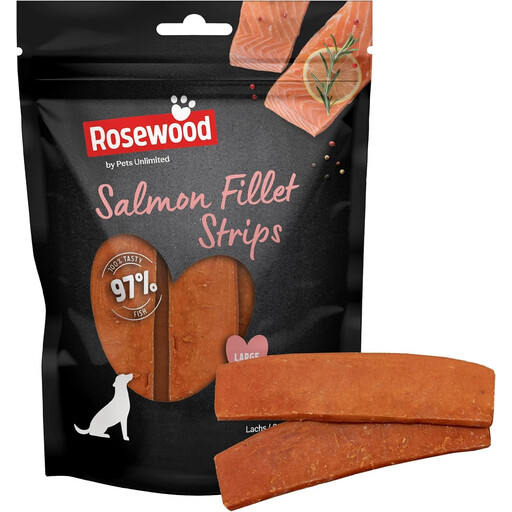
Why it suits this profile: Handy for training, walks or variety when you are looking for a fish snack rather than everyday dog food.
The packaging states that this is complementary feed. This helps prevent a snack from accidentally being used as a complete meal.
Salmon as the main ingredient according to the product information; soft 150-gram strips that are easy to portion and use as rewards.
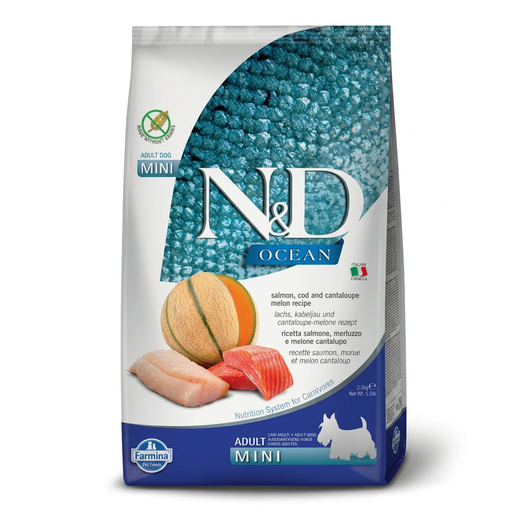
Why it suits this profile: A complete fish meal for small adult dogs, centred around a salmon recipe and compact packaging.
The product information describes it as complete food for adult dogs of small breeds. The ingredients list also makes it clear that it contains chicken fat.
Salmon, herring and fish oil in the composition; lists 32% crude protein and 18% crude fat.
We have put together a complete, up-to-date list of products that fully meet these strict selection criteria and the applicable European safety regulations.
For a puppy, the “for growth” description is more important than the flavour alone. According to the product description, the Eukanuba Grain Free dog puppy small/medium ocean fish is aimed at small and medium-sized puppies aged 1 to 12 months. The manufacturer also mentions DHA, calcium, prebiotics and omega 3 and omega 6. According to Eukanuba’s own information, these ingredients are intended to support puppies’ nutritional needs; this is not a substitute for individual feeding advice.
Anyone considering hypoallergenic dog food should pay particularly close attention to all protein sources. A product containing fish may include several fish species. Also check whether eggs, poultry or other animal ingredients have been added. If your dog has been prescribed an elimination diet, the choice should be made in consultation with a vet.
Gradually transition from dry food to the new recipe, for example over seven days. Always provide fresh drinking water. Store an opened bag in a cool, dry place and seal it securely. For snacks, check the best-before date and include the amount in your dog’s daily ration.
Not automatically. Consider your dog’s age, breed size, activity level, weight and the complete ingredients list. Complete food for small adult dogs, for example, is not the same as puppy food or a snack.
This can vary from one dog to another. Grain-free simply means that the recipe contains no grains. Also check the alternative ingredients and all animal protein sources. If symptoms persist or are severe, veterinary advice is recommended.
Use the instructions on the packaging as a starting point and take your dog’s size and activity level into account. As salmon strips are complementary feed, they should not replace a complete meal. On a day when your dog has snacks, you may need to reduce the amount of dry food to keep the total daily intake balanced.
