
Vandaag of morgen in huis

Kwaliteit gegarandeerd

Welkomstaanbiedingen ontgrendelen: GRATIS bezorging | Tot 80% korting | Gratis 30 dagen JoyPlus-proefperiode
Download de app
If you’re looking for fish dog food, you’ll soon come across terms such as grain-free, hypoallergenic, rich in omega 3 and high-quality protein. These descriptions can be useful, but they don’t always tell the whole story. A fish recipe, for example, may also contain chicken, egg or several types of fish. And “grain-free” doesn’t automatically mean the food is suitable for every dog with a food sensitivity.
By checking the label carefully, you can compare dog food with fish by ingredients, life stage and breed size. Below are the main things to look out for, along with some practical recommendations.
Fish may be prominently named on the front of the pack, while the ingredients list includes several animal protein sources. So check which ingredients appear at the top of the list and whether the recipe contains chicken, beef, egg or lamb, for example. This is especially important if you’re following an elimination diet on your vet’s advice.
Grain-free dog food contains no grains, but may use other sources of carbohydrate, such as peas, chickpeas or sweet potato. A recipe may also contain several types of fish. So a product labelled “hypoallergenic” is no guarantee that it will resolve your dog’s problem. According to the brand’s own product information, Vet Life Hypoallergenic Fish & Potato Formula is based on a fish and potato recipe. Always check the full packaging and speak to a vet if symptoms persist.
Puppy food, food for adult dogs and food for senior dogs have different nutritional goals. A puppy, for example, needs a recipe formulated for growth, while a senior product often has a different energy density and additional ingredients. You should also choose the right kibble size for a small, medium or large dog.
Check whether the packaging says complete pet food and which life stage the food is intended for. Also check the feeding guide, which is based on body weight and activity level. These amounts are a starting point; adjust the portion if your dog’s weight changes.
Examples from the range:
Dog food with salmon, cod or herring differs in more than just flavour. Check whether it contains fresh fish, dried fish or fish meal, and how much is included in the recipe. For example, Farmina N&D Ocean Cod and Pumpkin Adult Small lists cod as 25% fresh cod and 25% dehydrated cod protein. The medium and large varieties use the same stated percentages of cod, but are tailored to a different breed size.
Dog food with herring may also have a different recipe from food with salmon or cod. According to the ingredients list, Farmina N&D Ocean Herring and Orange contains 26% fresh herring and 25% dehydrated herring.
Compare the analytical information rather than relying on marketing claims alone. Look out for:
According to the product information, Farmina N&D Ocean Salmon Adult Medi/Maxi lists, among other things, 30% crude protein, 18% crude fat, 2.30% omega 3, 1% DHA and 0.70% EPA. These are product specifications, not a guarantee of a particular result for every dog.
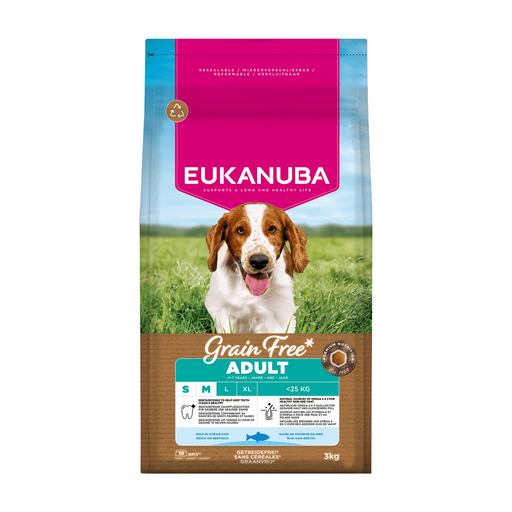
Why it suits this profile: A straightforward choice for adult dogs of small and medium breeds, with dry food in a 3 kg pack.
The product information describes a grain-free, chicken-free recipe with ocean fish. If your dog has an intolerance, check the current ingredients list.
Tailored to small and medium adult dogs; according to the product information, it contains FOS and beet pulp.
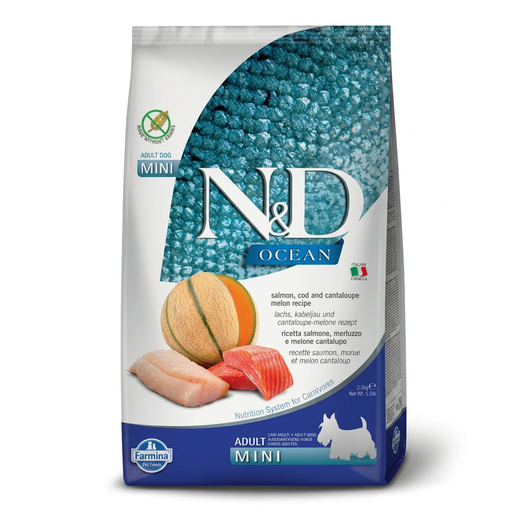
Why it suits this profile: Designed for adult dogs of small breeds looking for a grain-free salmon recipe.
The listed ingredients include fresh and dried salmon as key protein sources. According to the product information, the recipe also contains herring and chicken fat.
32% crude protein, 18% crude fat and a grain-free recipe, according to the product details provided.
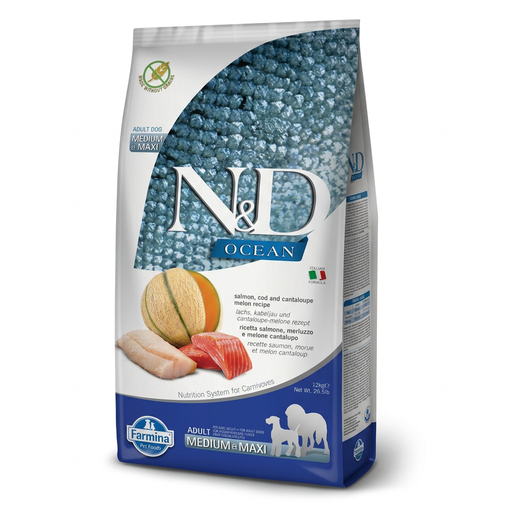
Why it suits this profile: The large pack is practical for medium and large adult dogs that eat dry food every day.
The product page lists percentages for salmon and cod and includes a seven-day transition plan. This makes it easier to check the ingredients and plan the switch.
12 kg pack; according to the product specifications, it contains 30% crude protein, 18% crude fat and stated DHA and EPA values.
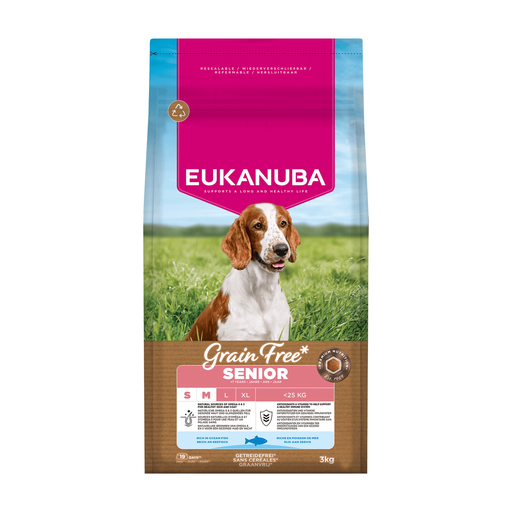
Why it suits this profile: According to the product information, this variety is intended for senior dogs aged 7 and over from small and medium breeds.
The life stage is clearly stated. The product information also describes a grain-free, chicken-free recipe with ocean fish.
According to the product information, it contains glucosamine and chondroitin; the pack size is 3 kg.
We’ve put together a complete, up-to-date list of products that meet these strict selection criteria and the applicable European safety regulations.
Dry dog food is easy to portion and practical to store. Seal the bag carefully after use and keep it somewhere cool and dry. Wet dog food contains more moisture and can be useful for dogs that don’t drink much. Once opened, however, it should be refrigerated and used within the stated period, as instructed on the product.
One example is Ziwi PEAK DOG CANS Mackerel & Lamb 390 g. According to the product information, this is complete wet food with mackerel and lamb, containing 76% moisture. After opening, the can should be covered, kept in the fridge and used within two days. When switching foods, always compare the nutritional value and portion size, not just the weight of a can with that of a bag of kibble.
That depends on the specific intolerance and the full ingredients list. A grain-free recipe may still contain several animal protein sources. If your dog has recurring skin or digestive problems, it’s best to speak to a vet.
Gradually mix the new food into your dog’s current food, usually over about seven days. Start with a small amount and increase it step by step. Keep an eye on your dog’s stools, appetite and weight.
Only if the product is specifically formulated for puppies or growth. Don’t simply choose an adult recipe. Check the life stage, breed size and feeding guide on the packaging.
