
Vandaag of morgen in huis

Kwaliteit gegarandeerd

Welkomstaanbiedingen ontgrendelen: GRATIS bezorging | Tot 80% korting | Gratis 30 dagen JoyPlus-proefperiode
Download de app
A cat that loves fish makes choosing in store easy — until you start comparing the labels. One pack may feature tuna prominently on the front, while the actual proportion of tuna in the recipe may be limited. Another bag may look good value, but contain mainly dry food and require careful portion weighing.
As a Joybuy Product Recommendation Officer, I therefore focus on verifiable information: complete or complementary food, moisture content, protein and fat percentages, ingredients, portion size and pack format. This helps prevent an appealing flavour name from overshadowing the most important information.
“Cat food with tuna” does not automatically mean that tuna is the largest ingredient. Check the ingredients list and the stated percentage. In some recipes, for example, the fish component may make up 4% of the variety, while the food also contains meat and animal by-products.
If you want one clearly defined fish source, look at the full composition. The INABA Bisque Cat Tuna Recipe, for example, lists 30% tuna and uses tuna as its only source of animal protein according to the product information. However, this product is complementary food, not a complete daily meal.
A soup, mousse in a small pouch or liquid treat can appeal to fussy cats. However, a complementary product does not automatically provide all the nutrients needed for daily use. So check whether the label states that it is complete food for adult cats.
Fish cat treats, such as tuna sticks or salmon cream, should be given alongside the main meal. Adjust the amount of main food if necessary and follow the feeding guidelines on the packaging.
Salmon or tuna cat food can vary considerably in texture:
Your cat’s preference is important, but also consider their age, weight, activity level and any dietary restrictions. If problems persist or your cat has been prescribed a specific diet, your vet should guide your choice.
For daily meals, look for the description complete wet food for adult cats or complete food for the relevant life stage. A product labelled “complementary pet food” is intended as a treat, topping or extra.
Examples:
Wet food generally contains considerably more moisture than kibble. This can be useful for cats that do not drink much from their bowl, but it does not replace fresh drinking water. Products can vary considerably: INABA Bisque lists 86% moisture, while INABA Churu Cat Tuna lists 91% moisture. These products are intended as supplements.
Also pay attention to the daily quantity. An 85-gram tin is convenient for one meal, but a cat weighing around 4 kg may need several tins or portions per day according to some product guidelines. Always use the packaging as your starting point and adjust the amount to your cat’s body weight and activity level.
Compare the analytical constituents of each product rather than relying only on marketing terms such as “high protein”. Farmina N&D Ocean Neutered Cat Herring, for example, lists 46% crude protein, 11% crude fat and 8% moisture. It is dry food for neutered or spayed adult cats and, according to the product specifications, contains herring as an important protein source.
“Grain-free cat food” is not automatically necessary for every cat. The most important thing is whether the composition suits your cat and whether your vet has recommended it for a specific reason. If your cat has sensitivities, always check the full ingredients list; fish itself can also be an allergen.
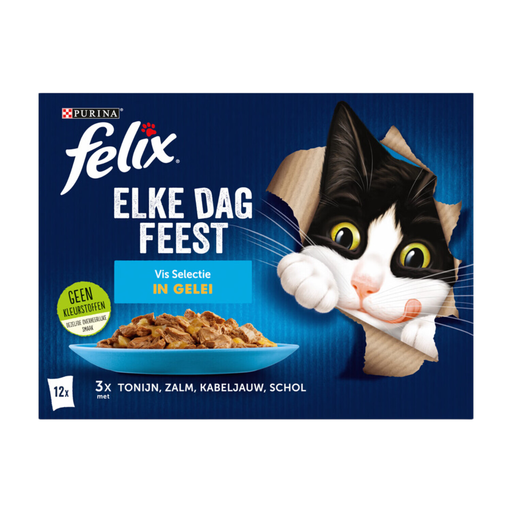
Why it suits this profile: A multipack with 85-gram portions is easy to manage if you want to offer different fish flavours without buying a large stock straight away.
The packaging states that it is complete food for adult cats and clearly identifies varieties including tuna, salmon, cod and plaice.
12 portions of 85 g; jelly texture; complete and balanced for adult cats according to the product information.
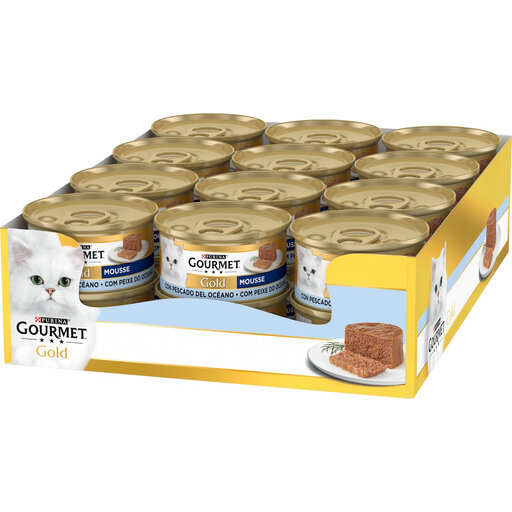
Why it suits this profile: The smooth mousse is ideal for cats that prefer a silky texture, as well as households that want a good supply of small portions.
The product information describes it as complete food for adult cats. The 85 g portions also help minimise the amount left after opening.
24 individual tins; mousse texture; complete daily food according to the product description.
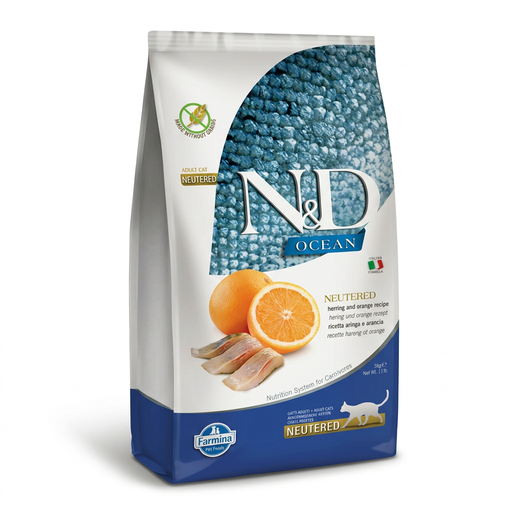
Why it suits this profile: Designed for neutered or spayed adult cats and intended as daily dry food when buying larger packs is more convenient.
The product specification states the target group, 11% crude fat and a grain-free composition. This makes comparison more meaningful than relying solely on the term “fish recipe”.
5 kg pack; herring as an important protein source; 46% crude protein and 11% crude fat according to the stated analysis.
We have put together a complete, up-to-date list of products that fully meet these strict selection criteria and the applicable European safety requirements.
It can be, provided the label states that the product is complete food for adult cats. Soup, mousse treats or tuna bisque labelled “complementary” are not intended for this purpose.
Not automatically. Check the ingredients, particularly if you suspect a food sensitivity. Also avoid changing food constantly simply to vary the flavour. If your cat experiences symptoms such as persistent diarrhoea, itching or reduced appetite, it is advisable to consult a vet.
This depends on the type of product, your cat’s weight and the recommended amount. Do not compare only the price per tin; calculate the cost per 100 grams or per day as well. A cat food multipack can reduce the price per item, while smaller portions may result in less waste. Dry food often costs less per meal, but it is still important to weigh out each portion.
