
Vandaag of morgen in huis

Kwaliteit gegarandeerd

Welkomstaanbiedingen ontgrendelen: GRATIS bezorging | Tot 80% korting | Gratis 30 dagen JoyPlus-proefperiode
Download de app
Fish-based cat food is popular for its aroma, flavour and wide range of recipes. However, an image of salmon or tuna on the packaging does not automatically mean that fish is the main ingredient. Some recipes contain only a small percentage of the fish named, while other ingredients appear further up the composition.
So pay particular attention to the label rather than marketing terms. With these points in mind, you can make a more informed choice between wet cat food, dry cat food, kitten food and food for adult or neutered cats.
“ with salmon” or “with tuna” does not necessarily mean that the product consists mainly of salmon or tuna. Some varieties, for example, list just 4% of the named fish species. The rest may consist of meat and animal derivatives, cereals, vegetable protein extracts or other fish derivatives.
That is why you should check the full composition. Ingredients are generally listed in descending order by quantity. Also look for a specific statement such as “4% tuna” or “26% dried cod”.
Complete cat food is intended as a daily diet when this is clearly stated on the label. Complementary food, such as some soups, snacks or meal toppers, does not independently provide all the nutrients required.
According to the product information, Felix Soup Fish Wet Cat Food is complementary food for adult cats. The recommended amount is one pouch per 4 kg of body weight per day, as an addition to a complete meal. Its high moisture content can be useful for adding variety, but it does not replace a complete diet.
A kitten has different energy and nutritional needs from a calm adult cat. After neutering, it may also be sensible to review energy intake and portion size. A bag of fish-based cat food for adult cats is therefore not automatically suitable for a kitten.
Look for descriptions such as kitten, adult, neutered or “neutered cats”. If you have questions about a medical condition, allergy or special diet, discuss your choice with a vet. Product claims about digestion, coat or weight management are not a substitute for professional nutritional advice.
First check which life stage the product is intended for:
The feeding guideline on the packaging is a starting point. Adjust the portion according to your cat’s weight, activity level and body condition.
Wet food contains considerably more moisture than dry food. This makes wet cat food appealing to owners who want to offer extra variety or whose cat drinks very little. It is not a medical treatment, but it can be a practical part of your cat’s daily fluid intake.
Choose the texture according to your cat’s preference and eating habits:
The term grain-free cat food is not an automatic guarantee of quality. Look at the complete recipe and the analytical constituents. According to the product specifications, Farmina N&D Ocean Cat Herring with Orange lists 44% crude protein, 20% fat and 8% moisture, among other values. According to the product information provided, the composition contains no rice, maize, soya, peas or lentils.
Another option is Farmina N&D Ocean Cod, Spelt, Oats and Orange Flavor Adult Cat Food. According to the label, this recipe contains 27% fresh cod, 26% dehydrated cod, spelt and oats. It is therefore not a grain-free formula. That does not necessarily present a problem if your cat tolerates cereals well; it mainly shows why you should read the ingredients list.
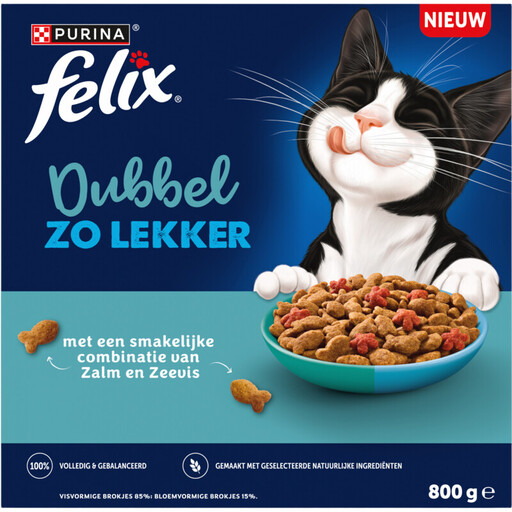
Why it suits this profile: An 800 g pack of wet food for adult cats, with a mix of fish-shaped and flower-shaped pieces. Handy if you want to offer different textures without making a major investment.
The product information states that this is complete food for adult cats. The composition also gives specific percentages for salmon and sea fish.
800 g contents, 30% protein, 11% fat and added taurine, vitamins and minerals according to the product specifications.
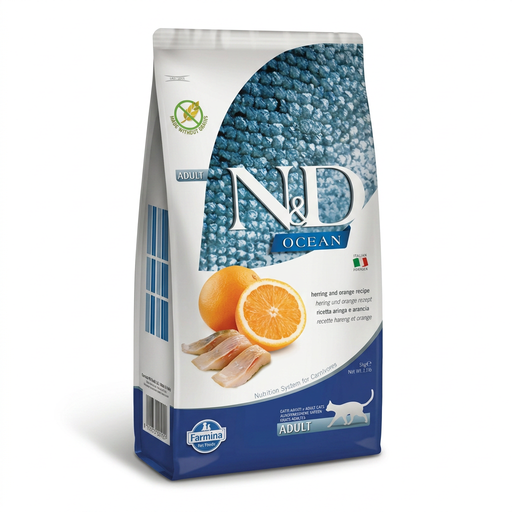
Why it suits this profile: A large bag of dry food for adult cats whose owners are looking for a herring-based recipe and want to be able to check the ingredients list in detail.
The product specifications clearly show the fish sources and analytical values. According to the product description, the recipe is grain-free and intended as complete food for adult cats.
44% crude protein, 20% fat, 5 kg contents and stated DHA and EPA values. Introduce the new food gradually over 7 to 10 days.
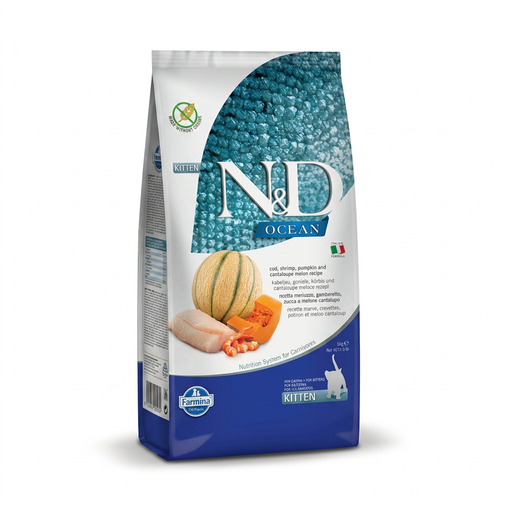
Why it suits this profile: Designed for kittens and suitable for owners looking for a larger pack of fish-based kitten food for everyday use.
The product description explicitly states the life stage, identifies cod as the main fish source and recommends a gradual transition of at least seven days.
The stated analysis lists at least 36% protein, DHA 0,70%, EPA 0,40% and added taurine. According to the description, the recipe is grain-free.
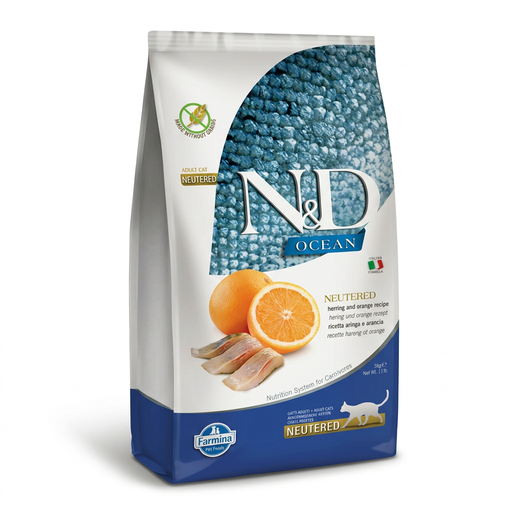
Why it suits this profile: Developed for adult neutered cats when you want to carefully tailor the daily portion and fat content.
According to the product information, the packaging is specifically aimed at neutered cats. The analysis lists 46% protein, 11% fat and 5,10% crude fibre.
Herring appears at the top of the ingredients list, the bag contains 5 kg and the recipe is grain-free according to the product specifications.
We have put together a complete, up-to-date list of products that fully meet these strict selection criteria and the applicable European safety regulations.
Not automatically. Check the life stage, nutritional status and composition. Cats with a known food sensitivity may react differently to fish or other protein sources. If symptoms persist, ask a vet for advice.
Both types can form part of a daily feeding plan when they are labelled as complete food. Wet food contains more moisture, while dry food is practical to store and portion. The choice depends on your cat’s preference, portion control and the information on the label.
Always follow the instructions on the packaging. The product information provided states that several wet food products can be kept refrigerated for up to 48 hours. Discard leftovers if the food smells unusual, changes colour or has been left out of the fridge for too long.
