
Hosting a larger study group
You want to make enough filter coffee for everyone in one brew. The amount you need depends on the number of people, the capacity of their mugs and whether they’ll want a second round.


For a study-group lunch, first work out how much coffee you need based on the number of servings and the mugs you use; don’t rely on the stated number of cups alone. A thermal carafe is a good choice if people will be serving themselves at different times or you want to put the coffee on the table. A glass jug is an option if you’ll serve the coffee soon after brewing. According to the Consumentenbond, coffee can taste more bitter if left on a hot plate, so check how long your chosen model keeps it warm, too.
You want to make enough filter coffee for everyone in one brew. The amount you need depends on the number of people, the capacity of their mugs and whether they’ll want a second round.
You want to serve coffee at the table during lunch, so you’re comparing a thermal carafe with a glass jug on a hot plate.
You want the machine to be easy to fill and quick to clean after your guests leave. A removable filter holder or reusable filter could be worth considering.
For a study-group lunch, serving size, how you’ll serve the coffee, and the work involved before and after brewing all play a part.
| What to consider | What should you check? | Who is this most important for? |
|---|---|---|
| Making enough coffee in one brew | Count the expected servings and compare their volume with the capacity in litres. Don’t assume that the stated number of cups means the same number of large mugs. | If I want to make enough coffee for the group in one go, I work out how much we’ll need using the mugs we actually use. Around 33% of consumers prioritise making enough coffee in one brew. |
| Keeping coffee warm and serving it | Check the type of jug. For a glass jug, check the hot plate and the exact model’s auto-off time. | If people won’t all have coffee at the same time, I want to be able to put the jug on the table without having to brew more. Around 27% of consumers prioritise keeping coffee warm and serving it during lunch. |
| Ease of use and cleaning | Check that the water level and filter holder are easy to access, and see which parts the manual says can be cleaned. | When I’m hosting, I want filling the machine beforehand to be straightforward and the clean-up afterwards to be quick. Around 20% of consumers prioritise ease of preparation and cleaning. |
| Filters and replacement parts | Check the filter size and the model number that matches any replacement jug. | If I make coffee regularly, I want to know which filters fit and how to identify a spare jug for my machine. Around 20% of consumers prioritise maintenance and compatible parts. |
Without a standard serving size, a cup count doesn’t tell you how many of your own mugs you can fill.
Count the expected servings and work out the capacity of the mugs you actually use, then compare it with the machine’s capacity in litres.
If the jug turns out to be too small, brewing another batch during lunch could take up valuable time.
According to the Consumentenbond, coffee can taste more bitter if left on a hot plate. A glass-jug model may also switch off automatically.
If people will be serving themselves at different times, consider a thermal carafe. For a glass jug, check the exact model’s auto-off time.
Spare carafes may be made for specific model numbers.
Before buying a spare carafe, check the model number on the base of your machine and make sure it matches the carafe.
The KZ818D is a thermal-carafe model worth comparing if you’re looking for a timer and a stated capacity of 1.2 litres. Inventum says this model makes up to 10 cups.
The Enjoy Top Therm is a thermal-carafe model worth comparing if you’ll be leaving the coffee on the table during lunch.
The HD7460/40 is a glass-jug model with a stated capacity of 1.2 litres, according to Philips.
The PurShine KF 1500 is a glass-jug model for which Braun states a capacity of 10 cups.
These Joybuy picks are aimed at making filter coffee for groups, with glass-jug models and one model with a tap for larger quantities.
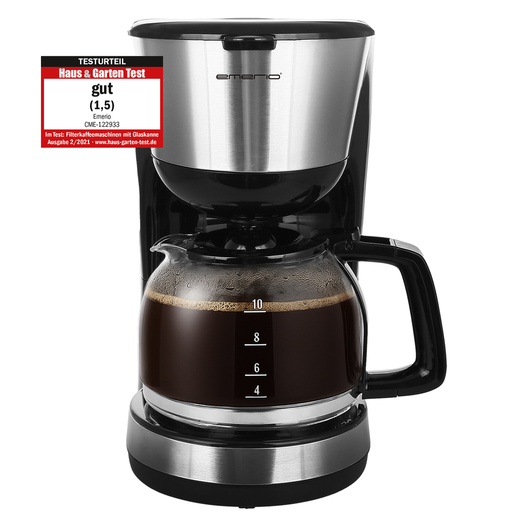 No image available
The glass jug and hot plate are handy if you’ll be serving the coffee after brewing.
Stated capacity: 1.25 l; around 10 cups; removable reusable filter, water-level indicator and drip stop.
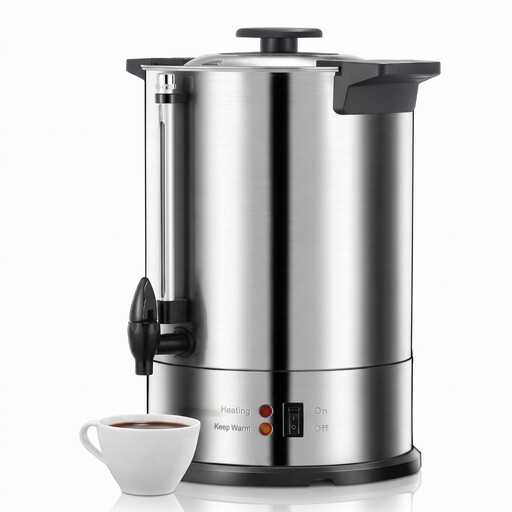 No image available
Its stated capacity and tap make it suitable for serving filter coffee to a group.
Stated capacity: 15 l; keep-warm function, reusable stainless steel filter, water-level indicator and tap. Power: 1500 W.
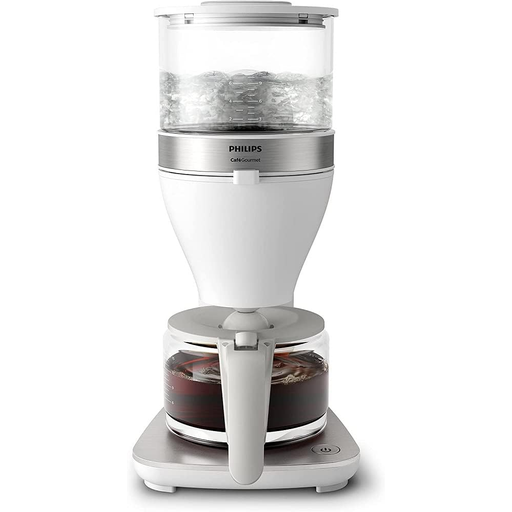 No image available
The glass jug and hot plate are designed for serving coffee after brewing.
Stated capacity: 1.25 l and 10 cups; keep-warm function; Aroma Twister spout and Boil and Brew system.
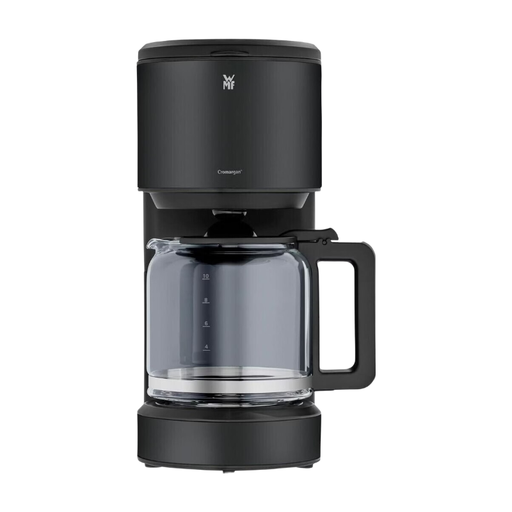 No image available
The glass jug and keep-warm function are useful if you want to serve coffee after brewing.
Stated capacity: 10 cups; water-level indicator, button controls and non-slip base. Power: 1000 W.
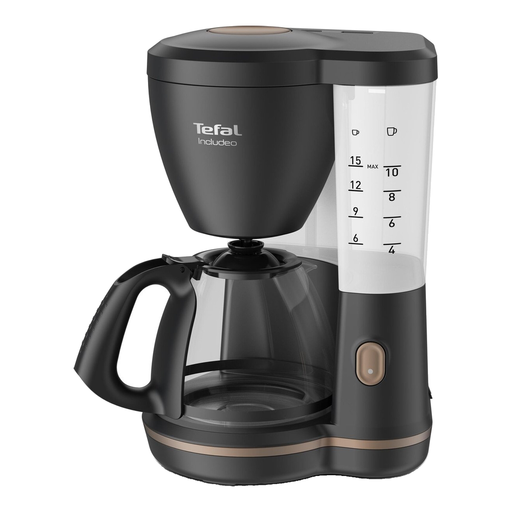 No image available
The glass jug and drip stop can come in handy if you want to serve coffee between brews.
Stated capacity: 1.25 l and 10 to 15 cups; permanent filter, adjustable volume and automatic shut-off after 30 minutes.
Multiply the expected number of servings by the amount in each of your own cups or mugs, then compare the result with the machine’s capacity in litres. The Consumentenbond gives 125 ml as the traditional serving size for a cup of filter coffee. Larger mugs or a second round will need more capacity.
Follow the manual for your exact model for instructions on connecting, cleaning and descaling it. The manual for the Inventum KZ818D, for example, says to use the machine indoors on a flat surface and plug it into a suitably earthed socket. These instructions apply to that model.
If you bought the product as a consumer in the Netherlands, the retailer is your point of contact for a solution. According to the Dutch government, there is no fixed two-year statutory guarantee period in the Netherlands; what you can expect depends, among other things, on the product, its price and the information you were given. A manufacturer’s guarantee is in addition to your statutory rights.
The Dutch government lists options including the shop or online retailer where you buy a new, similar appliance, another collection point and your local council recycling centre.