
The group organiser
You want to make enough coffee for several people in one brew. Compare the capacity in litres with the size of the cups or mugs you actually use.


Start by working out how much coffee you need in one brew: calculate it in litres based on your own mugs, rather than relying only on the stated number of cups. If people will be pouring coffee at different times during your evening study session, a thermal carafe is a sensible option. If everyone will drink shortly after brewing, a glass jug may be enough. The Consumers' Association warns that coffee can become more bitter over time when left on a hotplate. Also check the features and safety information for the exact model.
You want to make enough coffee for several people in one brew. Compare the capacity in litres with the size of the cups or mugs you actually use.
Not everyone will have coffee at the same time. What matters most, then, is how the coffee is kept between brewing and serving.
You’re looking for a machine that different people can fill, pour from and clean afterwards.
Best for: groups who pour coffee shortly after brewing and use the jug straight away.
Bear in mind: the hotplate and automatic shut-off vary by model. The Consumers' Association says coffee can become more bitter over time when left on a hotplate.
Best for: people who pour coffee at different times, with the carafe kept nearby.
Bear in mind: factor in how easy the carafe and lid are to clean.
| What to consider | What should you check? | Who is this most relevant to? |
|---|---|---|
| Amount per brew | Work out the amount you need based on the number of people and the capacity of their mugs, then compare it with the machine’s capacity in litres. | If I want to make enough coffee for the group in one go, I compare the capacity in litres with our mugs. Around 36% of consumers prioritise making enough coffee in one brew. |
| Serving coffee later | Consider whether a thermal carafe or a hotplate better suits the time between brewing and serving, and check the features of the exact model. | When people help themselves to coffee at different times, I want to know how the jug keeps it between brewing and serving. Around 29% of consumers give this top priority. |
| Shared use and cleaning | Check how to fill the water tank, whether the filter holder is removable and which parts the instructions say can be cleaned. | If several people use the machine, I want filling and cleaning to be practical for everyone. This matters most to around 21% of consumers. |
| Purchase and replacement parts | Check which replacement jug or filter holder fits the complete model number. | With regular use, I also want to know whether a compatible part is available if the jug or filter holder needs replacing. Around 14% of consumers prioritise purchase and replacement parts. |
The stated cup size may be smaller than the mugs people in your group use. So a jug that looks big enough on paper may still mean you need to brew a second pot.
Work out the amount you need using your own mug size, then compare it with the capacity in litres.
Having to brew a second pot can interrupt your get-together if the first jug isn’t big enough.
The shut-off time depends on the model. The Consumers' Association notes that coffee can become more bitter over time when left on a hotplate.
If people will be pouring coffee at different times, consider a thermal carafe. If you choose a glass jug, check the shut-off time for the exact model.
Replacement jugs are sometimes made for specific models. The wrong size or type may not fit your machine.
Check the full model number and the part’s compatibility before choosing one.
The Philips 3000 Series HD7460/40 is a filter coffee maker with a glass jug, designed for people who pour coffee shortly after brewing.
The Easy Therm has a thermal carafe and swing-out filter, making it worth considering if people will pour coffee at different times.
According to Bosch, the TKA6M273 combines a thermal carafe with a removable water tank and a descaling programme.
The KBG Select is a glass-jug model suited to occasions when the amount of coffee needed may vary.
This selection includes filter coffee makers for brewing a pot in one go, with a glass jug or a larger dispenser-style design.
 No image available
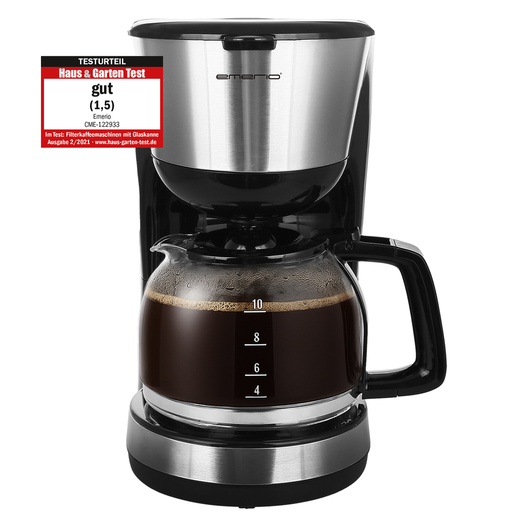
The stated 1.25-litre capacity gives you a starting point for deciding whether one brew will be enough for your group.
The product description lists around 10 cups, a reusable removable filter, a hotplate and an anti-drip feature.
 No image available
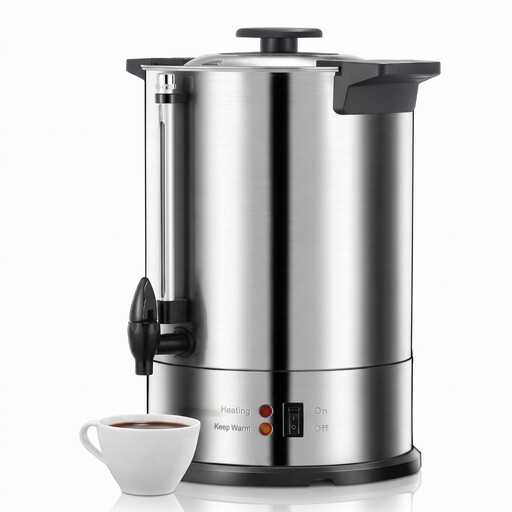
The stated 15-litre capacity makes this a model to consider in light of how much coffee your group actually needs.
The product name and description list a reusable stainless steel round filter, a tap and a keep-warm function.
 No image available
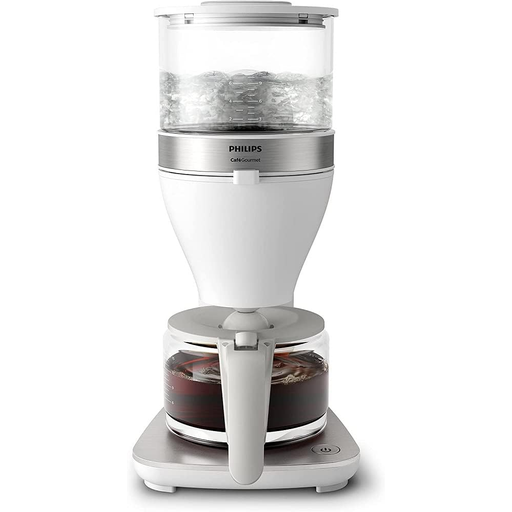
The glass jug and hotplate suit a group serving coffee from one freshly brewed pot; bear in mind that the keep-warm function is model-specific.
The product description lists a capacity of 1.25 litres, 10 cups and an Aroma Twister spout.
 No image available
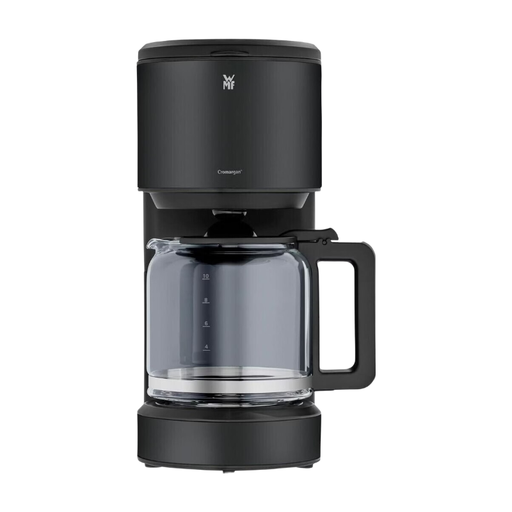
The stated capacity helps you decide whether this glass-jug model can make enough coffee for your group.
The product description lists 10 cups, a keep-warm function, a water-level indicator and automatic shut-off.
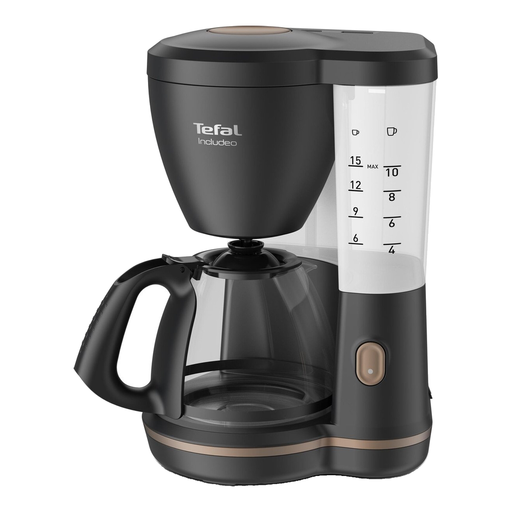 No image available
The stated capacity and adjustable amount of coffee are useful if you want to tailor each brew to your group.
The product name lists a capacity of 1.25 litres and 10 to 15 cups; the filter holder is removable and has a double handle.
New electric filter coffee makers placed on the market in the Netherlands and operating on 220–240 V AC must meet applicable European safety requirements. The Dutch government’s Ondernemersplein and EUR-Lex describe requirements including CE marking and the EU Declaration of Conformity. Check the marking and safety information for the specific machine; a product listing alone does not prove that an individual item meets these requirements.
Add up the amount each person wants and compare it with the capacity in litres of the exact machine. The stated number of cups may be based on smaller servings than your mugs.
The Consumers' Association recommends running water through a new machine before using it. Follow the instructions for cleaning and descaling your chosen model, and check which parts are dishwasher-safe.
New electric filter coffee makers placed on the market in the Netherlands and operating on 220–240 V AC must meet applicable European safety requirements. Among other things, the manufacturer must apply the CE marking and draw up an EU Declaration of Conformity. Check the marking and safety information for the specific product; a webshop description alone is not proof of compliance.
Not necessarily. The Dutch government explains that there is no fixed statutory warranty period in the Netherlands and that a product must meet what you can reasonably expect from it. Before buying, compare what an extended warranty offers on top of your statutory rights and any manufacturer’s warranty.